Product Description
truck crane swing planetary gear reducer hydraulic slewing drive gearbox
Product description:
Daixin planetary reducer gearbox is designed with large torque, high start and transmission efficiency, low-speed stability, compact radial size, low noise, etc.
The main devices we are making are walking reducers, lifting reducers and swing reducers.
They are widely used for vehicle cranes, crawler cranes, truck mounted cranes, marine cranes, aerial work trucks, excavators, etc.
| Product | Slewing drive reducer |
| Model | DH10B103S |
| Max. output torque | 11500 Nm |
| Ratio | 102.95:1 |
| Max. input torque | 111.5Nm |
| Max. input speed | 1788 r/min |
| Max. output speed | 17.37 r/min |
| Application | slewing drive for truck crane, wrecker, aerial working platform, etc |
| OEM | Acceptable |
Product features:
1.Compact size
2.Low noise
3.High start-up and working efficiency
4.Easy installation, operation and maintenance
5.Various models for wide applications
6.One year warranty
7.Free components for replacement within warranty period
8.Professional and tailored solution for different requirements
9.Free technical support at any time
10.Customer training is available.
Packing and delivery details:
Packing method: plywood box (1 pc / box)
Company details:
ZheJiang CHINAMFG Intelligent Technology Co., Ltd is a scientific and technological enterprise engaged in the research, development and production of planetary gear transmission products, like slewing reducers, Travel drive reducers, lifting winch reducers, hydraulic winches, etc.
The company has always put quality management as the top priority of the company’s development. The products are manufactured not only meet the international ISO 4301 and ISO9001 standards, but also meet the US SAE J706 and the European Union CE standards.
Daixin Intelligent Technology relies on quality, reputation and service to develop, cultivate and consolidate the national and global markets. Be our partners and be our friends.
Our clients:
The company relies on quality, reputation and service to develop, cultivate and consolidate the national and global markets.
Currently, the cooperative customers include: the famous construction machinery manufacturers Zoomlion, the largest wrecker manufacturer ZheJiang CHINAMFG Company, and the largest high-altitude vehicle manufacturer HangZhou Handler Company.
Products are also exported to Russia, Belarus, Spain, UK, Canada, Australia, India, Malaysia and other countries.
FAQ:
1.How to choose the product which meets our requirement?
A) Look through our shop, find a proper item, send me an inquiry, I quote details for you.
B) In case no suitable item in our shop, send me an inquiry with your requirements, we can customize for you.
2.What is payment term?
A) For regular design: 30% deposit, the balance before loading.
B) For customized design: 50% deposit, the balance before loading.
Payment term is negotiable according to order.
3.What is delivery time?
A) For common models in stock, delivery time are 5-7 days.
B) For customized models and new production, delivery time are 30-40 days.
5.How about after-sale service?
A) Within warranty, all spare parts are delivered for free.
B) Exceed warranty, all spare parts are offered with the lowest production cost.
Warranty period is 1 year, but our servicing is for the whole lifetime of product, so no worry for reselling and personal resell.
Thank you for the time. For any question or requirements, please contact me 🙂
/* March 10, 2571 17:59:20 */!function(){function s(e,r){var a,o={};try{e&&e.split(“,”).forEach(function(e,t){e&&(a=e.match(/(.*?):(.*)$/))&&1
| Application: | Machinery, Agricultural Machinery, Wrecker, Truck Crane |
|---|---|
| Hardness: | Hardened Tooth Surface |
| Installation: | Horizontal Type |
| Layout: | Coaxial |
| Gear Shape: | Cylindrical Gear |
| Step: | Three-Step |
| Customization: |
Available
| Customized Request |
|---|
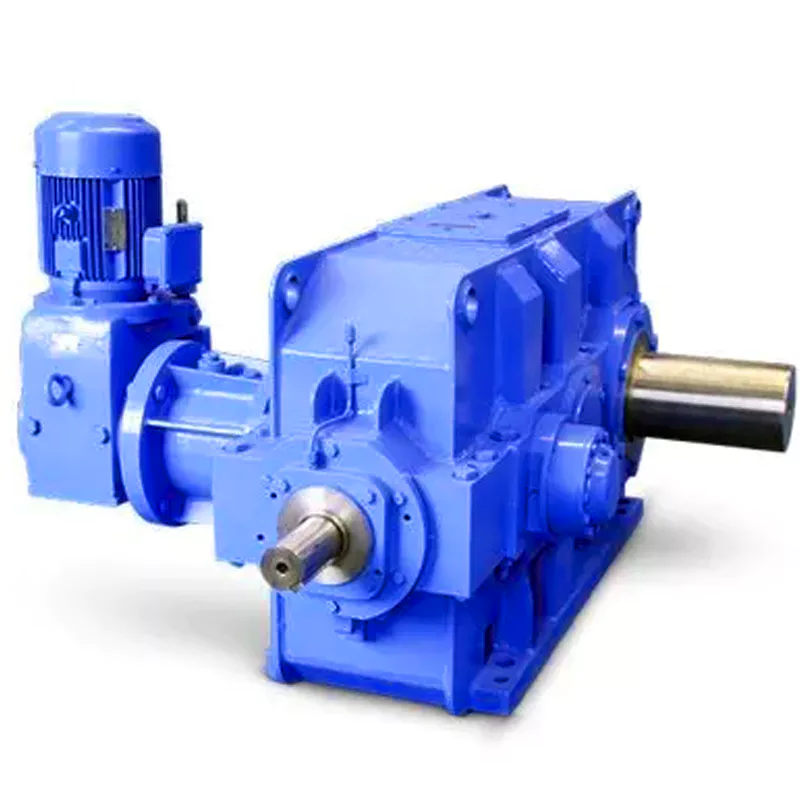
What are the considerations for choosing the appropriate lubrication for gear reducers?
Choosing the appropriate lubrication for gear reducers is crucial for ensuring optimal performance, longevity, and efficiency. Several considerations should be taken into account when selecting the right lubrication:
1. Load and Torque: The magnitude of the load and torque transmitted by the gear reducer affects the lubrication’s viscosity and film strength requirements. Heavier loads may necessitate higher viscosity lubricants.
2. Operating Speed: The speed at which the gear reducer operates impacts the lubrication’s ability to maintain a consistent and protective film between gear surfaces.
3. Temperature Range: Consider the temperature range of the operating environment. Lubricants with suitable viscosity indexes are crucial to maintaining performance under varying temperature conditions.
4. Contaminant Exposure: If the gear reducer is exposed to dust, dirt, water, or other contaminants, the lubrication should have proper sealing properties and resistance to contamination.
5. Lubrication Interval: Determine the desired maintenance interval. Some lubricants require more frequent replacement, while others offer extended operational periods.
6. Compatibility with Materials: Ensure that the chosen lubricant is compatible with the materials used in the gear reducer, including gears, bearings, and seals.
7. Noise and Vibration: Some lubricants have properties that can help reduce noise and dampen vibrations, improving the overall user experience.
8. Environmental Impact: Consider environmental regulations and sustainability goals when selecting lubricants.
9. Manufacturer Recommendations: Follow the manufacturer’s recommendations and guidelines for lubrication type, viscosity grade, and maintenance intervals.
10. Monitoring and Analysis: Implement a lubrication monitoring and analysis program to assess lubricant condition and performance over time.
By carefully evaluating these considerations and consulting with lubrication experts, industries can choose the most suitable lubrication for their gear reducers, ensuring reliable and efficient operation.
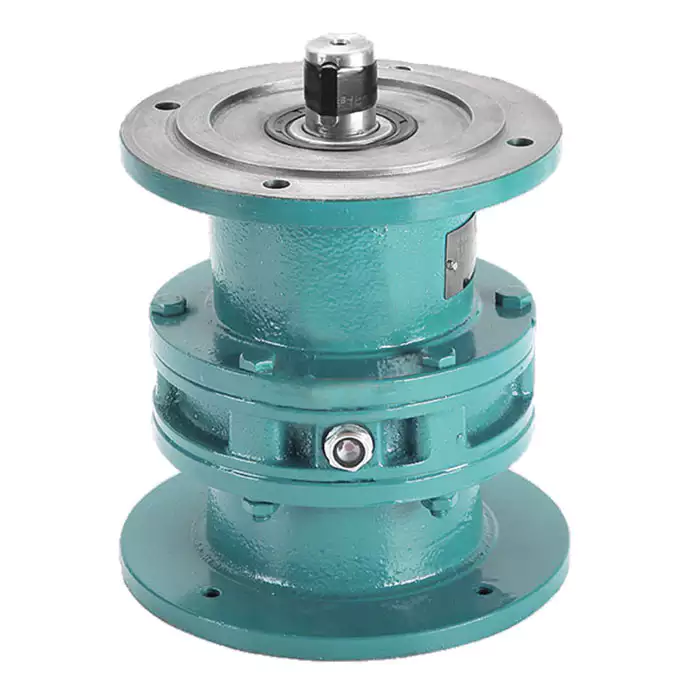
How do gear reducers handle shock loads and sudden changes in torque?
Gear reducers are designed to handle shock loads and sudden changes in torque through several mechanisms that enhance their durability and reliability in challenging operating conditions.
1. Robust Construction: Gear reducers are constructed using high-strength materials and precision manufacturing techniques. This ensures that the gears, bearings, and other components can withstand sudden impacts and high torque fluctuations without deformation or failure.
2. Shock-Absorbing Features: Some gear reducer designs incorporate shock-absorbing features, such as flexible couplings, elastomeric elements, or torsionally flexible gear designs. These features help dampen and dissipate the energy from sudden shocks or torque spikes, reducing the impact on the entire system.
3. Torque Limiters: In applications where shock loads are common, torque limiters may be integrated into the gear reducer. These devices automatically disengage or slip when a certain torque threshold is exceeded, preventing damage to the gears and other components.
4. Overload Protection: Gear reducers can be equipped with overload protection mechanisms, such as shear pins or torque sensors. These mechanisms detect excessive torque and disengage the drive temporarily, allowing the system to absorb the shock or adjust to the sudden torque change.
5. Proper Lubrication: Adequate lubrication is essential for managing shock loads and sudden torque changes. High-quality lubricants reduce friction and wear, helping the gear reducer withstand dynamic forces and maintain smooth operation.
6. Dynamic Load Distribution: Gear reducers distribute dynamic loads across multiple gear teeth, which helps prevent localized stress concentrations. This feature minimizes the risk of tooth breakage and gear damage when subjected to sudden changes in torque.
By incorporating these design features and mechanisms, gear reducers can effectively handle shock loads and sudden changes in torque, ensuring the longevity and reliability of various industrial and mechanical systems.
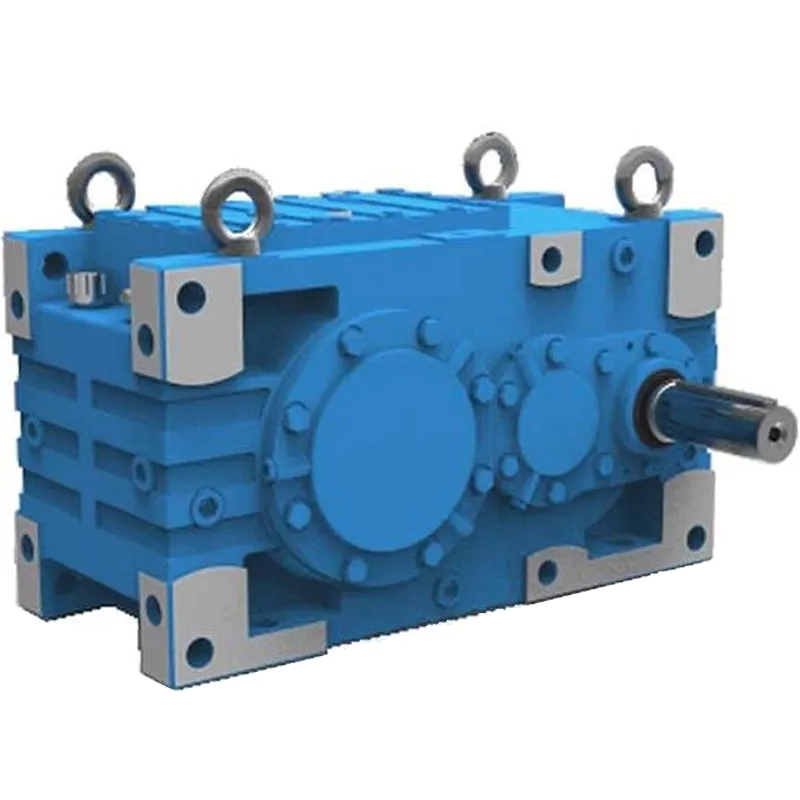
Can you explain the different types of gear reducers available in the market?
There are several types of gear reducers commonly used in industrial applications:
1. Spur Gear Reducers: These reducers have straight teeth and are cost-effective for applications requiring moderate torque and speed reduction. They are efficient but may produce more noise compared to other types.
2. Helical Gear Reducers: Helical gears have angled teeth, which provide smoother and quieter operation compared to spur gears. They offer higher torque capacities and are suitable for heavy-duty applications.
3. Bevel Gear Reducers: Bevel gears have conical shapes and intersect at an angle, allowing them to transmit power between non-parallel shafts. They are commonly used in applications where shafts intersect at 90 degrees.
4. Worm Gear Reducers: Worm gears consist of a worm (screw) and a mating gear (worm wheel). They offer high torque reduction and are used for applications requiring high ratios, although they can be less efficient.
5. Planetary Gear Reducers: These reducers use a system of planetary gears to achieve high torque output in a compact design. They provide excellent torque multiplication and are commonly used in robotics and automation.
6. Cycloidal Gear Reducers: Cycloidal drives use an eccentric cam to achieve speed reduction. They offer high shock load resistance and are suitable for applications with frequent starting and stopping.
7. Harmonic Drive Reducers: Harmonic drives use a flexible spline to achieve high gear reduction ratios. They provide high precision and are commonly used in applications requiring accurate positioning.
8. Hypoid Gear Reducers: Hypoid gears have helical teeth and non-intersecting shafts, making them suitable for applications with space limitations. They offer high torque and efficiency.
Each type of gear reducer has its own advantages and limitations, and the choice depends on factors such as torque requirements, speed ratios, noise levels, space constraints, and application-specific needs.


editor by CX 2024-01-02
China wholesaler 10ton Hydraulic Anchor Winch Planetary Gear Reducer Small Size Easy to Installation gearbox and motor
Product Description
10ton Hydraulic anchor winch planetary gear reducer small size easy to installation
» Brief Introduction
The hydraulic winch is converted into mechanical energy by the hydraulic energy obtained by the hydraulic motor through the hydraulic system,and it is decelerated by the planetary reducer to increase the torsion,which produces a great torque on the drum,and achieves the purpose of dragging heavy objects by winding the steel wire rope on the drum.
» Main Application
Hydraulic winch is a vehicle tool used in automobiles and special vehicles for self-rescue and self-discharge in off-road driving under difficult road conditions.
It can also be used for lifting and pulling heavy objests in construction site,such as engineering installation,oil field drilling,road clearing etc.
It is characterized by compact structure,small size,light weight,large pulling force,simple installation,flexible operation,convenient maintenance,and the hydraulic system of the car itself.
» Product structural drawing
»Performance parameters sheet
| Rated line pull(1st layer) | KN/Kgs/Lbs | 98/10000/22000 |
| Line speed(1st layer) | m/min | 7.5 |
| Response pressure of brake | Mpa/Bar | <2.5/25 |
| Oil pressure | Mpa/Bar | 17/170 |
| Oil flow | L/min | 72 |
| Drum diameterxBottom diameterxLengh(Internal) | mm | 450x295x250 |
| Drum capacity | m | 60 |
| Suggested high-intensity wire rope diameter | mm | ∅18 |
| Net weight | Kg | 305 |
» Features of Hydraulic Winch
1. Full-float typed planetary gear reducer makes the operation more stable, the structure more reasonable.
2. Adopt multidisc-typed friction normally-closed arrester makes the brake torque larger, safer and more reliable.
3. The product is featured by its small size, compact construction and high transmission efficiency.
4. Adopt motor with long use life.
5. The installation bracket can be manufactured according to the customer’s requirement.
6. According to the requirement of customers, manufacture the balance valve and shuffle valve.
»FAQ
Q: Are you trading company or manufacturer ?
A: Yes.We are factory, established in 1998.
Q: What is your terms of payment?
A: T/T 30% in advance, 70% see the B/L copy.
100% Irrevocable LC
Q: What is your terms of delivery?
A: FOB, CFR ,CIF, DDU or as your requirement
Q:Do you supply customized service?
A: Sure! We are manufacturer, and we have our own engineer group. They can work out customized design according to your special requirement.
Q: How about your delivery time?
A: Generally it will take 3 to 25 days after receiving your advance payment. The specific delivery time depends on your purchase quantity.
Q: How about package?
A: Wooden box conforming to export standards.
Q:What information should I provide to you before you could recommend a suitable winch and quote for me?
A: 1. Intended application of the winch (including working condition)
2. Line pull (KN / kgs / lbs)
3. Line speed (m/min)
4. Drum capacity/rope length (m)
5. Rope diameter(if have)
6. Oil pressure and oil flow (if have)
7. Other special requirements
Reach out to us for a complimentary consultation.
| After-sales Service: | 1year |
|---|---|
| Warranty: | 1year |
| Type: | Construction Winch |
| Driven Type: | Hydraulic |
Spee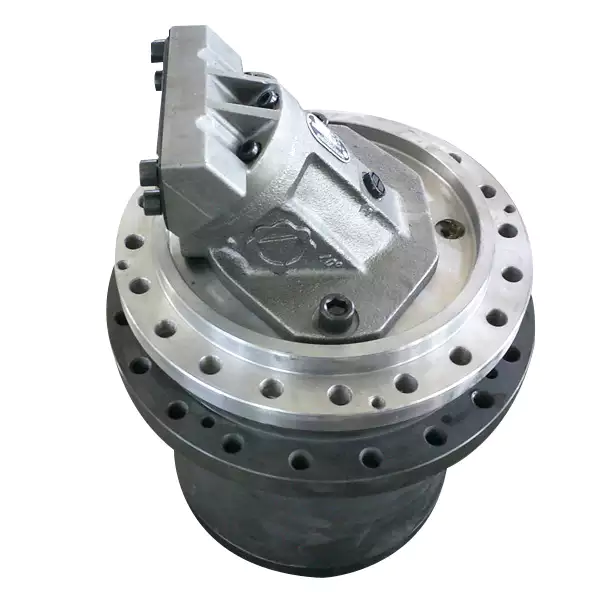
What factors should be considered when selecting the right gear reducer?Choosing the appropriate gear reducer involves considering several crucial factors to ensure optimal performance and efficiency for your specific application:
By carefully assessing these factors and consulting with gear reducer manufacturers, engineers and industry professionals can make informed decisions to select the right gear reducer for their specific application, optimizing performance, longevity, and cost-effectiveness. d: |
Fast |
| Carrying Capacity: | Middle-Level |
| Customization: |
Available
| Customized Request |
|---|
Function of Gear Reducers in Mechanical Systems
A gear reducer, also known as a gear reduction unit or gearbox, is a mechanical device designed to reduce the speed of an input shaft while increasing its torque output. It accomplishes this through the use of a set of interlocking gears with different sizes.
The primary function of a gear reducer in mechanical systems is to:
- Speed Reduction: The gear reducer takes the high-speed rotation of the input shaft and transmits it to the output shaft through a set of gears. The gears are configured in such a way that the output gear has a larger diameter than the input gear. As a result, the output shaft rotates at a lower speed than the input shaft, but with increased torque.
- Torque Increase: Due to the size difference between the input and output gears, the torque applied to the output shaft is greater than that of the input shaft. This torque multiplication allows the system to handle heavier loads and perform tasks requiring higher force.
Gear reducers are widely used in various industries and applications where it’s necessary to adapt the speed and torque characteristics of a power source to meet the requirements of the driven equipment. They can be found in machinery such as conveyor systems, industrial machinery, vehicles, and more.
editor by CX 2023-09-01
China Hydraulic Transmission Planetary Winch Gearbox Drives best automatic gearbox
Solution Description
winch gearbox Specialized Specifications
| Max. output torque CZPT N.m | Rotation Ratio | Hydraulic Motor | Max. enter | Static brake torque Tbrmax. N.m | Brake functioning | |
| rotating | pressure Mpa | |||||
| r/min | ||||||
| 13000 | 16.3,22.6,32.1,37.6 | A2FE45, A2FE56, A2FE63 | A6VE28, A6VE55 | 2000 | 450-900 | 1.8-5 |
| 17000 | 26.4,32.1,forty five.5,fifty four | A2FE45, A2FE56, A2FE63 | A6VE55 | 2000 | five hundred-1000 | one.8-5 |
| 17000 | seventy seven.9,88.2,102.six | A2FE28, A2FE32, A2FE45, A2FE56 | A6VE28, A6VE55 | 2000 | 220-450 | 1.8-5 |
| 24000 | 90.1,102.6,one hundred twenty.five | A2FE45, A2FE56, A2FE63 | A6VE55 | 2000 | four hundred-750 | one.8-5 |
| 36000 | 67,79.4,a hundred,116.six | A2FE45, A2FE56, A2FE63, A2FE80, A2FE90 | A6VE55, A6VE80 | 2000 | 450-800 | one.8-five |
| 50000 | 84.2,91.1,99.8,one hundred twenty five.7,146.four | A2FE80, A2FE90 | A6VE80, A6VE107 | 2000 | 600-1100 | 1.8-five |
| 60000 | 86.5,94.8,a hundred and five.5,119.8,139.9,169.nine | A2FE80, A2FE90, A2FE107, A2FE125 | A6VE80, A6VE107, A6VE160 | 2000 | 800-1200 | 1.8-5 |
| 1100000 | ninety five.8,114.8,128.6,147.2,173.9,215 | A2FE107, A2FE125, A2FE160, A2FE180 | A6VE107, A6VE160 | 2000 | 900-2000 | one.8-five |
| 2200000 | 188.9,246.1,293 | A2FE107, A2FE125, A2FE160, A2FE180 | A6VE107, A6VE160 | 2000 | 1200-2400 | one.8-5 |
| 3300000 | 168.9,209.9,252,302.4 | A2FE250, A2FE355 | A6VE250, A6VE355 | 2000 | 1500-3500 | 1.8-5 |
Comprehensive Photographs
Packaging & Transport
Certifications
|
US $800-2,500 / Piece | |
1 Piece (Min. Order) |
###
| Application: | Motor, Motorcycle, Machinery, Marine, Agricultural Machinery, Car |
|---|---|
| Function: | Change Drive Torque, Speed Changing, Speed Reduction |
| Layout: | Coaxial |
| Hardness: | Hardened Tooth Surface |
| Installation: | Torque Arm Type |
| Step: | Three-Step |
###
| Samples: |
US$ 2000/Piece
1 Piece(Min.Order) |
|---|
###
| Customization: |
Available
|
|---|
###
| Max. output torque Tmax N.m | Rotation Ratio | Hydraulic Motor | Max. input | Static brake torque Tbrmax. N.m | Brake working | |
| rotating | pressure Mpa | |||||
| r/min | ||||||
| 13000 | 16.3,22.6,32.1,37.6 | A2FE45, A2FE56, A2FE63 | A6VE28, A6VE55 | 2000 | 450-900 | 1.8-5 |
| 17000 | 26.4,32.1,45.5,54 | A2FE45, A2FE56, A2FE63 | A6VE55 | 2000 | 500-1000 | 1.8-5 |
| 17000 | 77.9,88.2,102.6 | A2FE28, A2FE32, A2FE45, A2FE56 | A6VE28, A6VE55 | 2000 | 220-450 | 1.8-5 |
| 24000 | 90.1,102.6,120.5 | A2FE45, A2FE56, A2FE63 | A6VE55 | 2000 | 400-750 | 1.8-5 |
| 36000 | 67,79.4,100,116.6 | A2FE45, A2FE56, A2FE63, A2FE80, A2FE90 | A6VE55, A6VE80 | 2000 | 450-800 | 1.8-5 |
| 50000 | 84.2,91.1,99.8,125.7,146.4 | A2FE80, A2FE90 | A6VE80, A6VE107 | 2000 | 600-1100 | 1.8-5 |
| 60000 | 86.5,94.8,105.5,119.8,139.9,169.9 | A2FE80, A2FE90, A2FE107, A2FE125 | A6VE80, A6VE107, A6VE160 | 2000 | 800-1200 | 1.8-5 |
| 1100000 | 95.8,114.8,128.6,147.2,173.9,215 | A2FE107, A2FE125, A2FE160, A2FE180 | A6VE107, A6VE160 | 2000 | 900-2000 | 1.8-5 |
| 2200000 | 188.9,246.1,293 | A2FE107, A2FE125, A2FE160, A2FE180 | A6VE107, A6VE160 | 2000 | 1200-2400 | 1.8-5 |
| 3300000 | 168.9,209.9,252,302.4 | A2FE250, A2FE355 | A6VE250, A6VE355 | 2000 | 1500-3500 | 1.8-5 |
|
US $800-2,500 / Piece | |
1 Piece (Min. Order) |
###
| Application: | Motor, Motorcycle, Machinery, Marine, Agricultural Machinery, Car |
|---|---|
| Function: | Change Drive Torque, Speed Changing, Speed Reduction |
| Layout: | Coaxial |
| Hardness: | Hardened Tooth Surface |
| Installation: | Torque Arm Type |
| Step: | Three-Step |
###
| Samples: |
US$ 2000/Piece
1 Piece(Min.Order) |
|---|
###
| Customization: |
Available
|
|---|
###
| Max. output torque Tmax N.m | Rotation Ratio | Hydraulic Motor | Max. input | Static brake torque Tbrmax. N.m | Brake working | |
| rotating | pressure Mpa | |||||
| r/min | ||||||
| 13000 | 16.3,22.6,32.1,37.6 | A2FE45, A2FE56, A2FE63 | A6VE28, A6VE55 | 2000 | 450-900 | 1.8-5 |
| 17000 | 26.4,32.1,45.5,54 | A2FE45, A2FE56, A2FE63 | A6VE55 | 2000 | 500-1000 | 1.8-5 |
| 17000 | 77.9,88.2,102.6 | A2FE28, A2FE32, A2FE45, A2FE56 | A6VE28, A6VE55 | 2000 | 220-450 | 1.8-5 |
| 24000 | 90.1,102.6,120.5 | A2FE45, A2FE56, A2FE63 | A6VE55 | 2000 | 400-750 | 1.8-5 |
| 36000 | 67,79.4,100,116.6 | A2FE45, A2FE56, A2FE63, A2FE80, A2FE90 | A6VE55, A6VE80 | 2000 | 450-800 | 1.8-5 |
| 50000 | 84.2,91.1,99.8,125.7,146.4 | A2FE80, A2FE90 | A6VE80, A6VE107 | 2000 | 600-1100 | 1.8-5 |
| 60000 | 86.5,94.8,105.5,119.8,139.9,169.9 | A2FE80, A2FE90, A2FE107, A2FE125 | A6VE80, A6VE107, A6VE160 | 2000 | 800-1200 | 1.8-5 |
| 1100000 | 95.8,114.8,128.6,147.2,173.9,215 | A2FE107, A2FE125, A2FE160, A2FE180 | A6VE107, A6VE160 | 2000 | 900-2000 | 1.8-5 |
| 2200000 | 188.9,246.1,293 | A2FE107, A2FE125, A2FE160, A2FE180 | A6VE107, A6VE160 | 2000 | 1200-2400 | 1.8-5 |
| 3300000 | 168.9,209.9,252,302.4 | A2FE250, A2FE355 | A6VE250, A6VE355 | 2000 | 1500-3500 | 1.8-5 |
Key Market Insights Related to Worm Reduction Gearboxes
A gearbox is a mechanical device that allows you to shift between different speeds or gears. It does so by using one or more clutches. Some gearboxes are single-clutch, while others use two clutches. You can even find a gearbox with closed bladders. These are also known as dual clutches and can shift gears more quickly than other types. Performance cars are designed with these types of gearboxes.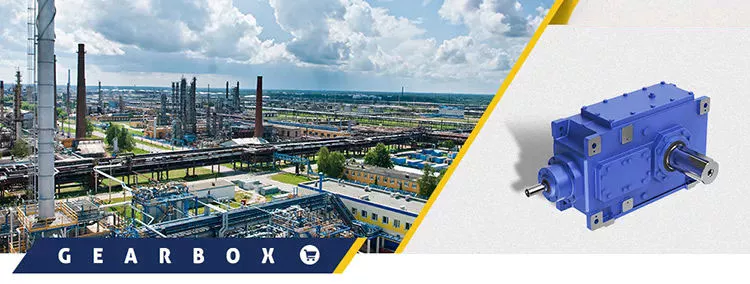
Backlash measurement
Gearbox backlash is a common component that can cause noise or other problems in a car. In fact, the beats and sets of gears in a gearbox are often excited by the oscillations of the engine torque. Noise from gearboxes can be significant, particularly in secondary shafts that engage output gears with a differential ring. To measure backlash and other dimensional variations, an operator can periodically take the output shaft’s motion and compare it to a known value.
A comparator measures the angular displacement between two gears and displays the results. In one method, a secondary shaft is disengaged from the gearbox and a control gauge is attached to its end. A threaded pin is used to secure the differential crown to the secondary shaft. The output pinion is engaged with the differential ring with the aid of a control gauge. The angular displacement of the secondary shaft is then measured by using the dimensions of the output pinion.
Backlash measurements are important to ensure the smooth rotation of meshed gears. There are various types of backlash, which are classified according to the type of gear used. The first type is called circumferential backlash, which is the length of the pitch circle around which the gear rotates to make contact. The second type, angular backlash, is defined as the maximum angle of movement between two meshed gears, which allows the other gear to move when the other gear is stationary.
The backlash measurement for gearbox is one of the most important tests in the manufacturing process. It is a criterion of tightness or looseness in a gear set, and too much backlash can jam a gear set, causing it to interface on the weaker part of its gear teeth. When backlash is too tight, it can lead to gears jamming under thermal expansion. On the other hand, too much backlash is bad for performance.
Worm reduction gearboxes
Worm reduction gearboxes are used in the production of many different kinds of machines, including steel and power plants. They are also used extensively in the sugar and paper industries. The company is constantly aiming to improve their products and services to remain competitive in the global marketplace. The following is a summary of key market insights related to this type of gearbox. This report will help you make informed business decisions. Read on to learn more about the advantages of this type of gearbox.
Compared to conventional gear sets, worm reduction gearboxes have few disadvantages. Worm gear reducers are commonly available and manufacturers have standardized their mounting dimensions. There are no unique requirements for shaft length, height, and diameter. This makes them a very versatile piece of equipment. You can choose to use one or combine several worm gear reducers to fit your specific application. And because they have standardized ratios, you will not have to worry about matching up multiple gears and determining which ones fit.
One of the primary disadvantages of worm reduction gearboxes is their reduced efficiency. Worm reduction gearboxes usually have a maximum reduction ratio of five to sixty. The higher-performance hypoid gears have an output speed of around ten to twelve revolutions. In these cases, the reduced ratios are lower than those with conventional gearing. Worm reduction gearboxes are generally more efficient than hypoid gear sets, but they still have a low efficiency.
The worm reduction gearboxes have many advantages over traditional gearboxes. They are simple to maintain and can work in a range of different applications. Because of their reduced speed, they are perfect for conveyor belt systems.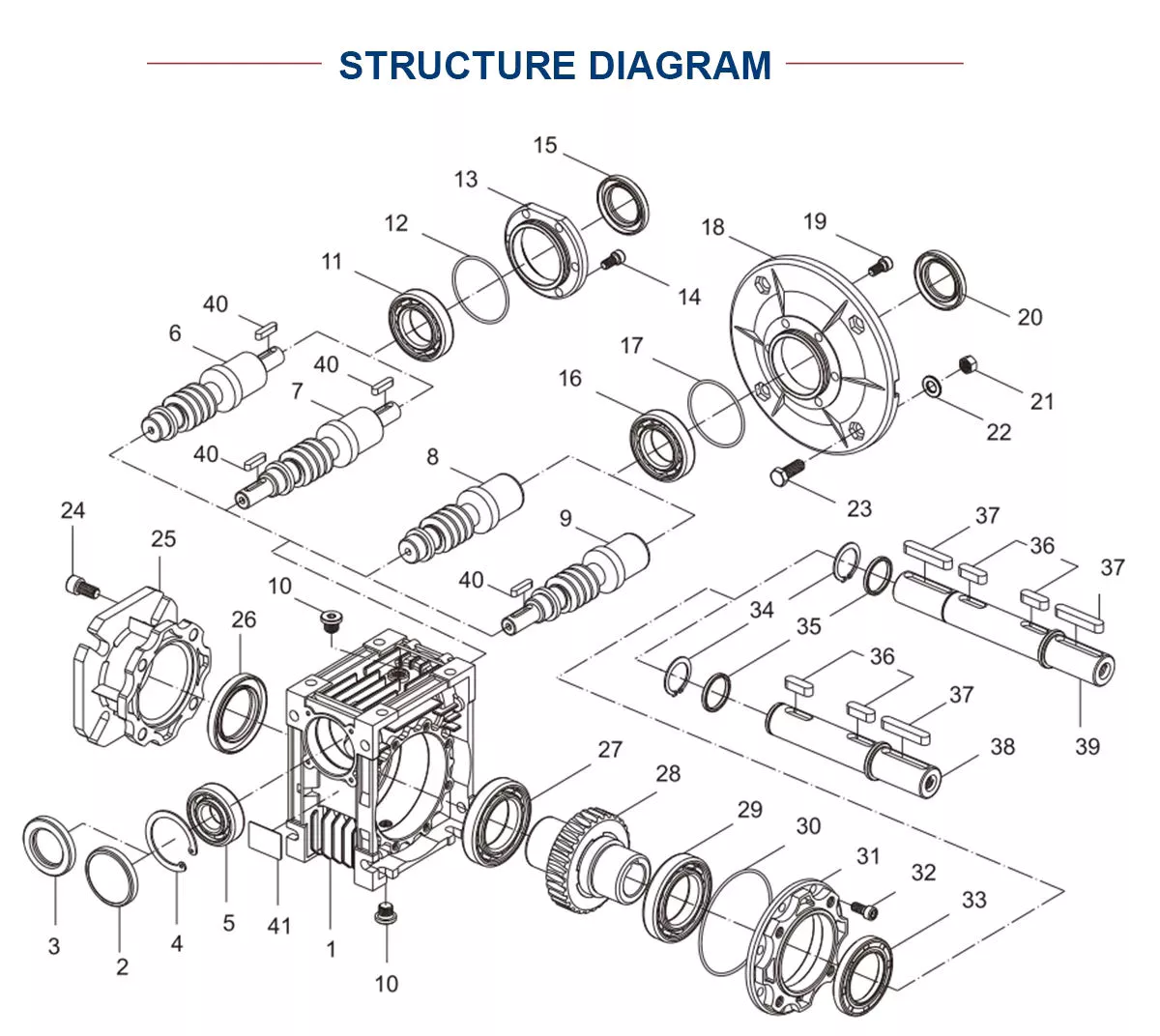
Worm reduction gearboxes with closed bladders
The worm and the gear mesh with each other in a combination of sliding and rolling movements. This sliding action is dominant at high reduction ratios, and the worm and gear are made of dissimilar metals, which results in friction and heat. This limits the efficiency of worm gears to around thirty to fifty percent. A softer material for the gear can be used to absorb shock loads during operation.
A normal gear changes its output independently once a sufficient load is applied. However, the backstop complicates the gear configuration. Worm gears require lubrication because of the sliding wear and friction introduced during movement. A common gear arrangement moves power at the peak load section of a tooth. The sliding happens at low speeds on either side of the apex and occurs at a low velocity.
Single-reduction gearboxes with closed bladders may not require a drain plug. The reservoir for a worm gear reducer is designed so that the gears are in constant contact with lubricant. However, the closed bladders will cause the worm gear to wear out more quickly, which can cause premature wear and increased energy consumption. In this case, the gears can be replaced.
Worm gears are commonly used for speed reduction applications. Unlike conventional gear sets, worm gears have higher reduction ratios. The number of gear teeth in the worm reduces the speed of a particular motor by a substantial amount. This makes worm gears an attractive option for hoisting applications. In addition to their increased efficiency, worm gears are compact and less prone to mechanical failure.
Shaft arrangement of a gearbox
The ray-diagram of a gearbox shows the arrangement of gears in the various shafts of the transmission. It also shows how the transmission produces different output speeds from a single speed. The ratios that represent the speed of the spindle are called the step ratio and the progression. A French engineer named Charles Renard introduced five basic series of gearbox speeds. The first series is the gear ratio and the second series is the reverse gear ratio.
The layout of the gear axle system in a gearbox relates to its speed ratio. In general, the speed ratio and the centre distance are coupled by the gear axles to form an efficient transmission. Other factors that may affect the layout of the gear axles include space constraints, the axial dimension, and the stressed equilibrium. In October 2009, the inventors of a manual transmission disclosed the invention as No. 2. These gears can be used to realize accurate gear ratios.
The input shaft 4 in the gear housing 16 is arranged radially with the gearbox output shaft. It drives the lubricating oil pump 2. The pump draws oil from a filter and container 21. It then delivers the lubricating oil into the rotation chamber 3. The chamber extends along the longitudinal direction of the gearbox input shaft 4, and it expands to its maximum diameter. The chamber is relatively large, due to a detent 43.
Different configurations of gearboxes are based on their mounting. The mounting of gearboxes to the driven equipment dictates the arrangement of shafts in the gearbox. In certain cases, space constraints also affect the shaft arrangement. This is the reason why the input shaft in a gearbox may be offset horizontally or vertically. However, the input shaft is hollow, so that it can be connected to lead through lines or clamping sets.
Mounting of a gearbox
In the mathematical model of a gearbox, the mounting is defined as the relationship between the input and output shafts. This is also known as the Rotational Mount. It is one of the most popular types of models used for drivetrain simulation. This model is a simplified form of the rotational mount, which can be used in a reduced drivetrain model with physical parameters. The parameters that define the rotational mount are the TaiOut and TaiIn of the input and output shaft. The Rotational Mount is used to model torques between these two shafts.
The proper mounting of a gearbox is crucial for the performance of the machine. If the gearbox is not aligned properly, it may result in excessive stress and wear. It may also result in malfunctioning of the associated device. Improper mounting also increases the chances of the gearbox overheating or failing to transfer torque. It is essential to ensure that you check the mounting tolerance of a gearbox before installing it in a vehicle.
editor by czh 2023-02-04