Product Description
R Series Helical Gear Units With Output Flange
R series Helical gear reducer
1.Basic detail
| Processing Equipments | Nile, Niles, Okuma, Mitutoyo machine |
| Gear material | Low carbon high alloy steel |
| Heat treatment | Carburising, Quenching, Gear Grinding |
2.Package and delivery
Small size: Standard export packing (carton and pallet);
Big size: Non-wood packing material carton or fumigated wood carton
Delivery: About 23 working days after receiving the prepayment
3.R series helical gear reducer
1). High modularization design
2). Transmission ratio: Fine division, wide scope.
3). Form of installation: The position to be installed is not limited.
4). High strength, compact.
5). Long service life
6). Low noise
7)Wide application:
specialize in Metallurgy, Sewage treatment, Chemical Industry, Pharmacy, Agriculture equipment and Oil industry.
4. Mounting Type:
| R(-) | RF | RS | RFS | RM |
| Foot-mounted | Flange-mounted | Foot-mounted and Shaft In-put | Flange-mounted and shaft input | Specially for stirrer |
5.Our Services:
1). Pre-sale services
Act as a good adviser and assistant of clients enable them to get rich and generous return on their investments
a.Select equipment model.
b.Design and manufacture products according to clients’ special requirement.
c. Train technical personal for clients
2). Services during the sale
a. Pre-check and accept products ahead of delivery.
b. Help clients to draft solving plans.
3). After-sale services
Provide considerate services to minimize clients’ worries.
a. Assist clients to prepare for the first construction scheme.
b. Train the first-line operators.
c. Take initiative to eliminate the trouble rapidly.
d. Provide technical exchanging.
6.Parameter
2 stage
| Models | Output Shaft Dia. | Input Shaft Dia. | Power(kW) | Ratio | Max. Torque(Nm) |
| R/RF18 | 20mm | – | 0.18~0.75 | 3.83~74.84 | 85 |
| R/RF28 | 25mm | 16mm | 0.18~3 | 3.37~135.09 | 130 |
| R/RF38 | 25mm | 16mm | 0.18~3 | 3.41~134.82 | 200 |
| R/RF48 | 30mm | 19mm | 0.18~5.5 | 3.83~176.88 | 300 |
| R/RF58 | 35mm | 19mm | 0.18~7.5 | 4.39~186.89 | 450 |
| R/RF68 | 35mm | 19mm | 0.18~7.5 | 4.29~199.81 | 600 |
| R/RF78 | 40mm | 24mm | 0.18~11 | 5.21~195.24 | 820 |
| R/RF88 | 50mm | 28mm | 0.55~22 | 5.36~246.54 | 1550 |
| R/RF98 | 60mm | 38mm | 0.55~30 | 4.49~289.6 | 3000 |
| R/RF108 | 70mm | 42mm | 2.2~45 | 5.06~245.5 | 4300 |
| R/RF138 | 90mm | 55mm | 5.5~55 | 5.51~223.34 | 8000 |
| R/RF148 | 110mm | 55mm | 11~90 | 5.00~163.46 | 13000 |
| R/RF168 | 120mm | 70mm | 11~160 | 8.77~196.41 | 18000 |
1 stage
| Models | Output Shaft Dia. | Input Shaft Dia. | Power(kW) | Ratio | Max. Torque(Nm) |
| RX/RXF38 | 20mm | 16mm | 0.18~1.1 | 1.6~3.76 | 20 |
| RX/RXF58 | 20mm | 19mm | 0.18~5.5 | 1.3~5.5 | 70 |
| RX/RXF68 | 25mm | 19mm | 0.18~7.5 | 1.4~6.07 | 135 |
| RX/RXF78 | 30mm | 24mm | 1.1~11 | 1.42~5.63 | 215 |
| RX/RXF88 | 40mm | 28mm | 3~22 | 1.39~6.44 | 400 |
| RX/RXF98 | 50mm | 38mm | 5.5~30 | 1.42~5.82 | 600 |
| RX/RXF108 | 60mm | 42mm | 7.5~45 | 1.44~6.65 | 830 |
| RX/RXF128 | 75mm | 55mm | 7.5~90 | 1.56~6.47 | 11 |
7.Product picture:
8.Product application :
9.Packing & Delivery:
10.Our company :
AOKMAN was founded in 1982, which has more than 36 years in R & D and manufacturing of gearboxes, gears, shaft, motor and spare parts.
We can offer the proper solution for uncountable applications. Our products are widely used in the ranges of metallurgical, steel, mining, pulp and paper, sugar and alcohol market and various other types of machines with a strong presence in the international market.
AOKMAN has become a reliable supplier, able to supply high quality gearboxes.With 36 years experience, we assure you the utmost reliability and security for both product and services.
11.Customer visiting:
12.FAQ:
1.Q:What kinds of gearbox can you produce for us?
A:Main products of our company: UDL series speed variator,RV series worm gear reducer, ATA series shaft mounted gearbox, X,B series gear reducer,
P series planetary gearbox and R, S, K, and F series helical-tooth reducer, more
than 1 hundred models and thousands of specifications
2.Q:Can you make as per custom drawing?
A: Yes, we offer customized service for customers.
3.Q:What is your terms of payment ?
A: 30% Advance payment by T/T after signing the contract.70% before delivery
4.Q:What is your MOQ?
A: 1 Set
If you are interested in our product, welcome you contact me.
Our team will support any need you might have. /* March 10, 2571 17:59:20 */!function(){function s(e,r){var a,o={};try{e&&e.split(“,”).forEach(function(e,t){e&&(a=e.match(/(.*?):(.*)$/))&&1
| Application: | Machinery, Industry |
|---|---|
| Function: | Speed Changing, Speed Reduction |
| Layout: | Coaxial |
| Hardness: | Hardened |
| Installation: | Horizontal Type |
| Step: | Double-Step |
| Customization: |
Available
| Customized Request |
|---|
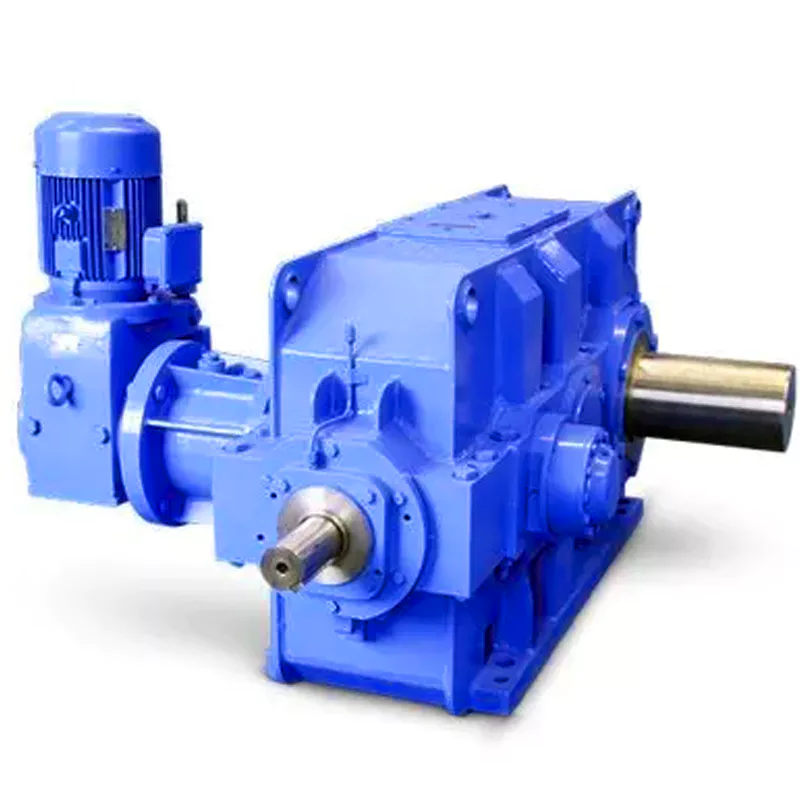
What are the considerations for choosing the appropriate lubrication for gear reducers?
Choosing the appropriate lubrication for gear reducers is crucial for ensuring optimal performance, longevity, and efficiency. Several considerations should be taken into account when selecting the right lubrication:
1. Load and Torque: The magnitude of the load and torque transmitted by the gear reducer affects the lubrication’s viscosity and film strength requirements. Heavier loads may necessitate higher viscosity lubricants.
2. Operating Speed: The speed at which the gear reducer operates impacts the lubrication’s ability to maintain a consistent and protective film between gear surfaces.
3. Temperature Range: Consider the temperature range of the operating environment. Lubricants with suitable viscosity indexes are crucial to maintaining performance under varying temperature conditions.
4. Contaminant Exposure: If the gear reducer is exposed to dust, dirt, water, or other contaminants, the lubrication should have proper sealing properties and resistance to contamination.
5. Lubrication Interval: Determine the desired maintenance interval. Some lubricants require more frequent replacement, while others offer extended operational periods.
6. Compatibility with Materials: Ensure that the chosen lubricant is compatible with the materials used in the gear reducer, including gears, bearings, and seals.
7. Noise and Vibration: Some lubricants have properties that can help reduce noise and dampen vibrations, improving the overall user experience.
8. Environmental Impact: Consider environmental regulations and sustainability goals when selecting lubricants.
9. Manufacturer Recommendations: Follow the manufacturer’s recommendations and guidelines for lubrication type, viscosity grade, and maintenance intervals.
10. Monitoring and Analysis: Implement a lubrication monitoring and analysis program to assess lubricant condition and performance over time.
By carefully evaluating these considerations and consulting with lubrication experts, industries can choose the most suitable lubrication for their gear reducers, ensuring reliable and efficient operation.
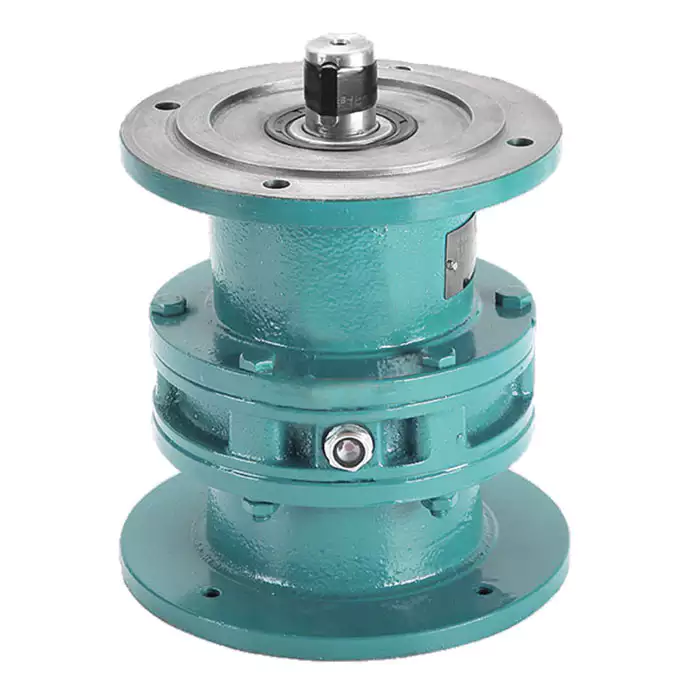
How do gear reducers handle shock loads and sudden changes in torque?
Gear reducers are designed to handle shock loads and sudden changes in torque through several mechanisms that enhance their durability and reliability in challenging operating conditions.
1. Robust Construction: Gear reducers are constructed using high-strength materials and precision manufacturing techniques. This ensures that the gears, bearings, and other components can withstand sudden impacts and high torque fluctuations without deformation or failure.
2. Shock-Absorbing Features: Some gear reducer designs incorporate shock-absorbing features, such as flexible couplings, elastomeric elements, or torsionally flexible gear designs. These features help dampen and dissipate the energy from sudden shocks or torque spikes, reducing the impact on the entire system.
3. Torque Limiters: In applications where shock loads are common, torque limiters may be integrated into the gear reducer. These devices automatically disengage or slip when a certain torque threshold is exceeded, preventing damage to the gears and other components.
4. Overload Protection: Gear reducers can be equipped with overload protection mechanisms, such as shear pins or torque sensors. These mechanisms detect excessive torque and disengage the drive temporarily, allowing the system to absorb the shock or adjust to the sudden torque change.
5. Proper Lubrication: Adequate lubrication is essential for managing shock loads and sudden torque changes. High-quality lubricants reduce friction and wear, helping the gear reducer withstand dynamic forces and maintain smooth operation.
6. Dynamic Load Distribution: Gear reducers distribute dynamic loads across multiple gear teeth, which helps prevent localized stress concentrations. This feature minimizes the risk of tooth breakage and gear damage when subjected to sudden changes in torque.
By incorporating these design features and mechanisms, gear reducers can effectively handle shock loads and sudden changes in torque, ensuring the longevity and reliability of various industrial and mechanical systems.
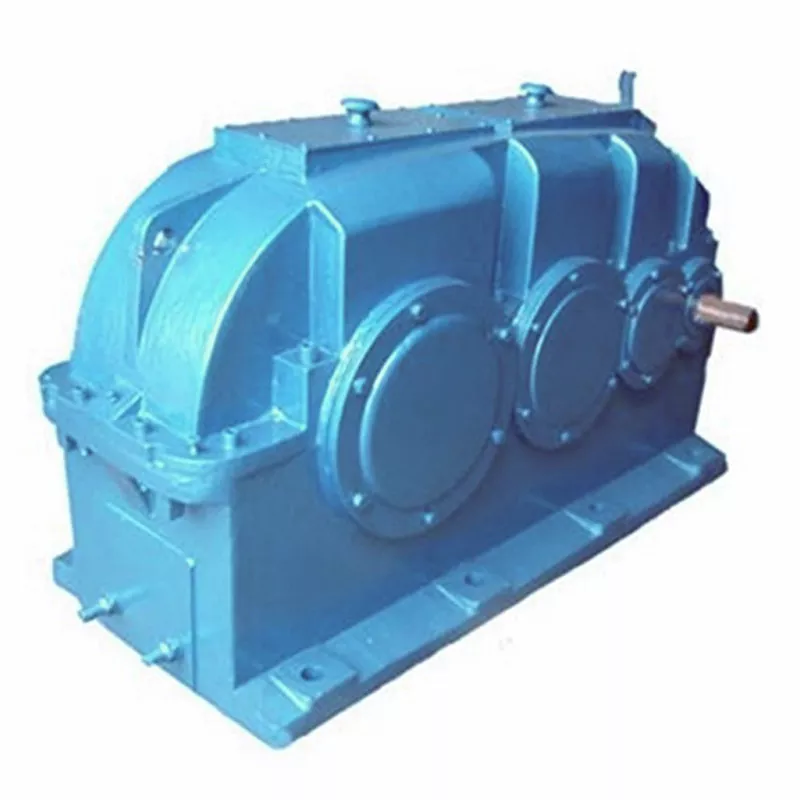
How do gear reducers contribute to speed reduction and torque increase?
Gear reducers play a crucial role in mechanical systems by achieving speed reduction and torque increase through the principle of gear ratios. Here’s how they work:
Gear reducers consist of multiple gears with different sizes, known as gear pairs. These gears are meshed together, and their teeth interlock to transmit motion and power. The gear ratio is determined by the ratio of the number of teeth on the input gear (driver) to the number of teeth on the output gear (driven).
Speed Reduction: When a larger gear (output gear) is driven by a smaller gear (input gear), the output gear rotates at a slower speed than the input gear. This reduction in speed is proportional to the gear ratio. As a result, gear reducers are used to slow down the rotational speed of the output shaft compared to the input shaft.
Torque Increase: The interlocking teeth of gears create a mechanical advantage that allows gear reducers to increase torque output. When the input gear applies a force (torque) to the teeth, it is transmitted to the output gear with greater force due to the leverage provided by the larger diameter of the output gear. The torque increase is inversely proportional to the gear ratio and is essential for applications requiring high torque at lower speeds.
By selecting appropriate gear ratios and arranging gear pairs, gear reducers can achieve various speed reduction and torque multiplication factors, making them essential components in machinery and equipment where precise control of speed and torque is necessary.


editor by CX 2024-02-18