Product Description
Product Description
SGR straight 3 stage Planetary Gearbox
Technical data:
1. Ratio range: 8.1-191
2. Input power: 0.12-270 KW
3. Permit torque rang: ≤ 50000 N. M
4. Output speed: 0.3~205 r/min
5. Structure: Foot-mounted, flange-mounted, shaft-mounted
| Input structure | motor,IEC flange |
| Output speed | motor,IEC flange,input shaft |
| solid shaft, hollow shaft with key,with shrink disk |
Characteristic:
1. Adopt optimized design, module combination, right angle output, space reduction
2. High strength and longevity gears
3. Can be combined with various motors, wider ratio range
4. Big output torque, smoothly startup, high efficiency
Production pictures:
———————————————————————————————————————————————
FAQ:
1.Are you a factory or trader ?
We are a professional factory which has 20 years history specialized in gear transmission .
2.MOQ:
Our MOQ is 1pcs. However there is 1 handling cost $150 for the single order which less than $3000.00
3. Warranty
Our warranty is 12months
4. Payment term
100% T/T in advance and LC at sight .
5. Do you accept customization ?
YES.SGR have strong R&D team, we can provide customizable service according to requirements.
6. Packing
Generally we use standard export plywood case to arrange the shipment .
7. Delivery time
In normal ,time of delivery is 30days after receiving the prepayment .
8. What kinds of certification do you use ?
DNV-ISO9001:2008, SGS,CE etc, And new products patent.
9. What kinds of inspection you do before shipment ?
We do temperature test, noise, and oil leak inspection and commissioning before shipment.
10.How do you solve if the production have problem ?
Mostly, we don’t need customer send the goods back to us. Because the cost is very high, if there meets a problem,we firstly ask for the pictures for damaged parts. And base on the pictures, we can have a basic idea for the defect reason. Our guarantee is 12 months, if during the guarantee, we can supply repair .
| Application: | Motor, Machinery |
|---|---|
| Function: | Distribution Power, Change Drive Torque, Speed Reduction |
| Layout: | Coaxial |
| Hardness: | Hardened Tooth Surface |
| Installation: | Vertical Type |
| Step: | Single-Step |
| Samples: |
US$ 200/Piece
1 Piece(Min.Order) | |
|---|
| Customization: |
Available
| Customized Request |
|---|
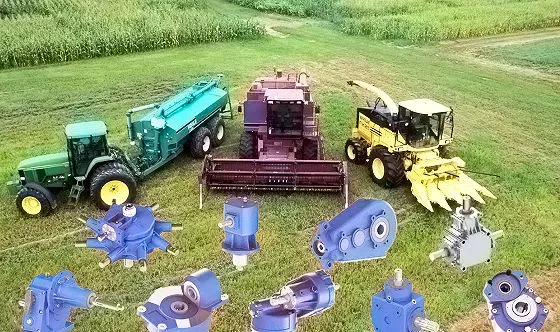
Types of Vehicle Gearboxes
In a vehicle, there are many types of gearboxes available. There are planetary gearboxes, Coaxial helical gearboxes, and skew bevel helical gearboxes, among others. In this article, we’ll cover all of them and help you determine which type of gearbox would be right for your vehicle. Also, we’ll discuss how each differs from the others.
planetary gearbox
A planetary gearbox is composed of three main components: a sun gear, an input bevel gear, and an output shaft. A planetary gearbox can have different output torques and ratios. The basic model of a planetary gearbox is highly efficient and transmits 97% of the power input. There are several kinds of planetary gearboxes, depending on the type of operation. In general, there are three types: the simple, the intermediate, and the complex.
The price of a planetary gearbox can vary a lot, and it’s important to know what you’ll need. Different manufacturers produce different planetary gearboxes, so check with a manufacturer to see what they have available. Make sure to check the quality of the planetary gearbox before making a final purchase. In addition, be sure to compare the prices and the availability of a particular product. A quality planetary gearbox will provide years of trouble-free operation and will not break your bank.
Planetary gears feature an integer number of teeth. Each planet has teeth that must mesh with its ring or sun. The number of planets, ring, and tooth count of each gear determine whether the teeth mesh. Some planets have fewer teeth than others, so they mesh better than others. However, compound planets can be more flexible and achieve higher reduction ratios. If you’re looking for a planetary gearbox for your next project, consider getting in touch with a manufacturer who specializes in this technology.
When it comes to construction, a planetary gearbox is no exception. It’s extremely important to choose the right planetary gear for your application, because an imbalance in the planet gear can cause increased wear and failure. Moreover, the compact size of a planetary gear ensures maximum heat dissipation. However, a planetary gear box may require cooling in some applications. A planetary gearbox will make your life easier, and it will give you years of trouble-free operation.
Straight bevel helical gearbox
The Straight bevel helical gearbox has a number of advantages, but it has a relatively short manufacturing process. Its most popular application is in the automotive industry, where it is used in many types of vehicles. Other applications include heavy and light equipment and the aviation and marine industries. Below is a brief introduction to this gearbox type. Read on to learn about its benefits. This type of gearbox is one of the easiest to manufacture.
The spiral bevel gear has larger teeth than straight bevel gears, resulting in a smoother, quieter rotation. It can handle high-speed heavy loads with less vibration. Spiral bevel gears are classified by their tooth form and cutting method. Straight bevel gears are easier to design and manufacture, but spiral bevel gears are more expensive. Both designs are suitable for high-speed, heavy-load operations, and general manufacturing applications.
In addition to being easy to install, the modular bevel gears have many advantages. They have an exceptionally high degree of interchangeability and feature the highest standards of component integrity. They can also be tailored to meet your specific requirements. The advantages of this gearbox type include high precision, optimum performance, and low noise. And because they are modular, they can be produced in a variety of finishes. These include stainless steel, titanium, and bronze.
Straight bevel helical gearbox manufacturers are committed to a high degree of precision in their designs. The radii, torques, and tooth profiles of straight bevel gears are more precisely measured than those of cylindrical bevel gears. The same calculations are used for all traditional bevel gear generators. This ensures that your 5-axis milled bevel gear sets have the same calculations and layout.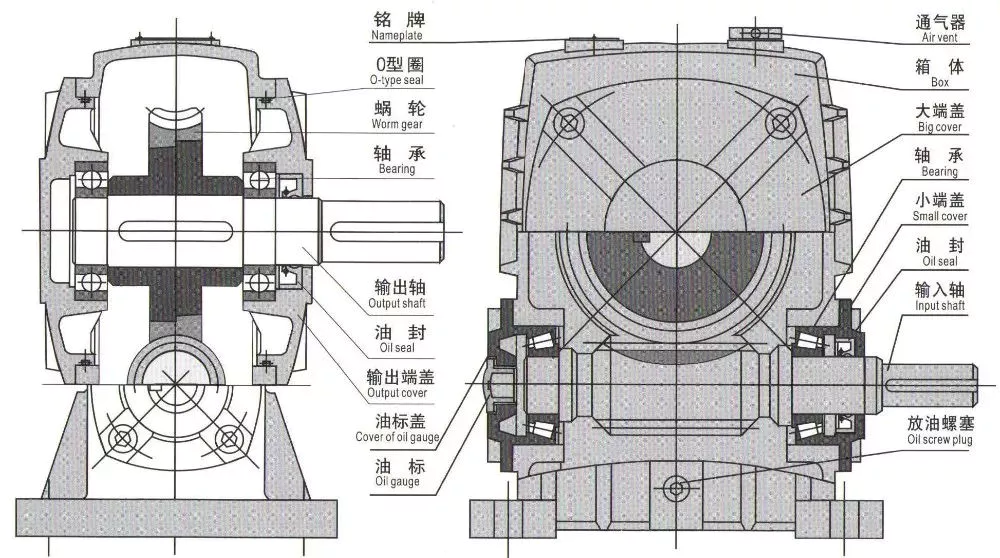
Coaxial helical gearbox
The Coaxial helical gearbox is a highly efficient transmission system that is well suited for light-duty applications. Compared to spur-type gearboxes, the real pitch of a Coaxial helical gearbox is low at all helix angles. This is because the coaxial type has the same number of teeth and center gap as the spur gearbox. Coaxial helical gearboxes also have a smaller footprint and are compact.
Several nations have implemented lockdown regulations for Industrial Gearbox trade, threatening the global economy. Several factors have been implicated in COVID-19, including supply chain, market, and financial markets. Experts are monitoring the situation globally and project remunerative prospects for gearbox manufacturers after the crisis. This report depicts the latest scenario and offers a comprehensive analysis of COVID-19’s impact on the entire industry.
This Coaxial helical gearbox features a compact structure and high precision gear. Its three-stage design combines two-stage gears with a single-stage gear, forging high-quality alloy steel for high precision and durability. The gears are serially-designed for easy interchangeability. They are also available in high-frequency heat-treated steel. A Coaxial helical gearbox is the perfect solution for many applications.
Coaxial helical gearboxes have the added benefit of using cylindrical gears instead of shafts. They operate quietly, and have more surface area to interact with. Their fixed angles make them suitable for heavy-duty applications, like in conveyors, coolers, and grinders. Compared to other gearbox types, Helical gearboxes have higher power-carrying capacity. Listed below are the benefits of a Coaxial Helical Gearbox
Skew bevel helical gearbox
A Skew bevel helical gear box is a common type of industrial gearbox. These gearboxes are rigid and compact and can be used in a variety of applications. They are commonly used in heavy-duty applications such as grinding mills, conveyors, and coolers. They are used in many applications to provide rotary motions between non-parallel shafts. They also have the added benefit of high-efficiency in a variety of industries.
Skew bevel helical gear boxes are suitable for heavy loads and are monolithic in construction. This type of gearbox combines the benefits of bevel and helical gears for right-angle torque, which makes it a popular choice for heavy-duty applications. In addition to being a robust and reliable gearbox, these gearboxes are highly customizable and can meet almost any industrial need.
To maximize the efficiency of bevel gears, FE-based tooth contact analysis is used to develop a sophisticated geometry optimization algorithm. The software also allows users to define optimal flank topography by introducing application-specific weightings for specific load levels. With this data, a manufacturing simulation is conducted to determine the best variant. A robust variant combines the benefits of efficiency, load-carrying capacity, and low excitation behavior.
The helical gear can be angled at 90 degrees. This is similar to a spur gear but produces less noise. It can achieve a nine-to-one speed reduction with one stage. However, a helical gear requires a larger driver gear for higher reductions. This gearbox is suitable for speeds from 1:1 to three times. They are often used in the manufacture of motors and generators.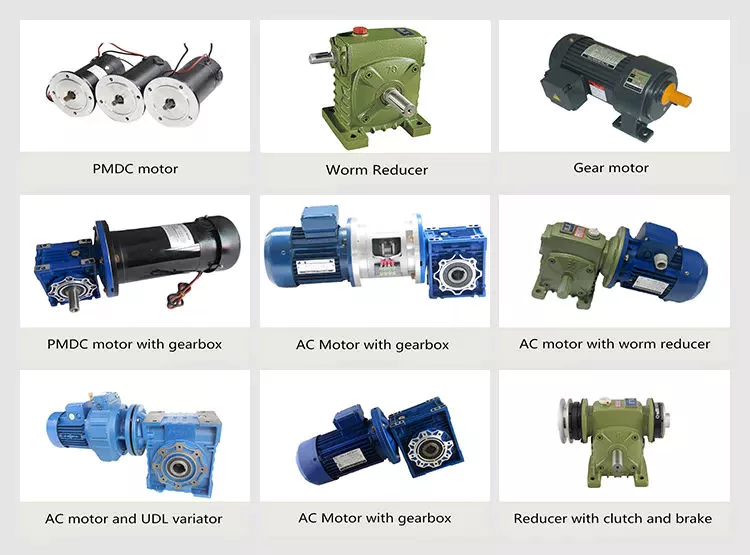
Extruder helical gearbox
An extruder helical gearbox is one of the most common industrial gears. It is compact in size and low-power consuming, making it ideal for heavy-duty applications. Extruder helical gearboxes are suitable for a variety of industrial applications, including cement, plastics, rubber, conveyors, and coolers. In addition to its use in plastics and rubber manufacturing, this gearbox is also useful in other low-power applications such as crushers, coolers, and conveyors.
CZPT SG series Extruder Helical Gearboxes are available in Single Screw and Twin Screw Variations. These gears feature a compact design, high power density, and long service life. Axial bearing housing and thrust bearings are mounted on the input shafts. Extruder helical gearboxes can be installed in various positions, including horizontal, vertical, and inclined.
Helicoidal gears are often produced in a modular manner. This design provides multiple benefits, including engineering and performance advantages, modular production, and the highest level of component integrity. A single helical gearbox can be assembled into a larger gearbox if needed, but modular production ensures consistent performance and economy. This modular design is also cost-effective. It is a versatile and reliable solution for a wide range of applications.
In addition to its efficiencies, Extruder helical gearboxes also have a low noise profile. They have no squeal sounds, and they are silent when running. They can transfer more power than conventional gearboxes. This type of gear has been used in the manufacturing of high-quality plastic products for years. They are often used for applications in automotive transmissions. Aside from being quiet, helical gears have higher contact levels and lower vibration.


editor by CX 2023-05-30
China wholesaler Qiangzhu Aluminium Double Input Shaft RV Series Gear Box automatic gearbox
Product Description
Aluminium Double Input Shaft RV Series Gear Box. Helical gearbox series not only has higher transmission efficiency and loading capability than those of single-stage worm wheel transmission, but also reduces space. Moreover, under the close volume, the series can obtain higher transmission ratio and is more favorable for equipment setting. This product can be combined with various reducers to meet different requirements. S series with self-lock function
Energy Efficiency: Leveraging the advantages of high efficiency of helical gears and smooth transmission of worm gears, the reducer performs with outstanding stability and efficiency is above 90%
Loading Capacity: Available with power ranges from 0.12KW to 37KW, depending on different requirements and applications.
Installation Flexibility: All models are designed for a choice of mounting position M1-M6 specified by customers.
RICHMAN UNIVERSAL SOURCING CO LIMITED is located in HangZhou ZheJiang . With more than 20 years experience in gear transmission area, we have our owned factory and product lines. Worm reducer (WP series; RV series; VF series), screw jack reducer (WSH series) and helical gearbox (K,S,R,F series) are current mainly products. Strict and precision quality control procedure makes the final products meet demands of our customers.
We try to develop different markets, cooperate with kinds of customers, which can makes us keep moving forward, keep innovative and international vision. Richman Universal Sourcing is your best partner of transmission resolutions.
| Application: | Motor, Machinery |
|---|---|
| Function: | Change Drive Torque, Change Drive Direction, Speed Reduction |
| Layout: | Coaxial |
| Hardness: | Hardened Tooth Surface |
| Installation: | Vertical Type |
| Step: | Three-Step |
| Customization: |
Available
| Customized Request |
|---|
Types of Vehicle Gearboxes
In a vehicle, there are many types of gearboxes available. There are planetary gearboxes, Coaxial helical gearboxes, and skew bevel helical gearboxes, among others. In this article, we’ll cover all of them and help you determine which type of gearbox would be right for your vehicle. Also, we’ll discuss how each differs from the others.
planetary gearbox
A planetary gearbox is composed of three main components: a sun gear, an input bevel gear, and an output shaft. A planetary gearbox can have different output torques and ratios. The basic model of a planetary gearbox is highly efficient and transmits 97% of the power input. There are several kinds of planetary gearboxes, depending on the type of operation. In general, there are three types: the simple, the intermediate, and the complex.
The price of a planetary gearbox can vary a lot, and it’s important to know what you’ll need. Different manufacturers produce different planetary gearboxes, so check with a manufacturer to see what they have available. Make sure to check the quality of the planetary gearbox before making a final purchase. In addition, be sure to compare the prices and the availability of a particular product. A quality planetary gearbox will provide years of trouble-free operation and will not break your bank.
Planetary gears feature an integer number of teeth. Each planet has teeth that must mesh with its ring or sun. The number of planets, ring, and tooth count of each gear determine whether the teeth mesh. Some planets have fewer teeth than others, so they mesh better than others. However, compound planets can be more flexible and achieve higher reduction ratios. If you’re looking for a planetary gearbox for your next project, consider getting in touch with a manufacturer who specializes in this technology.
When it comes to construction, a planetary gearbox is no exception. It’s extremely important to choose the right planetary gear for your application, because an imbalance in the planet gear can cause increased wear and failure. Moreover, the compact size of a planetary gear ensures maximum heat dissipation. However, a planetary gear box may require cooling in some applications. A planetary gearbox will make your life easier, and it will give you years of trouble-free operation.
Straight bevel helical gearbox
The Straight bevel helical gearbox has a number of advantages, but it has a relatively short manufacturing process. Its most popular application is in the automotive industry, where it is used in many types of vehicles. Other applications include heavy and light equipment and the aviation and marine industries. Below is a brief introduction to this gearbox type. Read on to learn about its benefits. This type of gearbox is one of the easiest to manufacture.
The spiral bevel gear has larger teeth than straight bevel gears, resulting in a smoother, quieter rotation. It can handle high-speed heavy loads with less vibration. Spiral bevel gears are classified by their tooth form and cutting method. Straight bevel gears are easier to design and manufacture, but spiral bevel gears are more expensive. Both designs are suitable for high-speed, heavy-load operations, and general manufacturing applications.
In addition to being easy to install, the modular bevel gears have many advantages. They have an exceptionally high degree of interchangeability and feature the highest standards of component integrity. They can also be tailored to meet your specific requirements. The advantages of this gearbox type include high precision, optimum performance, and low noise. And because they are modular, they can be produced in a variety of finishes. These include stainless steel, titanium, and bronze.
Straight bevel helical gearbox manufacturers are committed to a high degree of precision in their designs. The radii, torques, and tooth profiles of straight bevel gears are more precisely measured than those of cylindrical bevel gears. The same calculations are used for all traditional bevel gear generators. This ensures that your 5-axis milled bevel gear sets have the same calculations and layout.
Coaxial helical gearbox
The Coaxial helical gearbox is a highly efficient transmission system that is well suited for light-duty applications. Compared to spur-type gearboxes, the real pitch of a Coaxial helical gearbox is low at all helix angles. This is because the coaxial type has the same number of teeth and center gap as the spur gearbox. Coaxial helical gearboxes also have a smaller footprint and are compact.
Several nations have implemented lockdown regulations for Industrial Gearbox trade, threatening the global economy. Several factors have been implicated in COVID-19, including supply chain, market, and financial markets. Experts are monitoring the situation globally and project remunerative prospects for gearbox manufacturers after the crisis. This report depicts the latest scenario and offers a comprehensive analysis of COVID-19’s impact on the entire industry.
This Coaxial helical gearbox features a compact structure and high precision gear. Its three-stage design combines two-stage gears with a single-stage gear, forging high-quality alloy steel for high precision and durability. The gears are serially-designed for easy interchangeability. They are also available in high-frequency heat-treated steel. A Coaxial helical gearbox is the perfect solution for many applications.
Coaxial helical gearboxes have the added benefit of using cylindrical gears instead of shafts. They operate quietly, and have more surface area to interact with. Their fixed angles make them suitable for heavy-duty applications, like in conveyors, coolers, and grinders. Compared to other gearbox types, Helical gearboxes have higher power-carrying capacity. Listed below are the benefits of a Coaxial Helical Gearbox
Skew bevel helical gearbox
A Skew bevel helical gear box is a common type of industrial gearbox. These gearboxes are rigid and compact and can be used in a variety of applications. They are commonly used in heavy-duty applications such as grinding mills, conveyors, and coolers. They are used in many applications to provide rotary motions between non-parallel shafts. They also have the added benefit of high-efficiency in a variety of industries.
Skew bevel helical gear boxes are suitable for heavy loads and are monolithic in construction. This type of gearbox combines the benefits of bevel and helical gears for right-angle torque, which makes it a popular choice for heavy-duty applications. In addition to being a robust and reliable gearbox, these gearboxes are highly customizable and can meet almost any industrial need.
To maximize the efficiency of bevel gears, FE-based tooth contact analysis is used to develop a sophisticated geometry optimization algorithm. The software also allows users to define optimal flank topography by introducing application-specific weightings for specific load levels. With this data, a manufacturing simulation is conducted to determine the best variant. A robust variant combines the benefits of efficiency, load-carrying capacity, and low excitation behavior.
The helical gear can be angled at 90 degrees. This is similar to a spur gear but produces less noise. It can achieve a nine-to-one speed reduction with one stage. However, a helical gear requires a larger driver gear for higher reductions. This gearbox is suitable for speeds from 1:1 to three times. They are often used in the manufacture of motors and generators.
Extruder helical gearbox
An extruder helical gearbox is one of the most common industrial gears. It is compact in size and low-power consuming, making it ideal for heavy-duty applications. Extruder helical gearboxes are suitable for a variety of industrial applications, including cement, plastics, rubber, conveyors, and coolers. In addition to its use in plastics and rubber manufacturing, this gearbox is also useful in other low-power applications such as crushers, coolers, and conveyors.
CZPT SG series Extruder Helical Gearboxes are available in Single Screw and Twin Screw Variations. These gears feature a compact design, high power density, and long service life. Axial bearing housing and thrust bearings are mounted on the input shafts. Extruder helical gearboxes can be installed in various positions, including horizontal, vertical, and inclined.
Helicoidal gears are often produced in a modular manner. This design provides multiple benefits, including engineering and performance advantages, modular production, and the highest level of component integrity. A single helical gearbox can be assembled into a larger gearbox if needed, but modular production ensures consistent performance and economy. This modular design is also cost-effective. It is a versatile and reliable solution for a wide range of applications.
In addition to its efficiencies, Extruder helical gearboxes also have a low noise profile. They have no squeal sounds, and they are silent when running. They can transfer more power than conventional gearboxes. This type of gear has been used in the manufacturing of high-quality plastic products for years. They are often used for applications in automotive transmissions. Aside from being quiet, helical gears have higher contact levels and lower vibration.
editor by CX 2023-04-25
China Qjs6-90, S6-100, S6-150, S6-160 Manual Gear Box Assy, Gearbox Transmission for Yutong Zk6116D Bus, Higer Bus, Kinglong, Golden Dragon Bus Parts automatic gearbox
Item Description
| Item | ZF S6-150 Gearbox Spare Components Manufacturing facility for CZPT Bus |
| Gearbox model | S6-80 S6-ninety 5S-150GP S6-150 QJ1506 S5-70 S5-80 S5-a hundred and twenty S6-120 QJ805 QJ705 S6-100 S6-one hundred sixty QJ1205 QJ1206 5S-111GP |
| Standard sort | Forging |
| Substance | 20CrMnTi/ZF steel |
| Automobile Make | Yutong, King Lengthy, Yaxing, Howo,Beiben,North Benz,Volvo,Xihu (West Lake) Dis.n,JAC,Shaolin,BCI,Higer,Xihu (West Lake) Dis.,Golden Dragon, Zonda, Zhongtong, Shenlong, Foton, Neoplan,Ankai, and so forth. |
| Certificate | ISO/TS 16949:2009 Assessed by Bureau Veritas Certificate No.5601378_P+T |
| Package | 1.Normal export package (from inside to outside): oiled paper, containers, cartons, and wood pallets two.Tailored package |
5 Speed Gearbox: QJ505 QJ605 QJ705 S5-70 QJ805 S5-eighty QJ1205 S5-120
six Speed Gearbox: S6-80 S6-90 AK6-ninety S6-100 S6-one hundred twenty QJ1206 S6-121 QJ1216 S6-one hundred fifty
QJ1506 S6-a hundred and sixty
9 Speed Gearbox: 5s-150GP 5s-111GP 5s-136GP QJ1319
16 Speed Gearbox : 16S109 16S150 16S151 16S181 16S 220 16S221 16S251
| S/No. | Component No. CZPT Bus/Kinglong/Higer/Bonluck…. |
| Filter | |
| 1 | Gasoline Filter |
| two | Air Filter ( Flate variety) |
| three | Oil Filter |
| Belts | |
| one | Radiator Facet Belt |
| two | AC&Idler pulley belt |
| three | Compressor pulley belt |
| four | Radiator Belt |
| five | Alternator Belt |
| 6 | Motor Belt |
| Inside Trim | |
| one | Side curtain |
| Air Problem System | |
| one | Alternator for A/C (28 Volts) |
| 2 | A/C Discharge Hose |
| 8 | A/C Stator |
| nine | a/c alternator battery much less capacitor |
| ten | Evaporator fan |
| Engine Support | |
| one | Motor Mounting Pads |
| 2 | Motor hose |
| 7 | Radiator Assy |
| Transmission Method | |
| 1 | Pressure Plate |
| 3 | Release Bearing |
| four | Clutch fork assembly |
| 5 | Clutch pump assy |
| six | Boost Sheel Cyclinder Assy |
| Brake Technique | |
| 3 | Brake disc pads |
| 4 | Exhaust BRAKE Actuator |
| 5 | Exhaust butterfly Valve |
| Suspension | |
| one | Entrance Shock absorber Assy |
| 2 | front wheel stud |
| 3 | Rear Shockabsorber Assy |
| 4 | Rear wheel stud |
| Glass | |
| 1 | Remaining Aspect Passenger bonding glass |
| two | Still left aspect adhensive glass |
| 3 | remaining bonding glass |
| 4 | Ride aspect bonding glass |
| five | Right Rear bonding glass |
| Additional Areas | |
| one | Vacuum pump 2 stage |
| two | drinking water pump |
| Engine Help | |
| one | Retarder Mounting |
| two | Primary Engine Alternator Regulator |
| 3 | Rectifier |
| 4 | Stator |
| 6 | AC Loafer pulley |
| seven | Air filter consumption hose |
| eight | H2o pump |
| CHASIS | |
| two | Rear Major Leaf Spring |
| 3 | Reduce Bracket bushing |
| 4 | U- BOLT NUT(NUT ONLY) |
| six | Electricity Steering Motor |
| 7 | Steering bracket |
| eight | Rear brake linner |
| nine | Brake Linner Rivots |
| BODY | |
| 1 | black glass above passenger door |
| two | driver window |
| 3 | left entrance facet window |
| 9 | Fuel SPRING (Luggage Door)1.2.3.5 |
| 11 | Gasoline spring for engine |
| 12 | baggage Compartment HINGES |
| thirteen | luggage Compartment HINGES |
| Gearbox components | |
| 1 | clutch fork pin |
| two | Clutch fork rubber |
| 3 | spacer |
| 4 | tiny circlip(outer) |
| 5 | Large circlip(interior) |
| ELECTRICAL System | |
| 1 | Reverse Buzzer |
| two | Commencing Switch |
| 3 | Fuse a hundred amps flat kind |
| 9 | Fascility lock with mild |
| 11 | Television display |
| 12 | Amplifier with DVD Participant |
| 13 | Retarder Controller |
| Lamps | |
| one | Front Mixture Light-weight L |
| three | Fog Lamp |
| 4 | Facet Marker lamp |
| 5 | Rear best marker lamp |
| 6 | rear leading turning lamp |
| seven | luggage compartment lamp |
| nine | stage base lamp |
| 10 | Ceiling mild connector |
| 12 | Licence plate light-weight(LED Variety) |
| STARTING Program | |
| 1 | Solenoid change |
| 2 | Starter clutch |
| three | Pinion Gear |
| INTERIOR TRIM | |
| one | Seat armrest L/R |
| 2 | Seats Fabric |
| three | Journal Netting |
| four | Vents for air conditioned |
| 5 | Velocity sensor |
If you need any bus areas you should contact me:
|
/ Piece | |
1 Piece (Min. Order) |
###
| Application: | Machinery, Car |
|---|---|
| Function: | Distribution Power |
| Type: | Manual Gear Box |
| Bus Model: | Zk6116D |
| Ratio: | 7.03-0.81 |
| Yutong Part Number: | 1701-04345 |
###
| Customization: |
|---|
###
| Item | ZF S6-150 Gearbox Spare Parts Factory for Yutong Bus |
| Gearbox model | S6-80 S6-90 5S-150GP S6-150 QJ1506 S5-70 S5-80 S5-120 S6-120 QJ805 QJ705 S6-100 S6-160 QJ1205 QJ1206 5S-111GP |
| Basic form | Forging |
| Material | 20CrMnTi/ZF steel |
| Vehicle Make | Yutong, King Long, Yaxing, Howo,Beiben,North Benz,Volvo,Hongyan,JAC,Shaolin,BCI,Higer,Anyuan,Golden Dragon, Zonda, Zhongtong, Shenlong, Foton, Neoplan,Ankai, etc. |
| Certificate | ISO/TS 16949:2009 Assessed by Bureau Veritas Certificate No.5601378_P+T |
| Package | 1.Standard export package (from inside to outside): oiled paper, boxes, cartons, and wooden pallets 2.Customized package |
###
| S/No. | Part No. Zhongtong Bus/Kinglong/Higer/Bonluck…. |
| Filter | |
| 1 | Fuel Filter |
| 2 | Air Filter ( Flate type) |
| 3 | Oil Filter |
| Belts | |
| 1 | Radiator Side Belt |
| 2 | AC&Idler pulley belt |
| 3 | Compressor pulley belt |
| 4 | Radiator Belt |
| 5 | Alternator Belt |
| 6 | Engine Belt |
| Inside Trim | |
| 1 | Side curtain |
| Air Condition System | |
| 1 | Alternator for A/C (28 Volts) |
| 2 | A/C Discharge Hose |
| 8 | A/C Stator |
| 9 | a/c alternator battery less capacitor |
| 10 | Evaporator fan |
| Engine Support | |
| 1 | Engine Mounting Pads |
| 2 | Engine hose |
| 7 | Radiator Assy |
| Transmission System | |
| 1 | Pressure Plate |
| 3 | Release Bearing |
| 4 | Clutch fork assembly |
| 5 | Clutch pump assy |
| 6 | Boost Sheel Cyclinder Assy |
| Brake System | |
| 3 | Brake disc pads |
| 4 | Exhaust BRAKE Actuator |
| 5 | Exhaust butterfly Valve |
| Suspension | |
| 1 | Front Shock absorber Assy |
| 2 | front wheel stud |
| 3 | Rear Shockabsorber Assy |
| 4 | Rear wheel stud |
| Glass | |
| 1 | Left Side Passenger bonding glass |
| 2 | Left side adhensive glass |
| 3 | left bonding glass |
| 4 | Ride side bonding glass |
| 5 | Right Rear bonding glass |
| Additional Parts | |
| 1 | Vacuum pump 2 stage |
| 2 | water pump |
| Engine Support | |
| 1 | Retarder Mounting |
| 2 | Main Engine Alternator Regulator |
| 3 | Rectifier |
| 4 | Stator |
| 6 | AC Idler pulley |
| 7 | Air filter intake hose |
| 8 | Water pump |
| CHASIS | |
| 2 | Rear Main Leaf Spring |
| 3 | Lower Bracket bushing |
| 4 | U- BOLT NUT(NUT ONLY) |
| 6 | Power Steering Motor |
| 7 | Steering bracket |
| 8 | Rear brake linner |
| 9 | Brake Linner Rivots |
| BODY | |
| 1 | black glass above passenger door |
| 2 | driver window |
| 3 | left front side window |
| 9 | GAS SPRING (LUGGAGE DOOR)1.2.3.5 |
| 11 | Gas spring for engine |
| 12 | luggage Compartment HINGES |
| 13 | luggage Compartment HINGES |
| Gearbox parts | |
| 1 | clutch fork pin |
| 2 | Clutch fork rubber |
| 3 | spacer |
| 4 | small circlip(outer) |
| 5 | Big circlip(inner) |
| ELECTRICAL SYSTEM | |
| 1 | Reverse Buzzer |
| 2 | Starting Switch |
| 3 | Fuse 100 amps flat type |
| 9 | Fascility lock with light |
| 11 | TV screen |
| 12 | Amplifier with DVD PLAYER |
| 13 | Retarder Controller |
| Lamps | |
| 1 | Front Combination Light L |
| 3 | Fog Lamp |
| 4 | Side Marker lamp |
| 5 | Rear top marker lamp |
| 6 | rear top turning lamp |
| 7 | luggage compartment lamp |
| 9 | step bottom lamp |
| 10 | Ceiling light connector |
| 12 | Licence plate light(LED TYPE) |
| STARTING SYSTEM | |
| 1 | Solenoid switch |
| 2 | Starter clutch |
| 3 | Pinion Gear |
| INTERIOR TRIM | |
| 1 | Seat armrest L/R |
| 2 | Seats Fabric |
| 3 | Magazine Netting |
| 4 | Vents for air conditioned |
| 5 | Speed sensor |
|
/ Piece | |
1 Piece (Min. Order) |
###
| Application: | Machinery, Car |
|---|---|
| Function: | Distribution Power |
| Type: | Manual Gear Box |
| Bus Model: | Zk6116D |
| Ratio: | 7.03-0.81 |
| Yutong Part Number: | 1701-04345 |
###
| Customization: |
|---|
###
| Item | ZF S6-150 Gearbox Spare Parts Factory for Yutong Bus |
| Gearbox model | S6-80 S6-90 5S-150GP S6-150 QJ1506 S5-70 S5-80 S5-120 S6-120 QJ805 QJ705 S6-100 S6-160 QJ1205 QJ1206 5S-111GP |
| Basic form | Forging |
| Material | 20CrMnTi/ZF steel |
| Vehicle Make | Yutong, King Long, Yaxing, Howo,Beiben,North Benz,Volvo,Hongyan,JAC,Shaolin,BCI,Higer,Anyuan,Golden Dragon, Zonda, Zhongtong, Shenlong, Foton, Neoplan,Ankai, etc. |
| Certificate | ISO/TS 16949:2009 Assessed by Bureau Veritas Certificate No.5601378_P+T |
| Package | 1.Standard export package (from inside to outside): oiled paper, boxes, cartons, and wooden pallets 2.Customized package |
###
| S/No. | Part No. Zhongtong Bus/Kinglong/Higer/Bonluck…. |
| Filter | |
| 1 | Fuel Filter |
| 2 | Air Filter ( Flate type) |
| 3 | Oil Filter |
| Belts | |
| 1 | Radiator Side Belt |
| 2 | AC&Idler pulley belt |
| 3 | Compressor pulley belt |
| 4 | Radiator Belt |
| 5 | Alternator Belt |
| 6 | Engine Belt |
| Inside Trim | |
| 1 | Side curtain |
| Air Condition System | |
| 1 | Alternator for A/C (28 Volts) |
| 2 | A/C Discharge Hose |
| 8 | A/C Stator |
| 9 | a/c alternator battery less capacitor |
| 10 | Evaporator fan |
| Engine Support | |
| 1 | Engine Mounting Pads |
| 2 | Engine hose |
| 7 | Radiator Assy |
| Transmission System | |
| 1 | Pressure Plate |
| 3 | Release Bearing |
| 4 | Clutch fork assembly |
| 5 | Clutch pump assy |
| 6 | Boost Sheel Cyclinder Assy |
| Brake System | |
| 3 | Brake disc pads |
| 4 | Exhaust BRAKE Actuator |
| 5 | Exhaust butterfly Valve |
| Suspension | |
| 1 | Front Shock absorber Assy |
| 2 | front wheel stud |
| 3 | Rear Shockabsorber Assy |
| 4 | Rear wheel stud |
| Glass | |
| 1 | Left Side Passenger bonding glass |
| 2 | Left side adhensive glass |
| 3 | left bonding glass |
| 4 | Ride side bonding glass |
| 5 | Right Rear bonding glass |
| Additional Parts | |
| 1 | Vacuum pump 2 stage |
| 2 | water pump |
| Engine Support | |
| 1 | Retarder Mounting |
| 2 | Main Engine Alternator Regulator |
| 3 | Rectifier |
| 4 | Stator |
| 6 | AC Idler pulley |
| 7 | Air filter intake hose |
| 8 | Water pump |
| CHASIS | |
| 2 | Rear Main Leaf Spring |
| 3 | Lower Bracket bushing |
| 4 | U- BOLT NUT(NUT ONLY) |
| 6 | Power Steering Motor |
| 7 | Steering bracket |
| 8 | Rear brake linner |
| 9 | Brake Linner Rivots |
| BODY | |
| 1 | black glass above passenger door |
| 2 | driver window |
| 3 | left front side window |
| 9 | GAS SPRING (LUGGAGE DOOR)1.2.3.5 |
| 11 | Gas spring for engine |
| 12 | luggage Compartment HINGES |
| 13 | luggage Compartment HINGES |
| Gearbox parts | |
| 1 | clutch fork pin |
| 2 | Clutch fork rubber |
| 3 | spacer |
| 4 | small circlip(outer) |
| 5 | Big circlip(inner) |
| ELECTRICAL SYSTEM | |
| 1 | Reverse Buzzer |
| 2 | Starting Switch |
| 3 | Fuse 100 amps flat type |
| 9 | Fascility lock with light |
| 11 | TV screen |
| 12 | Amplifier with DVD PLAYER |
| 13 | Retarder Controller |
| Lamps | |
| 1 | Front Combination Light L |
| 3 | Fog Lamp |
| 4 | Side Marker lamp |
| 5 | Rear top marker lamp |
| 6 | rear top turning lamp |
| 7 | luggage compartment lamp |
| 9 | step bottom lamp |
| 10 | Ceiling light connector |
| 12 | Licence plate light(LED TYPE) |
| STARTING SYSTEM | |
| 1 | Solenoid switch |
| 2 | Starter clutch |
| 3 | Pinion Gear |
| INTERIOR TRIM | |
| 1 | Seat armrest L/R |
| 2 | Seats Fabric |
| 3 | Magazine Netting |
| 4 | Vents for air conditioned |
| 5 | Speed sensor |
Choosing a Gearbox For Your Application
The gearbox is an essential part of bicycles. It is used for several purposes, including speed and force. A gearbox is used to achieve one or both of these goals, but there is always a trade-off. Increasing speed increases wheel speed and forces on the wheels. Similarly, increasing pedal force increases the force on the wheels. This makes it easier for cyclists to accelerate their bicycles. However, this compromise makes the gearbox less efficient than an ideal one.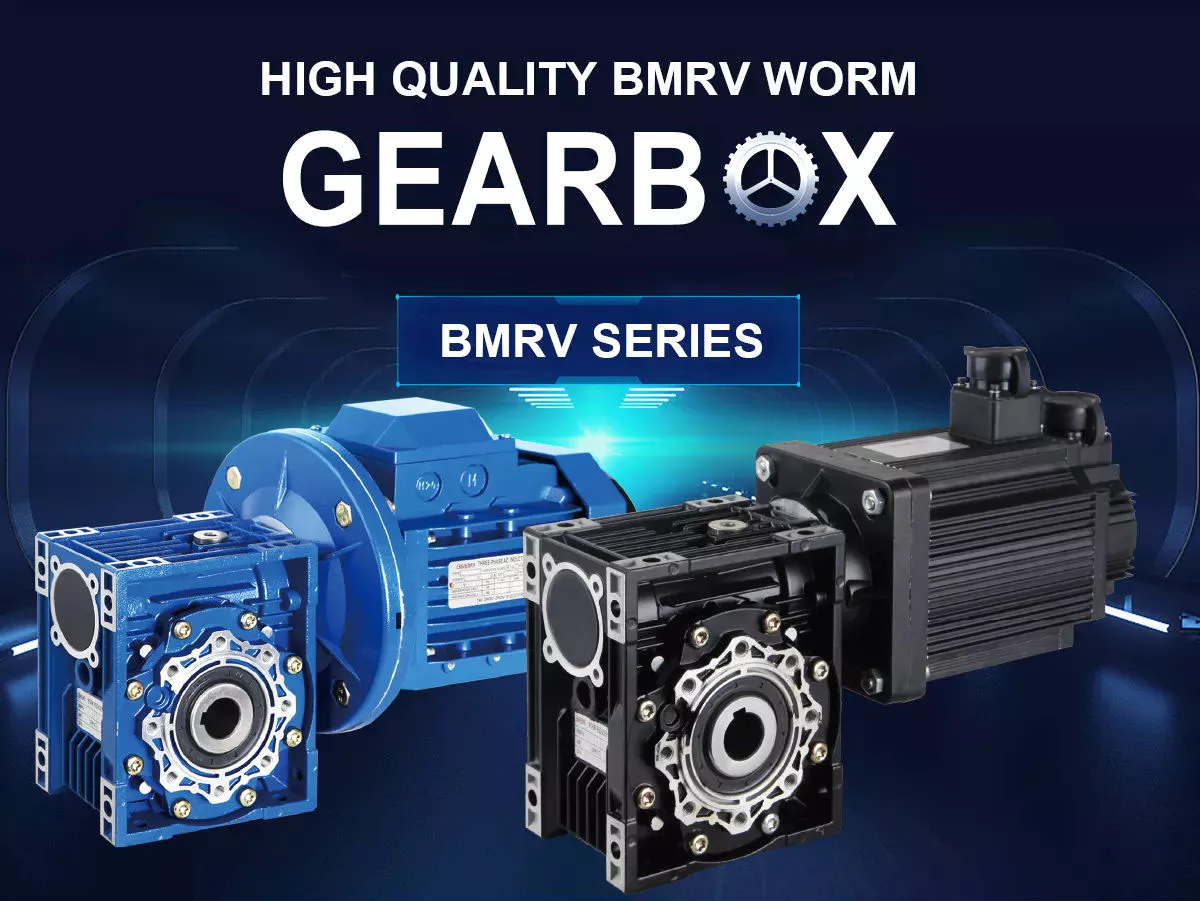
Dimensions
Gearboxes come in different sizes, so the size of your unit depends on the number of stages. Using a chart to determine how many stages are required will help you determine the dimensions of your unit. The ratios of individual stages are normally greater at the top and get smaller as you get closer to the last reduction. This information is important when choosing the right gearbox for your application. However, the dimensions of your gearbox do not have to be exact. Some manufacturers have guides that outline the required dimensions.
The service factor of a gearbox is a combination of the required reliability, the actual service condition, and the load that the gearbox will endure. It can range from 1.0 to 1.4. If the service factor of a gearbox is 1.0, it means that the unit has just enough capacity to meet your needs, but any extra requirements could cause the unit to fail or overheat. However, service factors of 1.4 are generally sufficient for most industrial applications, since they indicate that a gearbox can withstand 1.4 times its application requirement.
Different sizes also have different shapes. Some types are concentric, while others are parallel or at a right angle. The fourth type of gearbox is called shaft mount and is used when mounting the gearbox by foot is impossible. We will discuss the different mounting positions later. In the meantime, keep these dimensions in mind when choosing a gearbox for your application. If you have space constraints, a concentric gearbox is usually your best option.
Construction
The design and construction of a gearbox entails the integration of various components into a single structure. The components of a gearbox must have sufficient rigidity and adequate vibration damping properties. The design guidelines note the approximate values for the components and recommend the production method. Empirical formulas were used to determine the dimensions of the various components. It was found that these methods can simplify the design process. These methods are also used to calculate the angular and axial displacements of the components of the gearbox.
In this project, we used a 3D modeling software called SOLIDWORKS to create a 3-D model of a gear reducer. We used this software to simulate the structure of the gearbox, and it has powerful design automation tools. Although the gear reducer and housing are separate parts, we model them as a single body. To save time, we also removed the auxiliary elements, such as oil inlets and oil level indicators, from the 3D model.
Our method is based on parameter-optimized deep neural networks (DBNs). This model has both supervised and unsupervised learning capabilities, allowing it to be self-adaptive. This method is superior to traditional methods, which have poor self-adaptive feature extraction and shallow network generalization. Our algorithm is able to recognize faults in different states of the gearbox using its vibration signal. We have tested our model on two gearboxes.
With the help of advanced material science technologies, we can now manufacture the housing for the gearbox using high-quality steel and aluminium alloys. In addition, advanced telematics systems have increased the response time of manufacturers. These technologies are expected to create tremendous opportunities in the coming years and fuel the growth of the gearbox housing market. There are many different ways to construct a gearbox, and these techniques are highly customizable. In this study, we will consider the design and construction of various gearbox types, as well as their components.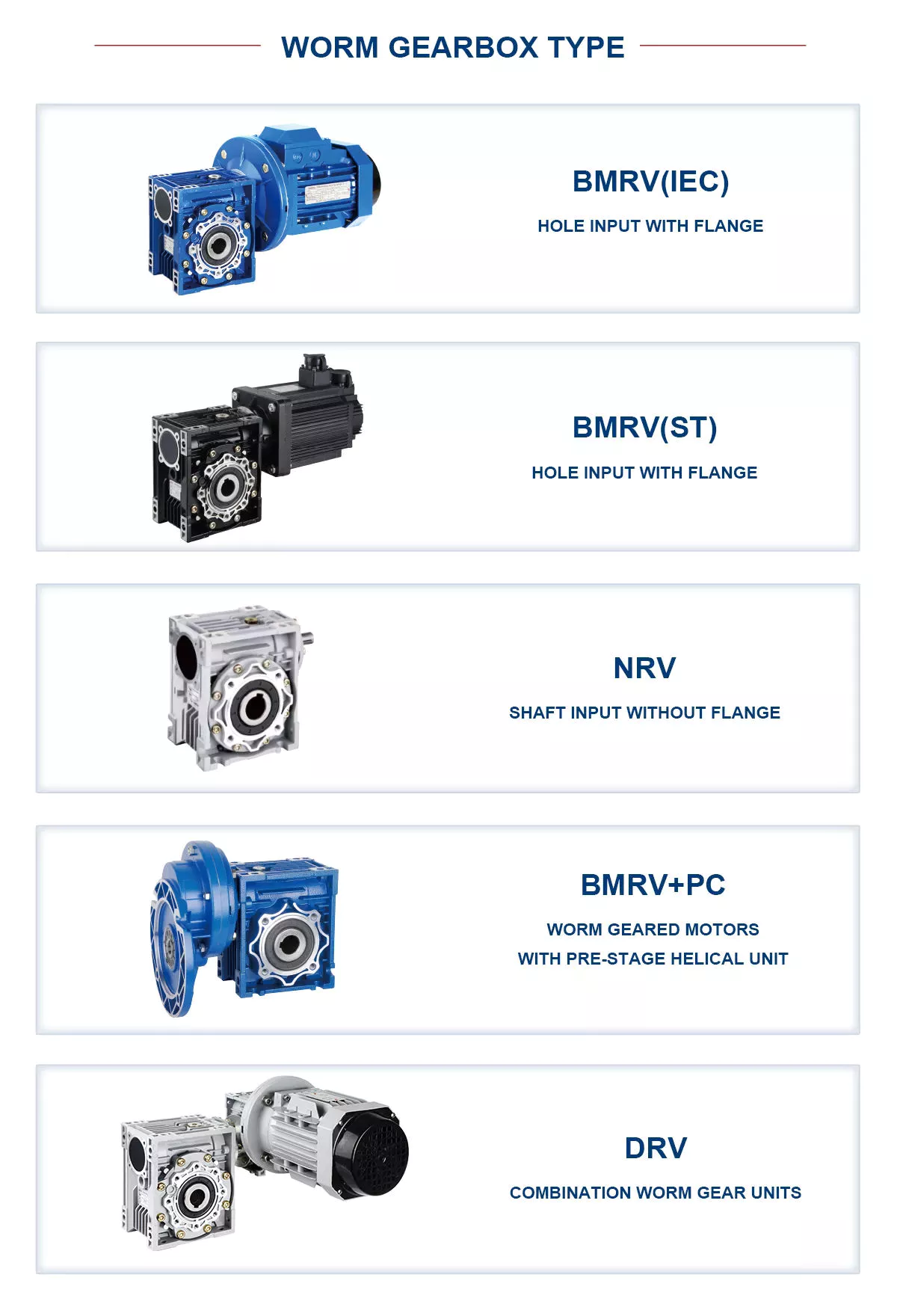
Working
A gearbox is a mechanical device that transmits power from one gear to another. The different types of gears are called planetary gears and are used in a variety of applications. Depending on the type of gearbox, it may be concentric, parallel, or at a right angle. The fourth type of gearbox is a shaft mount. The shaft mount type is used in applications that cannot be mounted by foot. The various mounting positions will be discussed later.
Many design guidelines recommend a service factor of 1.0, which needs to be adjusted based on actual service conditions. This factor is the combined measure of external load, required reliability, and overall gearbox life. In general, published service factors are the minimum requirements for a particular application, but a higher value is necessary for severe loading. This calculation is also recommended for high-speed gearboxes. However, the service factor should not be a sole determining factor in the selection process.
The second gear of a pair of gears has more teeth than the first gear. It also turns slower, but with greater torque. The second gear always turns in the opposite direction. The animation demonstrates this change in direction. A gearbox can also have more than one pair of gears, and a first gear may be used for the reverse. When a gear is shifted from one position to another, the second gear is engaged and the first gear is engaged again.
Another term used to describe a gearbox is “gear box.” This term is an interchangeable term for different mechanical units containing gears. Gearboxes are commonly used to alter speed and torque in various applications. Hence, understanding the gearbox and its parts is essential to maintaining your car’s performance. If you want to extend the life of your vehicle, be sure to check the gearbox’s efficiency. The better its functioning, the less likely it is to fail.
Advantages
Automatic transmission boxes are almost identical to mechanical transmission boxes, but they also have an electronic component that determines the comfort of the driver. Automatic transmission boxes use special blocks to manage shifts effectively and take into account information from other systems, as well as the driver’s input. This ensures accuracy and positioning. The following are a few gearbox advantages:
A gearbox creates a small amount of drag when pedaling, but this drag is offset by the increased effort to climb. The external derailleur system is more efficient when adjusted for friction, but it does not create as little drag in dry conditions. The internal gearbox allows engineers to tune the shifting system to minimize braking issues, pedal kickback, and chain growth. As a result, an internal gearbox is a great choice for bikes with high-performance components.
Helical gearboxes offer some advantages, including a low noise level and lower vibration. They are also highly durable and reliable. They can be extended in modular fashion, which makes them more expensive. Gearboxes are best for applications involving heavy loads. Alternatively, you can opt for a gearbox with multiple teeth. A helical gearbox is more durable and robust, but it is also more expensive. However, the benefits far outweigh the disadvantages.
A gearbox with a manual transmission is often more energy-efficient than one with an automatic transmission. Moreover, these cars typically have lower fuel consumption and higher emissions than their automatic counterparts. In addition, the driver does not have to worry about the brakes wearing out quickly. Another advantage of a manual transmission is its affordability. A manual transmission is often available at a lower cost than its automatic counterpart, and repairs and interventions are easier and less costly. And if you have a mechanical problem with the gearbox, you can control the fuel consumption of your vehicle with appropriate driving habits.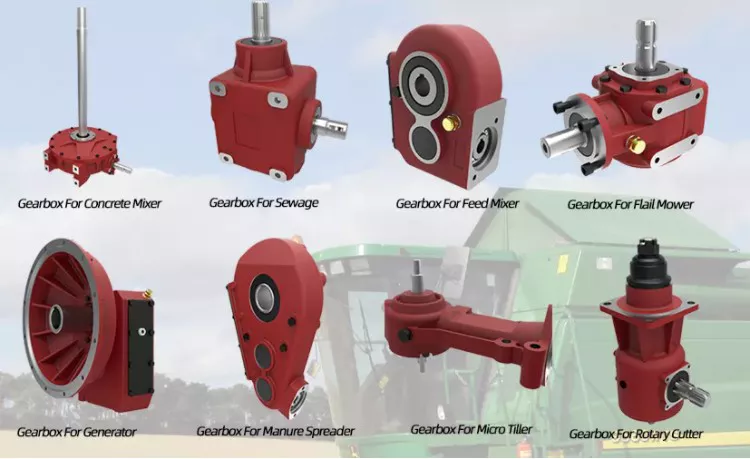
Application
While choosing a gearbox for a specific application, the customer should consider the load on the output shaft. High impact loads will wear out gear teeth and shaft bearings, requiring higher service factors. Other factors to consider are the size and style of the output shaft and the environment. Detailed information on these factors will help the customer choose the best gearbox. Several sizing programs are available to determine the most appropriate gearbox for a specific application.
The sizing of a gearbox depends on its input speed, torque, and the motor shaft diameter. The input speed must not exceed the required gearbox’s rating, as high speeds can cause premature seal wear. A low-backlash gearbox may be sufficient for a particular application. Using an output mechanism of the correct size may help increase the input speed. However, this is not recommended for all applications. To choose the right gearbox, check the manufacturer’s warranty and contact customer service representatives.
Different gearboxes have different strengths and weaknesses. A standard gearbox should be durable and flexible, but it must also be able to transfer torque efficiently. There are various types of gears, including open gearing, helical gears, and spur gears. Some of the types of gears can be used to power large industrial machines. For example, the most popular type of gearbox is the planetary drive gearbox. These are used in material handling equipment, conveyor systems, power plants, plastics, and mining. Gearboxes can be used for high-speed applications, such as conveyors, crushers, and moving monorail systems.
Service factors determine the life of a gearbox. Often, manufacturers recommend a service factor of 1.0. However, the actual value may be higher or lower than that. It is often useful to consider the service factor when choosing a gearbox for a particular application. A service factor of 1.4 means that the gearbox can handle 1.4 times the load required. For example, a 1,000-inch-pound gearbox would need a 1,400-inch-pound gearbox. Service factors can be adjusted to suit different applications and conditions.
editor by CX 2023-04-14
China Agricultural Gear Box Reducer Transmission Gearbox Flail Rotary Mower Cutter Tiller Right Angle Bevel Pto Agriculture Gearbox for Euro Agricultural Machines automatic gearbox
Merchandise Description
GTM Rotary mower gearbox
High High quality Planet-Course Agricultural Gearbox
Product Description
| Model | RG090 |
| Product Name | Rotary Cutter Gearbox |
| Ratio | Custom-made |
| Materials | QT450 for housing, 20CrMnTi for gear and shaft. |
Comprehensive Images
Application
Business Profile
Manufacturing facility
GTM manufacturing unit is positioned in ZHangZhoug, China. There has a professional team and sophisticated equipment. CNC workshop, equipment hobbing workshop, gear teeth inserting workshop, gear enamel shaving cutters grinding machine, warmth-treatment workshop, assembly workshop and automatic spray portray line forms a full assembly line. To produce much more probability.
About us
GTM is a expert agricultural machine gearbox company.
It makes much more than 1,000 types of items and supports OEM and ODM.
Including lawn mower series, rotary tiller sequence, rice harvester sequence, CZPT transportation storage series, and so on. Has export for several nation like American, Australia, India, Poland, and many others. We work with a lot of nicely-recognized manufacturers like John Deere, Bush Hog, and many others. Our once-a-year generation is 300,000 units, and our turnover in 2571 is USD 28 million. The export ratio is eighty%, and the domestic market place is 20%.
Exhibition
|
US $40-400 / Piece | |
200 Pieces (Min. Order) |
###
| Application: | Agricultural Machinery |
|---|---|
| Function: | Speed Increase |
| Layout: | Transmission |
| Hardness: | Hardened Tooth Surface |
| Installation: | Vertical Type |
| Step: | Custom-Made |
###
| Customization: |
Available
|
|---|
###
| Model | RG090 |
| Product Name | Rotary Cutter Gearbox |
| Ratio | Customized |
| Materials | QT450 for housing, 20CrMnTi for gear and shaft. |
|
US $40-400 / Piece | |
200 Pieces (Min. Order) |
###
| Application: | Agricultural Machinery |
|---|---|
| Function: | Speed Increase |
| Layout: | Transmission |
| Hardness: | Hardened Tooth Surface |
| Installation: | Vertical Type |
| Step: | Custom-Made |
###
| Customization: |
Available
|
|---|
###
| Model | RG090 |
| Product Name | Rotary Cutter Gearbox |
| Ratio | Customized |
| Materials | QT450 for housing, 20CrMnTi for gear and shaft. |
How to Select a Gearbox
When you drive your vehicle, the gearbox provides you with traction and speed. The lower gear provides the most traction, while the higher gear has the most speed. Selecting the right gear for your driving conditions will help you maximize both. The right gearing will vary based on road conditions, load, and speed. Short gearing will accelerate you more quickly, while tall gearing will increase top speed. However, you should understand how to use the gearbox before driving.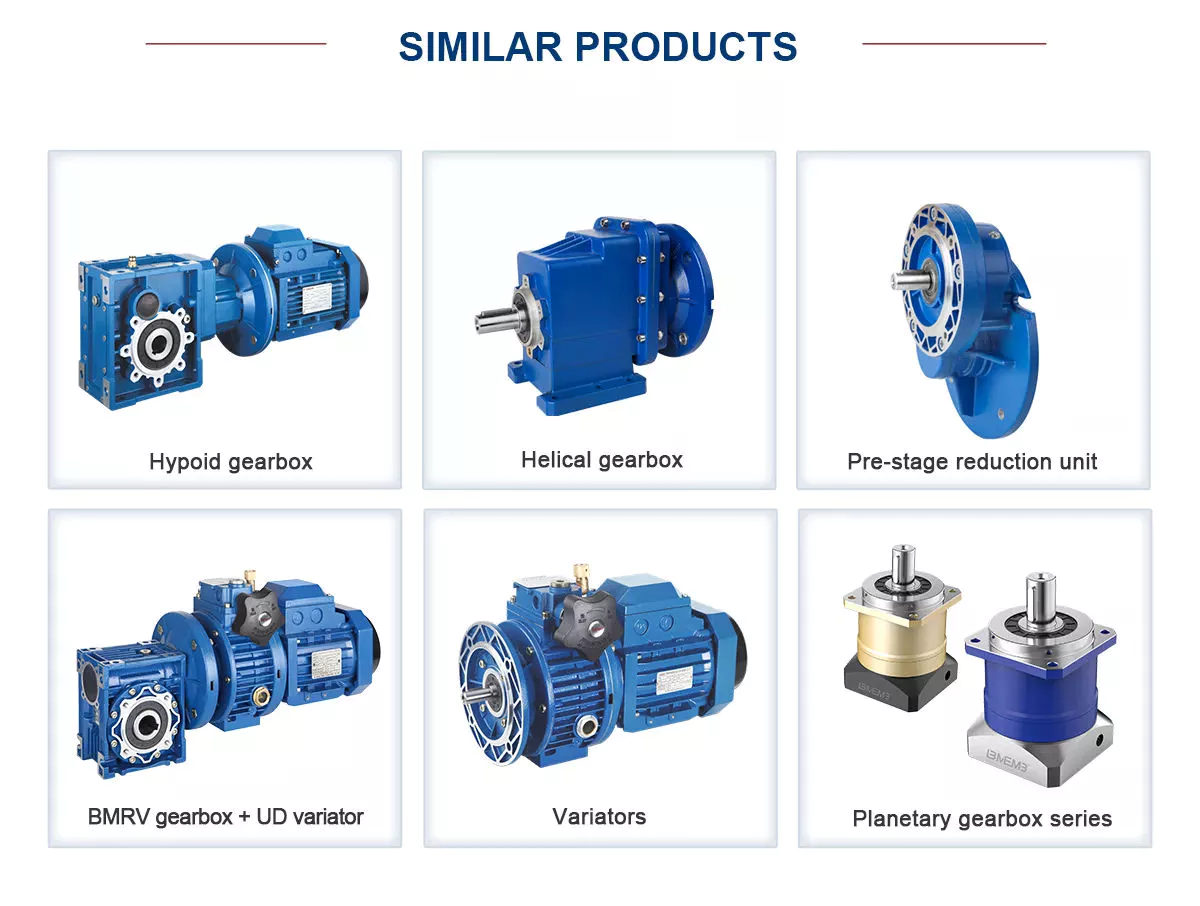
Function
The function of the gearbox is to transmit rotational energy to the machine’s drive train. The ratio between input and output torque is the ratio of the torque to the speed of rotation. Gearboxes have many different functions. A gearbox may have multiple functions or one function that is used to drive several other machines. If one gear is not turning, the other will be able to turn the gearbox. This is where the gearbox gets its name.
The pitch-controlled system has an equal number of failure modes as the electrical system, accounting for a large proportion of the longest machine downtime and halt time. The relationship between mechanisms and faults is not easily modeled mathematically. Failure modes of gearboxes are shown in Fig. 3. A gearbox’s true service life is six to eight years. However, a gearbox’s fault detection process must be developed as mature technology is required to reduce the downtime and avoid catastrophic incidents.
A gearbox is a vital piece of machinery. It processes energy produced by an engine to move the machine’s parts. A gearbox’s efficiency depends on how efficiently it transfers energy. The higher the ratio, the more torque is transferred to the wheels. It is a common component of bicycles, cars, and a variety of other devices. Its four major functions include:
In addition to ensuring gearbox reliability, a gearbox’s maintainability should be evaluated in the design phase. Maintainability considerations should be integrated into the gearbox design, such as the type of spare parts available. An appropriate maintenance regime will also determine how often to replace or repair specific parts. A proper maintenance procedure will also ensure that the gearbox is accessible. Whether it is easy to access or difficult to reach, accessibility is essential.
Purpose
A car’s transmission connects the engine to the wheels, allowing a higher-speed crankshaft to provide leverage. High-torque engines are necessary for the vehicle’s starting, acceleration, and meeting road resistance. The gearbox reduces the engine’s speed and provides torque variations at the wheels. The transmission also provides reversing power, making it possible to move the vehicle backwards and forwards.
Gears transmit power from one shaft to another. The size of the gears and number of teeth determine the amount of torque the unit can transmit. A higher gear ratio means more torque, but slower speed. The gearbox’s lever moves the engaging part on the shaft. The lever also slides the gears and synchronizers into place. If the lever slips to the left or right, the engine operates in second gear.
Gearboxes need to be closely monitored to reduce the likelihood of premature failure. Various tests are available to detect defective gear teeth and increase machine reliability. Figure 1.11(a) and (b) show a gearbox with 18 teeth and a 1.5:1 transmission ratio. The input shaft is connected to a sheave and drives a “V” belt. This transmission ratio allows the gearbox to reduce the speed of the motor, while increasing torque and reducing output speed.
When it comes to speed reduction, gear box is the most common method for reducing motor torque. The torque output is directly proportional to the volume of the motor. A small gearbox, for example, can produce as much torque as a large motor with the same output speed. The same holds true for the reverse. There are hybrid drives and in-line gearboxes. Regardless of the type, knowing about the functions of a gearbox will make it easier to choose the right one for your specific application.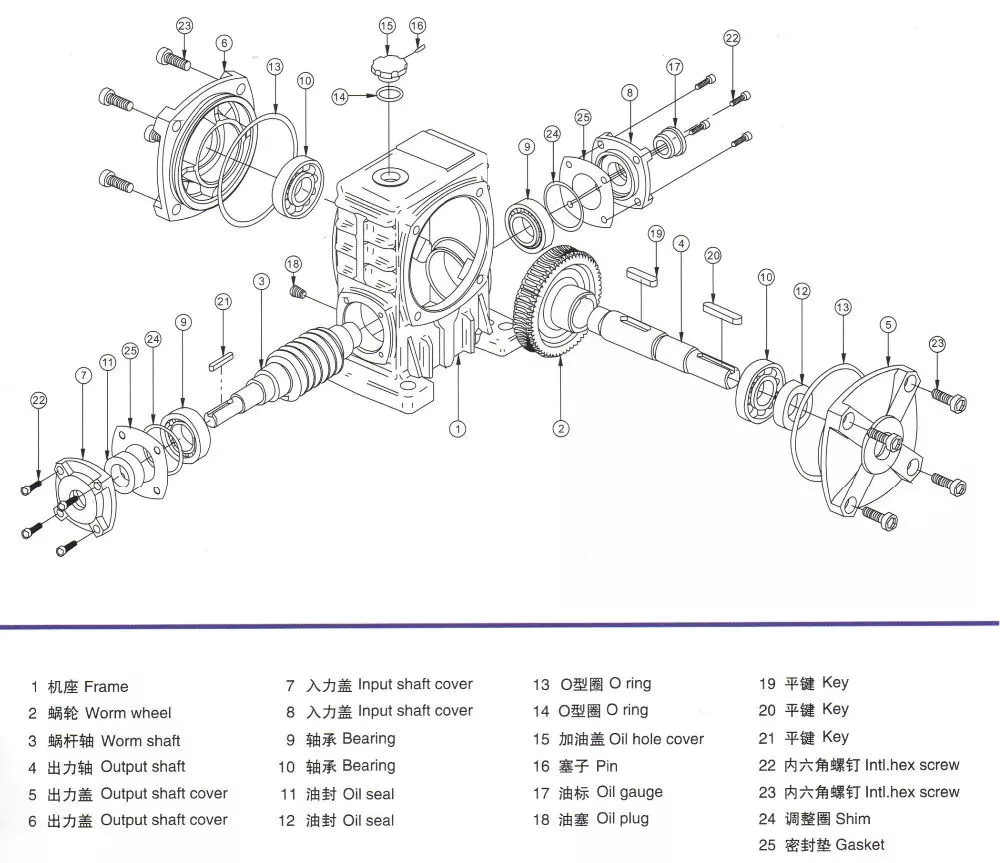
Application
When selecting a gearbox, the service factor must be considered. Service factor is the difference between the actual capacity of the gearbox and the value required by the application. Additional requirements for the gearbox may result in premature seal wear or overheating. The service factor should be as low as possible, as it could be the difference between the lifetime of the gearbox and its failure. In some cases, a gearbox’s service factor can be as high as 1.4, which is sufficient for most industrial applications.
China dominates the renewable energy industry, with the largest installed capacity of 1000 gigawatts and more than 2000 terawatt hours of electricity generated each year. The growth in these sectors is expected to increase the demand for gearboxes. For example, in China, wind and hydropower energy production are the major components of wind and solar power plants. The increased installation capacity indicates increased use of gearboxes for these industries. A gearbox that is not suitable for its application will not be functional, which may be detrimental to the production of products in the country.
A gearbox can be mounted in one of four different positions. The first three positions are concentric, parallel, or right angle, and the fourth position is shaft mount. A shaft mount gearbox is typically used in applications where the motor can’t be mounted via a foot. These positions are discussed in more detail below. Choosing the correct gearbox is essential in your business, but remember that a well-designed gearbox will help your bottom line.
The service factor of a gearbox is dependent on the type of load. A high shock load, for example, can cause premature failure of the gear teeth or shaft bearings. In such cases, a higher service factor is required. In other cases, a gearbox that is designed for high shock loads can withstand such loads without deteriorating its performance. Moreover, it will also reduce the cost of maintaining the gearbox over time.
Material
When choosing the material for your gearbox, you must balance the strength, durability, and cost of the design. This article will discuss the different types of materials and their respective applications and power transmission calculations. A variety of alloys are available, each of which offers its own advantages, including improved hardness and wear resistance. The following are some of the common alloys used in gears. The advantage of alloys is their competitive pricing. A gear made from one of these materials is usually stronger than its counterparts.
The carbon content of SPCC prevents the material from hardening like SS. However, thin sheets made from SPCC are often used for gears with lower strength. Because of the low carbon content, SPCC’s surface doesn’t harden as quickly as SS gears do, so soft nitriding is needed to provide hardness. However, if you want a gear that won’t rust, then you should consider SS or FCD.
In addition to cars, gearboxes are also used in the aerospace industry. They are used in space travel and are used in airplane engines. In agriculture, they are used in irrigation, pest and insect control machinery, and plowing machines. They are also used in construction equipment like cranes, bulldozers, and tractors. Gearboxes are also used in the food processing industry, including conveyor systems, kilns, and packaging machinery.
The teeth of the gears in your gearbox are important when it comes to performance. A properly meshing gear will allow the gears to achieve peak performance and withstand torque. Gear teeth are like tiny levers, and effective meshing reduces stress and slippage. A stationary parametric analysis will help you determine the quality of meshing throughout the gearing cycle. This method is often the most accurate way to determine whether your gears are meshing well.
Manufacturing
The global gear market is divided into five key regions, namely, North America, Europe, Asia Pacific, and Latin America. Among these regions, Asia Pacific is expected to generate the largest GDP, owing to rapidly growing energy demand and investments in industrial infrastructure. This region is also home to some of the largest manufacturing bases, and its continuous building of new buildings and homes will support the industry’s growth. In terms of application, gearboxes are used in construction, agricultural machinery, and transportation.
The Industrial Gearbox market is anticipated to expand during the next several years, driven by the rapid growth of the construction industry and business advancements. However, there are several challenges that hamper the growth of the industry. These include the high cost of operations and maintenance of gear units. This report covers the market size of industrial gearboxes globally, as well as their manufacturing technologies. It also includes manufacturer data for the period of 2020-2024. The report also features a discussion of market drivers and restraints.
Global health crisis and decreasing seaborne commerce have moderately adverse effects on the industry. Falling seaborne commerce has created a barrier to investment. The value of international crude oil is expected to cross USD 0 by April 2020, putting an end to new assets development and exploitation. In such a scenario, the global gearbox market will face many challenges. However, the opportunities are huge. So, the market for industrial gearboxes is expected to grow by more than 6% by 2020, thanks to the increasing number of light vehicles sold in the country.
The main shaft of a gearbox, also known as the output shaft, spins at different speeds and transfers torque to an automobile. The output shaft is splined so that a coupler and gear can be connected to it. The counter shaft and primary shaft are supported by bearings, which reduce friction in the spinning element. Another important part of a gearbox is the gears, which vary in tooth count. The number of teeth determines how much torque a gear can transfer. In addition, the gears can glide in any position.
editor by czh 2023-01-15
China Heavy Duty Resin Sand Casting Grey Iron Gear Box automatic gearbox
Product Description
| Description | Heavy duty Iron casting gear box |
| Content | Gray Iron, Ductile Iron |
| Method | Resin sand casting |
| Specification | a hundred-3000kg |
| Secondary approach and finish | machining, priming |
|
US $1,000-1,200 / Ton | |
10 Tons (Min. Order) |
###
| Application: | Machinery |
|---|---|
| Function: | Speed Changing, Speed Reduction |
| Layout: | Cycloidal |
| Hardness: | Hardened Tooth Surface |
| Installation: | Horizontal Type |
| Step: | Three-Step |
###
| Samples: |
US$ 0/Piece
1 Piece(Min.Order) |
|---|
###
| Customization: |
Available
|
|---|
###
| Description | Heavy duty Iron casting gear box |
| Material | Grey Iron, Ductile Iron |
| Process | Resin sand casting |
| Specification | 100-3000kg |
| Secondary process and finish | machining, priming |
|
US $1,000-1,200 / Ton | |
10 Tons (Min. Order) |
###
| Application: | Machinery |
|---|---|
| Function: | Speed Changing, Speed Reduction |
| Layout: | Cycloidal |
| Hardness: | Hardened Tooth Surface |
| Installation: | Horizontal Type |
| Step: | Three-Step |
###
| Samples: |
US$ 0/Piece
1 Piece(Min.Order) |
|---|
###
| Customization: |
Available
|
|---|
###
| Description | Heavy duty Iron casting gear box |
| Material | Grey Iron, Ductile Iron |
| Process | Resin sand casting |
| Specification | 100-3000kg |
| Secondary process and finish | machining, priming |
The Parts of a Gearbox
There are many parts of a Gearbox, and this article will help you understand its functions and components. Learn about its maintenance and proper care, and you’ll be on your way to repairing your car. The complexity of a Gearbox also makes it easy to make mistakes. Learn about its functions and components so that you’ll be able to make the best choices possible. Read on to learn more. Then, get your car ready for winter!
Components
Gearboxes are fully integrated mechanical components that consist of a series of gears. They also contain shafts, bearings, and a flange to mount a motor. The terms gearhead and gearbox are not often used interchangeably in the motion industry, but they are often synonymous. Gearheads are open gearing assemblies that are installed in a machine frame. Some newer designs, such as battery-powered mobile units, require tighter integration.
The power losses in a gearbox can be divided into no-load and load-dependent losses. The no-load losses originate in the gear pair and the bearings and are proportional to the ratio of shaft speed and torque. The latter is a function of the coefficient of friction and speed. The no-load losses are the most serious, since they represent the largest proportion of the total loss. This is because they increase with speed.
Temperature measurement is another important preventive maintenance practice. The heat generated by the gearbox can damage components. High-temperature oil degrades quickly at high temperatures, which is why the sump oil temperature should be monitored periodically. The maximum temperature for R&O mineral oils is 93degC. However, if the sump oil temperature is more than 200degF, it can cause seal damage, gear and bearing wear, and premature failure of the gearbox.
Regardless of its size, the gearbox is a crucial part of a car’s drivetrain. Whether the car is a sports car, a luxury car, or a farm tractor, the gearbox is an essential component of the vehicle. There are two main types of gearbox: standard and precision. Each has its own advantages and disadvantages. The most important consideration when selecting a gearbox is the torque output.
The main shaft and the clutch shaft are the two major components of a gearbox. The main shaft runs at engine speed and the countershaft may be at a lower speed. In addition to the main shaft, the clutch shaft has a bearing. The gear ratio determines the amount of torque that can be transferred between the countershaft and the main shaft. The drive shaft also has another name: the propeller shaft.
The gears, shafts, and hub/shaft connection are designed according to endurance design standards. Depending on the application, each component must be able to withstand the normal stresses that the system will experience. Oftentimes, the minimum speed range is ten to twenty m/s. However, this range can differ between different transmissions. Generally, the gears and shafts in a gearbox should have an endurance limit that is less than that limit.
The bearings in a gearbox are considered wear parts. While they should be replaced when they wear down, they can be kept in service much longer than their intended L10 life. Using predictive maintenance, manufacturers can determine when to replace the bearing before it damages the gears and other components. For a gearbox to function properly, it must have all the components listed above. And the clutch, which enables the transmission of torque, is considered the most important component.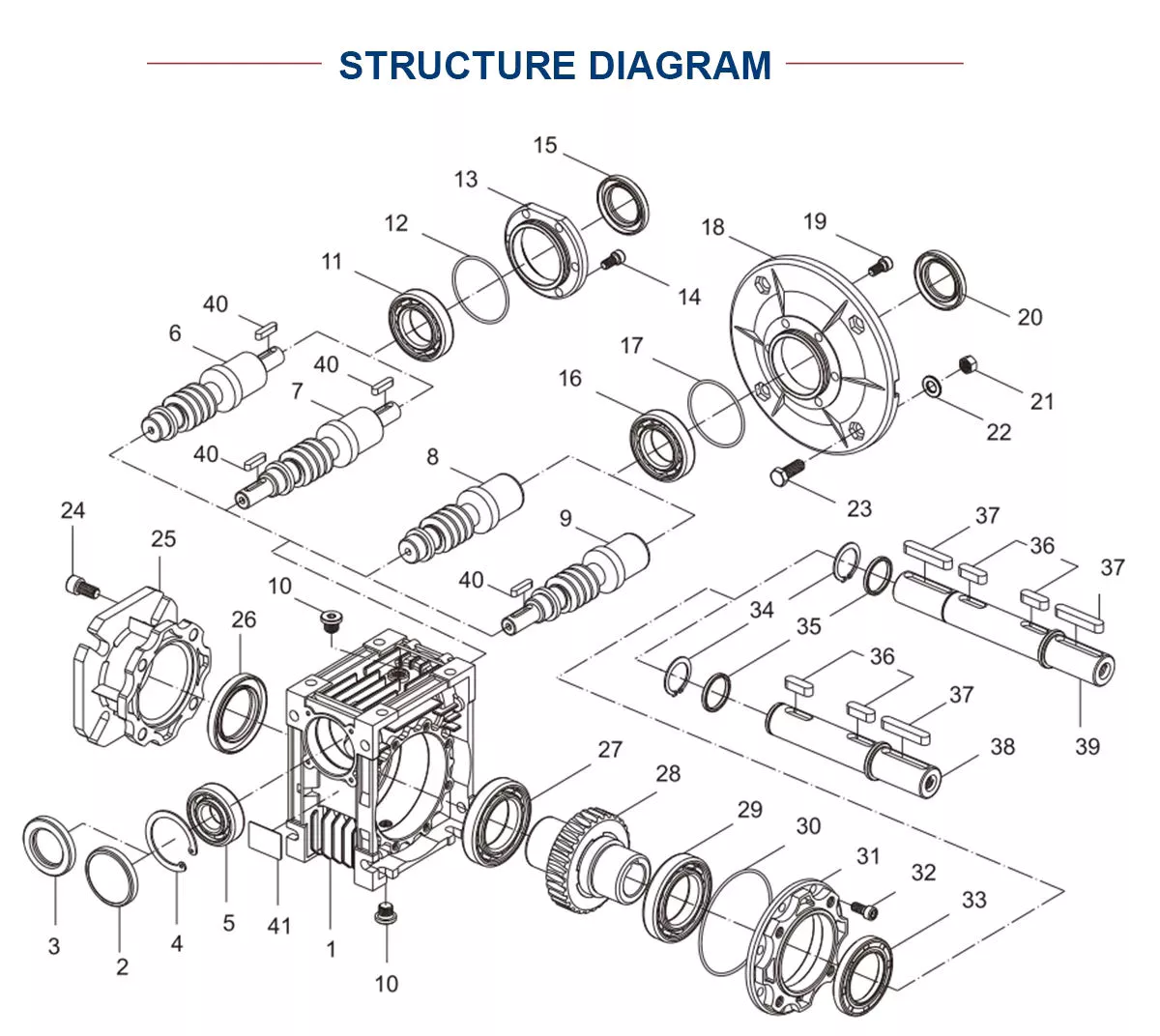
Functions
A gearbox is a fully integrated mechanical component that consists of mating gears. It is enclosed in a housing that houses the shafts, bearings, and flange for motor mounting. The purpose of a gearbox is to increase torque and change the speed of an engine by connecting the two rotating shafts together. A gearbox is generally made up of multiple gears that are linked together using couplings, belts, chains, or hollow shaft connections. When power and torque are held constant, speed and torque are inversely proportional. The speed of a gearbox is determined by the ratio of the gears that are engaged to transmit power.
The gear ratios in a gearbox are the number of steps a motor can take to convert torque into horsepower. The amount of torque required at the wheels depends on the operating conditions. A vehicle needs more torque than its peak torque when it is moving from a standstill. Therefore, the first gear ratio is used to increase torque and move the vehicle forward. To move up a gradient, more torque is required. To maintain momentum, the intermediate gear ratio is used.
As metal-to-metal contact is a common cause of gearbox failure, it is essential to monitor the condition of these components closely. The main focus of the proactive series of tests is abnormal wear and contamination, while the preventative tests focus on oil condition and additive depletion. The AN and ferrous density tests are exceptions to this rule, but they are used more for detecting abnormal additive depletion. In addition, lubrication is critical to the efficiency of gearboxes.
Maintenance
Daily maintenance is a critical aspect of the life cycle of a gearbox. During maintenance, you must inspect all gearbox connection parts. Any loose or damaged connection part should be tightened immediately. Oil can be tested using an infrared thermometer and particle counters, spectrometric analysis, or ferrography. You should check for excessive wear and tear, cracks, and oil leaks. If any of these components fail, you should replace them as soon as possible.
Proper analysis of failure patterns is a necessary part of any preventative maintenance program. This analysis will help identify the root cause of gearbox failures, as well as plan for future preventative maintenance. By properly planning preventative maintenance, you can avoid the expense and inconvenience of repairing or replacing a gearbox prematurely. You can even outsource gearbox maintenance to a company whose experts are knowledgeable in this field. The results of the analysis will help you create a more effective preventative maintenance program.
It is important to check the condition of the gearbox oil periodically. The oil should be changed according to its temperature and the hours of operation. The temperature is a significant determinant of the frequency of oil changes. Higher temperatures require more frequent changes, and the level of protection from moisture and water reduces by 75%. At elevated temperatures, the oil’s molecular structure breaks down more quickly, inhibiting the formation of a protective film.
Fortunately, the gear industry has developed innovative technologies and services that can help plant operators reduce their downtime and ensure optimal performance from their industrial gears. Here are 10 steps to ensure that your gearbox continues to serve its purpose. When you are preparing for maintenance, always keep in mind the following tips:
Regular vibration analysis is a vital part of gearbox maintenance. Increased vibration signals impending problems. Visually inspect the internal gears for signs of spiraling and pitting. You can use engineers’ blue to check the contact pattern of gear teeth. If there is a misalignment, bearings or housings are worn and need replacement. Also make sure the breathers remain clean. In dirty applications, this is more difficult to do.
Proper lubrication is another key factor in the life of gearboxes. Proper lubrication prevents failure. The oil must be free of foreign materials and have the proper amount of flow. Proper lubricant selection depends on the type of gear, reduction ratio, and input power. In addition to oil level, the lubricant must be regulated for the size and shape of gears. If not, the lubricant should be changed.
Lack of proper lubrication reduces the strength of other gears. Improper maintenance reduces the life of the transmission. Whether the transmission is overloaded or undersized, excessive vibration can damage the gear. If it is not properly lubricated, it can be damaged beyond repair. Then, the need for replacement gears may arise. However, it is not a time to waste a lot of money and time on repairs.
editor by czh 2022-11-27
China wholesaler Automatic Transmission Conveyor Gearbox Parts Roller Chains Conveyor Chain Driving Chain Gear Travelling Belt Sprocket Grate Motorcycle Transmission Gear with Great quality
Product Description
SPROCKET 1/2” X 5/16” 08B SERIES SPROCKETS
BASIC INFO.
INSTALLATION AND USING
The chain spocket, as a drive or deflection for chains, has pockets to hold the chain links with a D-profile cross section with flat side surfaces parallel to the centre plane of the chain links, and outer surfaces at right angles to the chain link centre plane. The chain links are pressed firmly against the outer surfaces and each of the side surfaces by the angled laying surfaces at the base of the pockets, and also the support surfaces of the wheel body together with the end sides of the webs formed by the leading and trailing walls of the pocket.
NOTICE
When fitting new chainwheels it is very important that a new chain is fitted at the same time, and vice versa. Using an old chain with new sprockets, or a new chain with old sprockets will cause rapid wear.
It is important if you are installing the chainwheels yourself to have the factory service manual specific to your model. Our chainwheels are made to be a direct replacement for your OEM chainwheels and as such, the installation should be performed according to your models service manual.
During use a chain will stretch (i.e. the pins will wear causing extension of the chain). Using a chain which has been stretched more than the above maximum allowance causes the chain to ride up the teeth of the sprocket. This causes damage to the tips of the chainwheels teeth, as the force transmitted by the chain is transmitted entirely through the top of the tooth, rather than the whole tooth. This results in severe wearing of the chainwheel.
FOR CHAIN STHangZhouRDS
Standards organizations (such as ANSI and ISO) maintain standards for design, dimensions, and interchangeability of transmission chains. For example, the following Table shows data from ANSI standard B29.1-2011 (Precision Power Transmission Roller Chains, Attachments, and Sprockets) developed by the American Society of Mechanical Engineers (ASME). See the references[8][9][10] for additional information.
ASME/ANSI B29.1-2011 Roller Chain Standard SizesSizePitchMaximum Roller DiameterMinimum Ultimate Tensile StrengthMeasuring Load25
For mnemonic purposes, below is another presentation of key dimensions from the same standard, expressed in fractions of an inch (which was part of the thinking behind the choice of preferred numbers in the ANSI standard):
Notes:
1. The pitch is the distance between roller centers. The width is the distance between the link plates (i.e. slightly more than the roller width to allow for clearance).
2. The right-hand digit of the standard denotes 0 = normal chain, 1 = lightweight chain, 5 = rollerless bushing chain.
3. The left-hand digit denotes the number of eighths of an inch that make up the pitch.
4. An “H” following the standard number denotes heavyweight chain. A hyphenated number following the standard number denotes double-strand (2), triple-strand (3), and so on. Thus 60H-3 denotes number 60 heavyweight triple-strand chain.
A typical bicycle chain (for derailleur gears) uses narrow 1⁄2-inch-pitch chain. The width of the chain is variable, and does not affect the load capacity. The more sprockets at the rear wheel (historically 3-6, nowadays 7-12 sprockets), the narrower the chain. Chains are sold according to the number of speeds they are designed to work with, for example, “10 speed chain”. Hub gear or single speed bicycles use 1/2″ x 1/8″ chains, where 1/8″ refers to the maximum thickness of a sprocket that can be used with the chain.
Typically chains with parallel shaped links have an even number of links, with each narrow link followed by a broad one. Chains built up with a uniform type of link, narrow at 1 and broad at the other end, can be made with an odd number of links, which can be an advantage to adapt to a special chainwheel-distance; on the other side such a chain tends to be not so strong.
Roller chains made using ISO standard are sometimes called as isochains.
WHY CHOOSE US
1. Reliable Quality Assurance System
2. Cutting-Edge Computer-Controlled CNC Machines
3. Bespoke Solutions from Highly Experienced Specialists
4. Customization and OEM Available for Specific Application
5. Extensive Inventory of Spare Parts and Accessories
6. Well-Developed Worldwide Marketing Network
7. Efficient After-Sale Service System
The 219 sets of advanced automatic production equipment provide guarantees for high product quality. The 167 engineers and technicians with senior professional titles can design and develop products to meet the exact demands of customers, and OEM customizations are also available with us. Our sound global service network can provide customers with timely after-sales technical services.
We are not just a manufacturer and supplier, but also an industry consultant. We work pro-actively with you to offer expert advice and product recommendations in order to end up with a most cost effective product available for your specific application. The clients we serve worldwide range from end users to distributors and OEMs. Our OEM replacements can be substituted wherever necessary and suitable for both repair and new assemblies.
| For Chain Acc.to DIN8187 ISO/R 606 | |||||
| Tooth Radius r3 | 13.0mm | ||||
| Radius Width C | 1.3mm | ||||
| Tooth Width b1 | 7.0mm | ||||
| Tooth Width B1 | 7.2mm | ||||
| Tooth Width B2 | 21.0mm | ||||
| Tooth Width B3 | 34.9mm | ||||
| 08B SERIES ROLLER CHAINS | |||||
| Pitch | 12.7 mm | ||||
| Internal Width | 7.75 mm | ||||
| Roller Diameter | 8.51 mm | ||||
###
| Z | de | dp | SIMPLEX | DUPLEX | TRIPLEX |
| D1 | D2 | D3 | |||
| 8 | 37.2 | 33.18 | 8 | 10 | 10 |
| 9 | 41.0 | 37.13 | 8 | 10 | 10 |
| 10 | 45.2 | 41.10 | 8 | 10 | 10 |
| 11 | 48.7 | 45.07 | 10 | 10 | 12 |
| 12 | 53.0 | 49.07 | 10 | 10 | 12 |
| 13 | 57.4 | 53.06 | 10 | 10 | 12 |
| 14 | 61.8 | 57.07 | 10 | 10 | 12 |
| 15 | 65.5 | 61.09 | 10 | 10 | 12 |
| 16 | 69.5 | 65.10 | 10 | 12 | 16 |
| 17 | 73.6 | 69.11 | 10 | 12 | 16 |
| 18 | 77.8 | 73.14 | 10 | 12 | 16 |
| 19 | 81.7 | 77.16 | 10 | 12 | 16 |
| 20 | 85.8 | 81.19 | 10 | 12 | 16 |
| 21 | 89.7 | 85.22 | 12 | 16 | 16 |
| 22 | 93.8 | 89.24 | 12 | 16 | 16 |
| 23 | 98.2 | 93.27 | 12 | 16 | 16 |
| 24 | 101.8 | 97.29 | 12 | 16 | 16 |
| 25 | 105.8 | 101.33 | 12 | 16 | 16 |
| 26 | 110.0 | 105.36 | 16 | 16 | 16 |
| 27 | 114.0 | 109.40 | 16 | 16 | 16 |
| 28 | 118.0 | 113.42 | 16 | 16 | 16 |
| 29 | 122.0 | 117.46 | 16 | 16 | 16 |
| 30 | 126.1 | 121.50 | 16 | 16 | 16 |
| 31 | 130.2 | 125.54 | 16 | 16 | 20 |
| 32 | 134.3 | 129.56 | 16 | 16 | 20 |
| 33 | 138.4 | 133.60 | 16 | 16 | 20 |
| 34 | 142.6 | 137.64 | 16 | 16 | 20 |
| 35 | 146.7 | 141.68 | 16 | 16 | 20 |
| 36 | 151.0 | 145.72 | 16 | 20 | 20 |
| 37 | 154.6 | 149.76 | 16 | 20 | 20 |
| 38 | 158.6 | 153.80 | 16 | 20 | 20 |
| 39 | 162.7 | 157.83 | 16 | 20 | 20 |
| 40 | 166.8 | 161.87 | 16 | 20 | 20 |
| 41 | 171.4 | 165.91 | 20 | 20 | 25 |
| 42 | 175.4 | 169.94 | 20 | 20 | 25 |
| 43 | 179.7 | 173.98 | 20 | 20 | 25 |
| 44 | 183.8 | 178.02 | 20 | 20 | 25 |
| 45 | 188.0 | 182.07 | 20 | 20 | 25 |
| 46 | 192.1 | 186.10 | 20 | 20 | 25 |
| 47 | 196.2 | 190.14 | 20 | 20 | 25 |
| 48 | 200.3 | 194.18 | 20 | 20 | 25 |
| 49 | 204.3 | 198.22 | 20 | 20 | 25 |
| 50 | 208.3 | 202.26 | 20 | 20 | 25 |
| 51 | 212.1 | 206.30 | 20 | 25 | 25 |
| 52 | 216.1 | 210.34 | 20 | 25 | 25 |
| 53 | 220.2 | 214.37 | 20 | 25 | 25 |
| 54 | 224.1 | 218.43 | 20 | 25 | 25 |
| 55 | 228.1 | 222.46 | 20 | 25 | 25 |
| 56 | 232.2 | 226.50 | 20 | 25 | 25 |
| 57 | 236.4 | 230.54 | 20 | 25 | 25 |
| 58 | 240.5 | 234.58 | 20 | 25 | 25 |
| 59 | 244.5 | 238.62 | 20 | 25 | 25 |
| 60 | 248.6 | 242.66 | 20 | 25 | 25 |
| 62 | 256.9 | 250.74 | 25 | 25 | 25 |
| 64 | 265.1 | 258.82 | 25 | 25 | 25 |
| 65 | 269.0 | 262.86 | 25 | 25 | 25 |
| 66 | 273.0 | 266.91 | 25 | 25 | 25 |
| 68 | 281.0 | 274.99 | 25 | 25 | 25 |
| 70 | 289.0 | 283.07 | 25 | 25 | 25 |
| 72 | 297.2 | 291.15 | 25 | 25 | 25 |
| 75 | 309.2 | 303.28 | 25 | 25 | 25 |
| 76 | 313.2 | 307.32 | 25 | 25 | 25 |
| 78 | 321.4 | 315.40 | 25 | 25 | 25 |
| 80 | 329.4 | 323.49 | 25 | 25 | 25 |
| 85 | 349.0 | 343.69 | 25 | 25 | 25 |
| 90 | 369.9 | 363.90 | 25 | 25 | 25 |
| 95 | 390.1 | 384.11 | 25 | 25 | 25 |
| 100 | 410.3 | 404.32 | 25 | 25 | 25 |
| 110 | 450.7 | 444.74 | 25 | 25 | 25 |
| 114 | 466.9 | 460.91 | 25 | 25 | 25 |
| 120 | 491.2 | 485.16 | 25 | 25 | 25 |
| 125 | 511.3 | 505.37 | 25 | 25 | 25 |
###
|
Type: |
Simplex, Duplex, Triplex |
|
Sprocket Model: |
3/8",1/2",5/8",3/4",1",1.25",1.50",1.75",2.00",2.25",2.00",2.25",2.50", 3" |
|
Teeth Number: |
9-100 |
|
Standard: |
ANSI , JIS, DIN, ISO |
|
Material: |
1020, 1045, SS304 , SS316; As Per User Request. |
|
Performance Treatment: |
Carburizing, High Frequency Treatment, Hardening and Tempering, Nitriding |
|
Surface Treatment: |
Black of Oxidation, Zincing, Nickelage. |
| Characteristic | Fire Resistant, Oil Resistant, Heat Resistant, Abrasive resistance, Oxidative resistance, Corrosion resistance, etc |
| Design criterion | ISO DIN ANSI & Customer Drawings |
| Application | Industrial transmission equipment |
| Package | Wooden Case / Container and pallet, or made-to-order |
|
Certification: |
ISO9001 SGS |
|
Quality Inspection: |
Self-check and Final-check |
|
Sample: |
ODM&OEM, Trial Order Available and Welcome |
| Advantage | Quality first, Service first, Competitive price, Fast delivery |
| Delivery Time | 10 days for samples. 15 days for official order. |
###
| ASME/ANSI B29.1-2011 Roller Chain Standard Sizes | ||||
| Size | Pitch | Maximum Roller Diameter | Minimum Ultimate Tensile Strength | Measuring Load |
|---|---|---|---|---|
| 25 | 0.250 in (6.35 mm) | 0.130 in (3.30 mm) | 780 lb (350 kg) | 18 lb (8.2 kg) |
| 35 | 0.375 in (9.53 mm) | 0.200 in (5.08 mm) | 1,760 lb (800 kg) | 18 lb (8.2 kg) |
| 41 | 0.500 in (12.70 mm) | 0.306 in (7.77 mm) | 1,500 lb (680 kg) | 18 lb (8.2 kg) |
| 40 | 0.500 in (12.70 mm) | 0.312 in (7.92 mm) | 3,125 lb (1,417 kg) | 31 lb (14 kg) |
| 50 | 0.625 in (15.88 mm) | 0.400 in (10.16 mm) | 4,880 lb (2,210 kg) | 49 lb (22 kg) |
| 60 | 0.750 in (19.05 mm) | 0.469 in (11.91 mm) | 7,030 lb (3,190 kg) | 70 lb (32 kg) |
| 80 | 1.000 in (25.40 mm) | 0.625 in (15.88 mm) | 12,500 lb (5,700 kg) | 125 lb (57 kg) |
| 100 | 1.250 in (31.75 mm) | 0.750 in (19.05 mm) | 19,531 lb (8,859 kg) | 195 lb (88 kg) |
| 120 | 1.500 in (38.10 mm) | 0.875 in (22.23 mm) | 28,125 lb (12,757 kg) | 281 lb (127 kg) |
| 140 | 1.750 in (44.45 mm) | 1.000 in (25.40 mm) | 38,280 lb (17,360 kg) | 383 lb (174 kg) |
| 160 | 2.000 in (50.80 mm) | 1.125 in (28.58 mm) | 50,000 lb (23,000 kg) | 500 lb (230 kg) |
| 180 | 2.250 in (57.15 mm) | 1.460 in (37.08 mm) | 63,280 lb (28,700 kg) | 633 lb (287 kg) |
| 200 | 2.500 in (63.50 mm) | 1.562 in (39.67 mm) | 78,175 lb (35,460 kg) | 781 lb (354 kg) |
| 240 | 3.000 in (76.20 mm) | 1.875 in (47.63 mm) | 112,500 lb (51,000 kg) | 1,000 lb (450 kg |
###
| Pitch (inches) | Pitch expressed in eighths |
ANSI standard chain number |
Width (inches) |
|---|---|---|---|
| 1⁄4 | 2⁄8 | 25 | 1⁄8 |
| 3⁄8 | 3⁄8 | 35 | 3⁄16 |
| 1⁄2 | 4⁄8 | 41 | 1⁄4 |
| 1⁄2 | 4⁄8 | 40 | 5⁄16 |
| 5⁄8 | 5⁄8 | 50 | 3⁄8 |
| 3⁄4 | 6⁄8 | 60 | 1⁄2 |
| 1 | 8⁄8 | 80 | 5⁄8 |
| For Chain Acc.to DIN8187 ISO/R 606 | |||||
| Tooth Radius r3 | 13.0mm | ||||
| Radius Width C | 1.3mm | ||||
| Tooth Width b1 | 7.0mm | ||||
| Tooth Width B1 | 7.2mm | ||||
| Tooth Width B2 | 21.0mm | ||||
| Tooth Width B3 | 34.9mm | ||||
| 08B SERIES ROLLER CHAINS | |||||
| Pitch | 12.7 mm | ||||
| Internal Width | 7.75 mm | ||||
| Roller Diameter | 8.51 mm | ||||
###
| Z | de | dp | SIMPLEX | DUPLEX | TRIPLEX |
| D1 | D2 | D3 | |||
| 8 | 37.2 | 33.18 | 8 | 10 | 10 |
| 9 | 41.0 | 37.13 | 8 | 10 | 10 |
| 10 | 45.2 | 41.10 | 8 | 10 | 10 |
| 11 | 48.7 | 45.07 | 10 | 10 | 12 |
| 12 | 53.0 | 49.07 | 10 | 10 | 12 |
| 13 | 57.4 | 53.06 | 10 | 10 | 12 |
| 14 | 61.8 | 57.07 | 10 | 10 | 12 |
| 15 | 65.5 | 61.09 | 10 | 10 | 12 |
| 16 | 69.5 | 65.10 | 10 | 12 | 16 |
| 17 | 73.6 | 69.11 | 10 | 12 | 16 |
| 18 | 77.8 | 73.14 | 10 | 12 | 16 |
| 19 | 81.7 | 77.16 | 10 | 12 | 16 |
| 20 | 85.8 | 81.19 | 10 | 12 | 16 |
| 21 | 89.7 | 85.22 | 12 | 16 | 16 |
| 22 | 93.8 | 89.24 | 12 | 16 | 16 |
| 23 | 98.2 | 93.27 | 12 | 16 | 16 |
| 24 | 101.8 | 97.29 | 12 | 16 | 16 |
| 25 | 105.8 | 101.33 | 12 | 16 | 16 |
| 26 | 110.0 | 105.36 | 16 | 16 | 16 |
| 27 | 114.0 | 109.40 | 16 | 16 | 16 |
| 28 | 118.0 | 113.42 | 16 | 16 | 16 |
| 29 | 122.0 | 117.46 | 16 | 16 | 16 |
| 30 | 126.1 | 121.50 | 16 | 16 | 16 |
| 31 | 130.2 | 125.54 | 16 | 16 | 20 |
| 32 | 134.3 | 129.56 | 16 | 16 | 20 |
| 33 | 138.4 | 133.60 | 16 | 16 | 20 |
| 34 | 142.6 | 137.64 | 16 | 16 | 20 |
| 35 | 146.7 | 141.68 | 16 | 16 | 20 |
| 36 | 151.0 | 145.72 | 16 | 20 | 20 |
| 37 | 154.6 | 149.76 | 16 | 20 | 20 |
| 38 | 158.6 | 153.80 | 16 | 20 | 20 |
| 39 | 162.7 | 157.83 | 16 | 20 | 20 |
| 40 | 166.8 | 161.87 | 16 | 20 | 20 |
| 41 | 171.4 | 165.91 | 20 | 20 | 25 |
| 42 | 175.4 | 169.94 | 20 | 20 | 25 |
| 43 | 179.7 | 173.98 | 20 | 20 | 25 |
| 44 | 183.8 | 178.02 | 20 | 20 | 25 |
| 45 | 188.0 | 182.07 | 20 | 20 | 25 |
| 46 | 192.1 | 186.10 | 20 | 20 | 25 |
| 47 | 196.2 | 190.14 | 20 | 20 | 25 |
| 48 | 200.3 | 194.18 | 20 | 20 | 25 |
| 49 | 204.3 | 198.22 | 20 | 20 | 25 |
| 50 | 208.3 | 202.26 | 20 | 20 | 25 |
| 51 | 212.1 | 206.30 | 20 | 25 | 25 |
| 52 | 216.1 | 210.34 | 20 | 25 | 25 |
| 53 | 220.2 | 214.37 | 20 | 25 | 25 |
| 54 | 224.1 | 218.43 | 20 | 25 | 25 |
| 55 | 228.1 | 222.46 | 20 | 25 | 25 |
| 56 | 232.2 | 226.50 | 20 | 25 | 25 |
| 57 | 236.4 | 230.54 | 20 | 25 | 25 |
| 58 | 240.5 | 234.58 | 20 | 25 | 25 |
| 59 | 244.5 | 238.62 | 20 | 25 | 25 |
| 60 | 248.6 | 242.66 | 20 | 25 | 25 |
| 62 | 256.9 | 250.74 | 25 | 25 | 25 |
| 64 | 265.1 | 258.82 | 25 | 25 | 25 |
| 65 | 269.0 | 262.86 | 25 | 25 | 25 |
| 66 | 273.0 | 266.91 | 25 | 25 | 25 |
| 68 | 281.0 | 274.99 | 25 | 25 | 25 |
| 70 | 289.0 | 283.07 | 25 | 25 | 25 |
| 72 | 297.2 | 291.15 | 25 | 25 | 25 |
| 75 | 309.2 | 303.28 | 25 | 25 | 25 |
| 76 | 313.2 | 307.32 | 25 | 25 | 25 |
| 78 | 321.4 | 315.40 | 25 | 25 | 25 |
| 80 | 329.4 | 323.49 | 25 | 25 | 25 |
| 85 | 349.0 | 343.69 | 25 | 25 | 25 |
| 90 | 369.9 | 363.90 | 25 | 25 | 25 |
| 95 | 390.1 | 384.11 | 25 | 25 | 25 |
| 100 | 410.3 | 404.32 | 25 | 25 | 25 |
| 110 | 450.7 | 444.74 | 25 | 25 | 25 |
| 114 | 466.9 | 460.91 | 25 | 25 | 25 |
| 120 | 491.2 | 485.16 | 25 | 25 | 25 |
| 125 | 511.3 | 505.37 | 25 | 25 | 25 |
###
|
Type: |
Simplex, Duplex, Triplex |
|
Sprocket Model: |
3/8",1/2",5/8",3/4",1",1.25",1.50",1.75",2.00",2.25",2.00",2.25",2.50", 3" |
|
Teeth Number: |
9-100 |
|
Standard: |
ANSI , JIS, DIN, ISO |
|
Material: |
1020, 1045, SS304 , SS316; As Per User Request. |
|
Performance Treatment: |
Carburizing, High Frequency Treatment, Hardening and Tempering, Nitriding |
|
Surface Treatment: |
Black of Oxidation, Zincing, Nickelage. |
| Characteristic | Fire Resistant, Oil Resistant, Heat Resistant, Abrasive resistance, Oxidative resistance, Corrosion resistance, etc |
| Design criterion | ISO DIN ANSI & Customer Drawings |
| Application | Industrial transmission equipment |
| Package | Wooden Case / Container and pallet, or made-to-order |
|
Certification: |
ISO9001 SGS |
|
Quality Inspection: |
Self-check and Final-check |
|
Sample: |
ODM&OEM, Trial Order Available and Welcome |
| Advantage | Quality first, Service first, Competitive price, Fast delivery |
| Delivery Time | 10 days for samples. 15 days for official order. |
###
| ASME/ANSI B29.1-2011 Roller Chain Standard Sizes | ||||
| Size | Pitch | Maximum Roller Diameter | Minimum Ultimate Tensile Strength | Measuring Load |
|---|---|---|---|---|
| 25 | 0.250 in (6.35 mm) | 0.130 in (3.30 mm) | 780 lb (350 kg) | 18 lb (8.2 kg) |
| 35 | 0.375 in (9.53 mm) | 0.200 in (5.08 mm) | 1,760 lb (800 kg) | 18 lb (8.2 kg) |
| 41 | 0.500 in (12.70 mm) | 0.306 in (7.77 mm) | 1,500 lb (680 kg) | 18 lb (8.2 kg) |
| 40 | 0.500 in (12.70 mm) | 0.312 in (7.92 mm) | 3,125 lb (1,417 kg) | 31 lb (14 kg) |
| 50 | 0.625 in (15.88 mm) | 0.400 in (10.16 mm) | 4,880 lb (2,210 kg) | 49 lb (22 kg) |
| 60 | 0.750 in (19.05 mm) | 0.469 in (11.91 mm) | 7,030 lb (3,190 kg) | 70 lb (32 kg) |
| 80 | 1.000 in (25.40 mm) | 0.625 in (15.88 mm) | 12,500 lb (5,700 kg) | 125 lb (57 kg) |
| 100 | 1.250 in (31.75 mm) | 0.750 in (19.05 mm) | 19,531 lb (8,859 kg) | 195 lb (88 kg) |
| 120 | 1.500 in (38.10 mm) | 0.875 in (22.23 mm) | 28,125 lb (12,757 kg) | 281 lb (127 kg) |
| 140 | 1.750 in (44.45 mm) | 1.000 in (25.40 mm) | 38,280 lb (17,360 kg) | 383 lb (174 kg) |
| 160 | 2.000 in (50.80 mm) | 1.125 in (28.58 mm) | 50,000 lb (23,000 kg) | 500 lb (230 kg) |
| 180 | 2.250 in (57.15 mm) | 1.460 in (37.08 mm) | 63,280 lb (28,700 kg) | 633 lb (287 kg) |
| 200 | 2.500 in (63.50 mm) | 1.562 in (39.67 mm) | 78,175 lb (35,460 kg) | 781 lb (354 kg) |
| 240 | 3.000 in (76.20 mm) | 1.875 in (47.63 mm) | 112,500 lb (51,000 kg) | 1,000 lb (450 kg |
###
| Pitch (inches) | Pitch expressed in eighths |
ANSI standard chain number |
Width (inches) |
|---|---|---|---|
| 1⁄4 | 2⁄8 | 25 | 1⁄8 |
| 3⁄8 | 3⁄8 | 35 | 3⁄16 |
| 1⁄2 | 4⁄8 | 41 | 1⁄4 |
| 1⁄2 | 4⁄8 | 40 | 5⁄16 |
| 5⁄8 | 5⁄8 | 50 | 3⁄8 |
| 3⁄4 | 6⁄8 | 60 | 1⁄2 |
| 1 | 8⁄8 | 80 | 5⁄8 |
Benefits and Uses of Miter Gears
If you’ve ever looked into the differences between miter gears, you’re probably wondering how to choose between a Straight toothed and Hypoid one. Before you decide, however, make sure you know about backlash and what it means. Backlash is the difference between the addendum and dedendum, and it prevents jamming of the gears, protects the mating gear surfaces, and allows for thermal expansion during operation.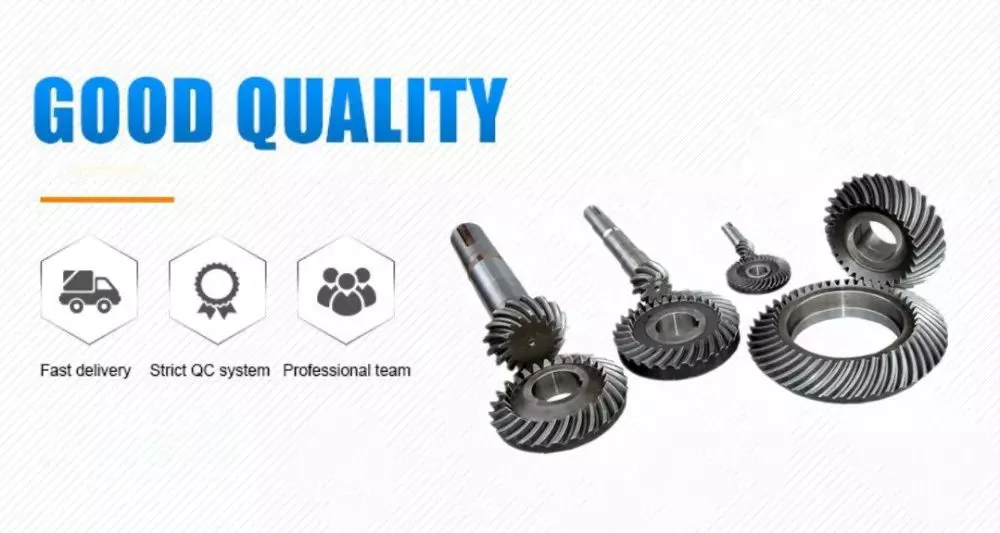
Spiral bevel gears
Spiral bevel gears are designed to increase efficiency and reduce cost. The spiral shape creates a profile in which the teeth are cut with a slight curve along their length, making them an excellent choice for heavy-duty applications. Spiral bevel gears are also hypoid gears, with no offsets. Their smaller size means that they are more compact than other types of right-angle gears, and they are much quieter than other types of gear.
Spiral bevel gears feature helical teeth arranged in a 90-degree angle. The design features a slight curve to the teeth, which reduces backlash while increasing flexibility. Because they have no offsets, they won’t slip during operation. Spiral bevel gears also have less backlash, making them an excellent choice for high-speed applications. They are also carefully spaced to distribute lubricant over a larger area. They are also very accurate and have a locknut design that prevents them from moving out of alignment.
In addition to the geometric design of bevel gears, CZPT can produce 3D models of spiral bevel gears. This software has gained widespread attention from many companies around the world. In fact, CZPT, a major manufacturer of 5-axis milling machines, recently machined a prototype using a spiral bevel gear model. These results prove that spiral bevel gears can be used in a variety of applications, ranging from precision machining to industrial automation.
Spiral bevel gears are also commonly known as hypoid gears. Hypoid gears differ from spiral bevel gears in that their pitch surface is not at the center of the meshing gear. The benefit of this gear design is that it can handle large loads while maintaining its unique features. They also produce less heat than their bevel counterparts, which can affect the efficiency of nearby components.
Straight toothed miter gears
Miter gears are bevel gears that have a pitch angle of 90 degrees. Their gear ratio is 1:1. Miter gears come in straight and spiral tooth varieties and are available in both commercial and high precision grades. They are a versatile tool for any mechanical application. Below are some benefits and uses of miter gears. A simple explanation of the basic principle of this gear type is given. Read on for more details.
When selecting a miter gear, it is important to choose the right material. Hard faced, high carbon steel is appropriate for applications requiring high load, while nylon and injection molding resins are suitable for lower loads. If a particular gear becomes damaged, it’s advisable to replace the entire set, as they are closely linked in shape. The same goes for spiral-cut miter gears. These geared products should be replaced together for proper operation.
Straight bevel gears are the easiest to manufacture. The earliest method was using an indexing head on a planer. Modern manufacturing methods, such as the Revacycle and Coniflex systems, made the process more efficient. CZPT utilizes these newer manufacturing methods and patented them. However, the traditional straight bevel is still the most common and widely used type. It is the simplest to manufacture and is the cheapest type.
SDP/Si is a popular supplier of high-precision gears. The company produces custom miter gears, as well as standard bevel gears. They also offer black oxide and ground bore and tooth surfaces. These gears can be used for many industrial and mechanical applications. They are available in moderate quantities from stock and in partial sizes upon request. There are also different sizes available for specialized applications.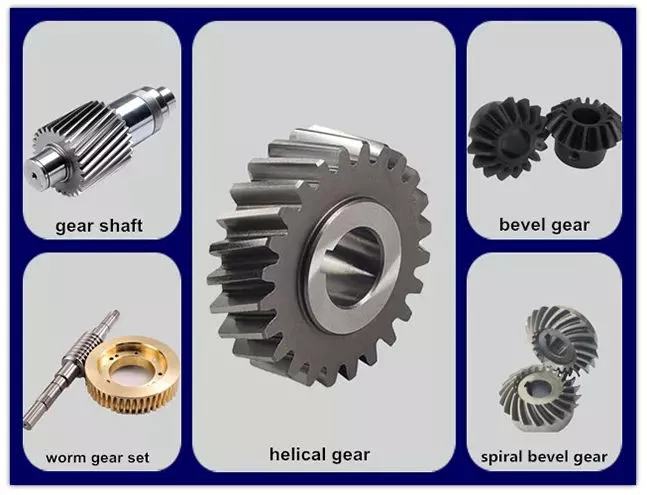
Hypoid bevel gears
The advantages of using Hypoid bevel and helical gears are obvious. Their high speed, low noise, and long life make them ideal for use in motor vehicles. This type of gear is also becoming increasingly popular in the power transmission and motion control industries. Compared to standard bevel and helical gears, they have a higher capacity for torque and can handle high loads with less noise.
Geometrical dimensioning of bevel/hypoid bevel gears is essential to meet ANSI/AGMA/ISO standards. This article examines a few ways to dimension hypoid bevel and helical gears. First, it discusses the limitations of the common datum surface when dimensioning bevel/helical gear pairs. A straight line can’t be parallel to the flanks of both the gear and the pinion, which is necessary to determine “normal backlash.”
Second, hypoid and helical gears have the same angular pitch, which makes the manufacturing process easier. Hypoid bevel gears are usually made of two gears with equal angular pitches. Then, they are assembled to match one another. This reduces noise and vibration, and increases power density. It is recommended to follow the standard and avoid using gears that have mismatched angular pitches.
Third, hypoid and helical gears differ in the shape of the teeth. They are different from standard gears because the teeth are more elongated. They are similar in appearance to spiral bevel gears and worm gears, but differ in geometry. While helical gears are symmetrical, hypoid bevel gears are non-conical. As a result, they can produce higher gear ratios and torque.
Crown bevel gears
The geometrical design of bevel gears is extremely complex. The relative contact position and flank form deviations affect both the paired gear geometry and the tooth bearing. In addition, paired gears are also subject to process-linked deviations that affect the tooth bearing and backlash. These characteristics require the use of narrow tolerance fields to avoid quality issues and production costs. The relative position of a miter gear depends on the operating parameters, such as the load and speed.
When selecting a crown bevel gear for a miter-gear system, it is important to choose one with the right tooth shape. The teeth of a crown-bevel gear can differ greatly in shape. The radial pitch and diametral pitch cone angles are the most common. The tooth cone angle, or “zerol” angle, is the other important parameter. Crown bevel gears have a wide range of tooth pitches, from flat to spiral.
Crown bevel gears for miter gear are made of high-quality materials. In addition to metal, they can be made of plastic or pre-hardened alloys. The latter are preferred as the material is less expensive and more flexible than steel. Furthermore, crown bevel gears for miter gears are extremely durable, and can withstand extreme conditions. They are often used to replace existing gears that are damaged or worn.
When selecting a crown bevel gear for a miter gear, it is important to know how they relate to each other. This is because the crown bevel gears have a 1:1 speed ratio with a pinion. The same is true for miter gears. When comparing crown bevel gears for miter gears, be sure to understand the radii of the pinion and the ring on the pinion.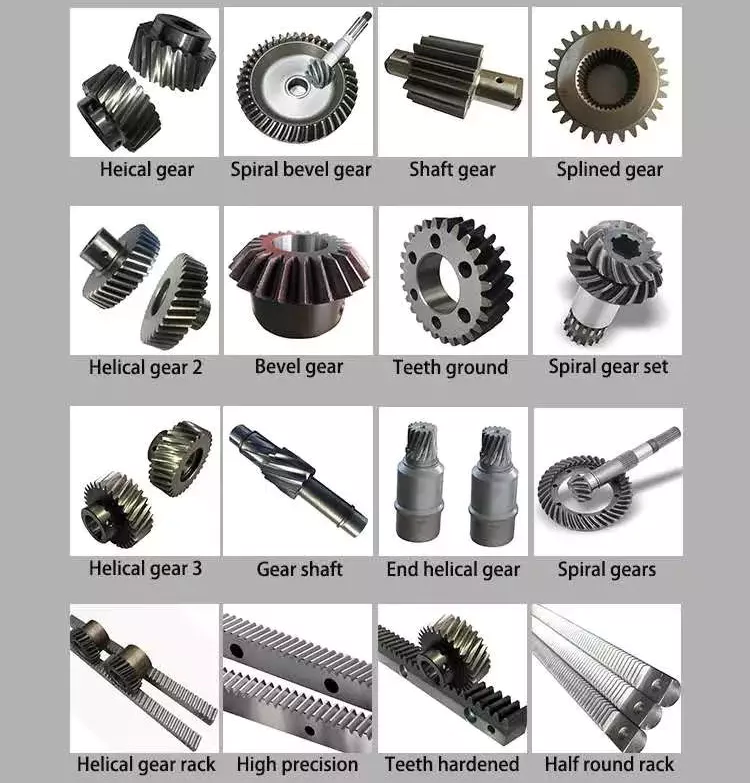
Shaft angle requirements for miter gears
Miter gears are used to transmit motion between intersecting shafts at a right angle. Their tooth profile is shaped like the mitre hat worn by a Catholic bishop. Their pitch and number of teeth are also identical. Shaft angle requirements vary depending on the type of application. If the application is for power transmission, miter gears are often used in a differential arrangement. If you’re installing miter gears for power transmission, you should know the mounting angle requirements.
Shaft angle requirements for miter gears vary by design. The most common arrangement is perpendicular, but the axes can be angled to almost any angle. Miter gears are also known for their high precision and high strength. Their helix angles are less than ten degrees. Because the shaft angle requirements for miter gears vary, you should know which type of shaft angle you require before ordering.
To determine the right pitch cone angle, first determine the shaft of the gear you’re designing. This angle is called the pitch cone angle. The angle should be at least 90 degrees for the gear and the pinion. The shaft bearings must also be capable of bearing significant forces. Miter gears must be supported by bearings that can withstand significant forces. Shaft angle requirements for miter gears vary from application to application.
For industrial use, miter gears are usually made of plain carbon steel or alloy steel. Some materials are more durable than others and can withstand higher speeds. For commercial use, noise limitations may be important. The gears may be exposed to harsh environments or heavy machine loads. Some types of gears function with teeth missing. But be sure to know the shaft angle requirements for miter gears before you order one.

