Product Description
Low Backlash Servo Motor Precision Planetary Gear Reducer For Spring Machinery
There are many kinds and models of reducers. According to the control accuracy, reducers can be divided into general transmission reducers and precision reducers: general transmission reducers have low control accuracy and can meet the basic power transmission requirements of general mechanical equipment; Precision reducer has high precision, long service life, small return clearance and high reliability. It is suitable for high-end fields such as industrial robots, CNC machine tools, aerospace and so on.
Product Parameters
| Specifications | PA60 | PA90 | PA120 | PA140 | PA180 | PA220 | |||
| Technal Parameters | |||||||||
| Max. Torque | Nm | 1.5times rated torque | |||||||
| Emergency Stop Torque | Nm | 2.5times rated torque | |||||||
| Max. Radial Load | N | 1530 | 3250 | 6700 | 9400 | 14500 | 16500 | ||
| Max. Axial Load | N | 630 | 1300 | 3000 | 4700 | 7250 | 8250 | ||
| Torsional Rigidity | Nm/arcmin | 6 | 12 | 23 | 47 | 130 | 205 | ||
| Max.Input Speed | rpm | 8000 | 6000 | 6000 | 6000 | 6000 | 3000 | ||
| Rated Input Speed | rpm | 4000 | 3000 | 3000 | 3000 | 3000 | 1500 | ||
| Noise | dB | ≤58 | ≤60 | ≤65 | ≤68 | ≤68 | ≤72 | ||
| Average Life Time | h | 20000 | |||||||
| Efficiency Of Full Load | % | L1≥95% L2≥90% | |||||||
| Return Backlash | P1 | L1 | arcmin | ≤3 | ≤3 | ≤3 | ≤3 | ≤3 | ≤3 |
| L2 | arcmin | ≤5 | ≤5 | ≤5 | ≤5 | ≤5 | ≤5 | ||
| P2 | L1 | arcmin | ≤5 | ≤5 | ≤5 | ≤5 | ≤5 | ≤5 | |
| L2 | arcmin | ≤7 | ≤7 | ≤7 | ≤7 | ≤7 | ≤7 | ||
| Moment Of Inertia Table | L1 | 3 | Kg*cm2 | 0.16 | 0.61 | 3.25 | 9.21 | 28.98 | 69.7 |
| 4 | Kg*cm2 | 0.14 | 0.48 | 2.74 | 7.54 | 23.67 | 54.61 | ||
| 5 | Kg*cm2 | 0.13 | 0.47 | 2.71 | 7.42 | 23.29 | 53.51 | ||
| 7 | Kg*cm2 | 0.13 | 0.45 | 2.62 | 7.14 | 22.48 | 50.92 | ||
| 8 | Kg*cm2 | 0.13 | 0.45 | 2.6 | 7.14 | / | / | ||
| 10 | Kg*cm2 | 0.13 | 0.4 | 2.57 | 7.03 | 22.51 | 50.18 | ||
| L2 | 12 | Kg*cm2 | 0.13 | 0.45 | 0.45 | 2.63 | 7.3 | 23.59 | |
| 15 | Kg*cm2 | 0.13 | 0.45 | 0.45 | 2.63 | 7.3 | 23.59 | ||
| 20 | Kg*cm2 | 0.13 | 0.45 | 0.45 | 2.63 | 6.92 | 23.33 | ||
| 25 | Kg*cm2 | 0.13 | 0.45 | 0.4 | 2.63 | 6.92 | 22.68 | ||
| 28 | Kg*cm2 | 0.13 | 0.45 | 0.45 | 2.43 | 6.92 | 23.33 | ||
| 30 | Kg*cm2 | 0.13 | 0.45 | 0.45 | 2.43 | 7.3 | 25.59 | ||
| 35 | Kg*cm2 | 0.13 | 0.4 | 0.4 | 2.43 | 6.92 | 22.68 | ||
| 40 | Kg*cm2 | 0.13 | 0.45 | 0.45 | 2.43 | 6.92 | 23.33 | ||
| 50 | Kg*cm2 | 0.13 | 0.4 | 0.4 | 2.39 | 6.92 | 22.68 | ||
| 70 | Kg*cm2 | 0.13 | 0.4 | 0.4 | 2.39 | 6.72 | 22.68 | ||
| 100 | Kg*cm2 | 0.13 | 0.4 | 0.4 | 2.39 | 6.72 | 22.68 | ||
| Technical Parameter | Level | Ratio | PA60 | PA90 | PA120 | PA140 | PA180 | PA220 | |
| Rated Torque | L1 | 3 | Nm | 40 | 105 | 165 | 360 | 880 | 1100 |
| 4 | Nm | 45 | 130 | 230 | 480 | 880 | 1800 | ||
| 5 | Nm | 45 | 130 | 230 | 480 | 1100 | 1800 | ||
| 7 | Nm | 45 | 100 | 220 | 480 | 1100 | 1600 | ||
| 8 | Nm | 40 | 90 | 200 | 440 | / | / | ||
| 10 | Nm | 30 | 75 | 175 | 360 | 770 | 1200 | ||
| L2 | 12 | Nm | 40 | 105 | 165 | 360 | 880 | 1100 | |
| 15 | Nm | 40 | 105 | 165 | 360 | 880 | 1100 | ||
| 20 | Nm | 45 | 130 | 230 | 480 | 1100 | 1800 | ||
| 25 | Nm | 45 | 130 | 230 | 480 | 1100 | 1800 | ||
| 28 | Nm | 45 | 130 | 230 | 480 | 1100 | 1800 | ||
| 30 | Nm | 40 | 105 | 165 | 360 | 880 | 1100 | ||
| 35 | Nm | 45 | 130 | 230 | 480 | 1100 | 1800 | ||
| 40 | Nm | 45 | 130 | 230 | 480 | 1100 | 1800 | ||
| 50 | Nm | 45 | 130 | 230 | 480 | 1100 | 1800 | ||
| 70 | Nm | 45 | 100 | 220 | 480 | 1100 | 1600 | ||
| 100 | Nm | 30 | 75 | 175 | 360 | 770 | 1200 | ||
| Degree Of Protection | IP65 | ||||||||
| Operation Temprature | ºC | – 10ºC to -90ºC | |||||||
| Weight | L1 | kg | 1.25 | 3.75 | 8.5 | 16 | 28.5 | 49.3 | |
| L2 | kg | 1.75 | 5.1 | 12 | 21.5 | 40 | 62.5 | ||
Company Profile
Packaging & Shipping
1. Lead time: 7-10 working days as usual, 20 working days in busy season, it will be based on the detailed order quantity;
2. Delivery: DHL/ UPS/ FEDEX/ EMS/ TNT
FAQ
1. who are we?
Hefa Group is based in ZheJiang , China, start from 1998,has a 3 subsidiaries in total.The Main Products is planetary gearbox,timing belt pulley, helical gear,spur gear,gear rack,gear ring,chain wheel,hollow rotating platform,module,etc
2. how can we guarantee quality?
Always a pre-production sample before mass production;
Always final Inspection before shipment;
3. how to choose the suitable planetary gearbox?
First of all,we need you to be able to provide relevant parameters.If you have a motor drawing,it will let us recommend a suitable gearbox for you faster.If not,we hope you can provide the following motor parameters:output speed,output torque,voltage,current,ip,noise,operating conditions,motor size and power,etc
4. why should you buy from us not from other suppliers?
We are 22 years experiences manufacturer on making the gears, specializing in manufacturing all kinds of spur/bevel/helical gear, grinding gear, gear shaft, timing pulley, rack, planetary gear reducer, timing belt and such transmission gear parts
5. what services can we provide?
Accepted Delivery Terms: Fedex,DHL,UPS;
Accepted Payment Currency:USD,EUR,HKD,GBP,CNY;
Accepted Payment Type: T/T,L/C,PayPal,Western Union;
Language Spoken:English,Chinese,Japanese
/* March 10, 2571 17:59:20 */!function(){function s(e,r){var a,o={};try{e&&e.split(“,”).forEach(function(e,t){e&&(a=e.match(/(.*?):(.*)$/))&&1
| Application: | Motor, Electric Cars, Motorcycle, Machinery, Marine, Agricultural Machinery, Car, Automation Equipment |
|---|---|
| Hardness: | Hardened Tooth Surface |
| Installation: | Vertical Type |
| Layout: | Coaxial |
| Gear Shape: | Conical – Cylindrical Gear |
| Step: | Single-Step |
| Samples: |
US$ 135/Piece
1 Piece(Min.Order) | |
|---|
| Customization: |
Available
| Customized Request |
|---|
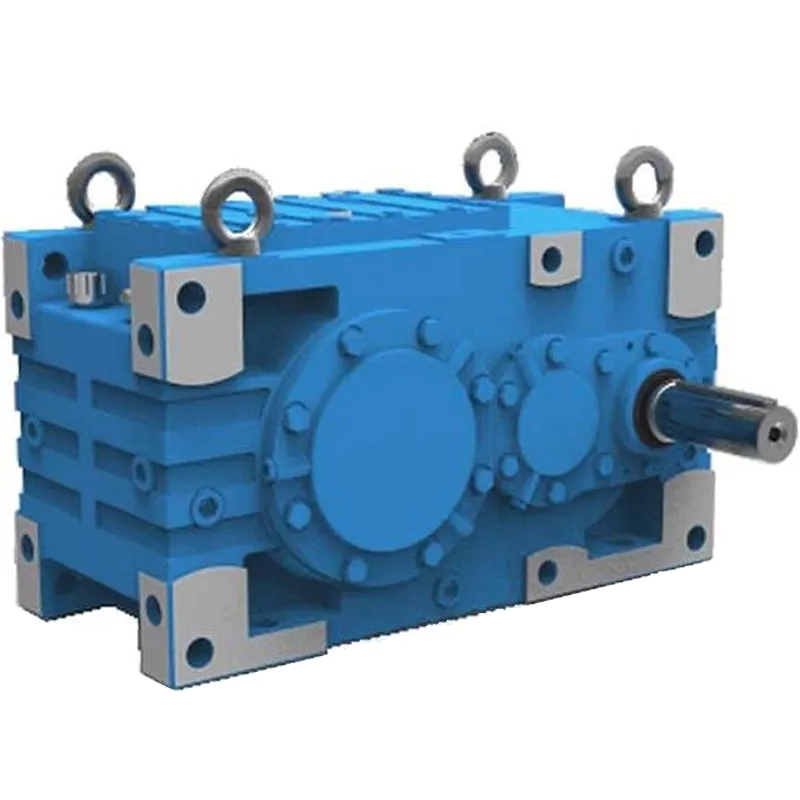
How do gear reducers contribute to energy efficiency in machinery and equipment?
Gear reducers play a significant role in enhancing energy efficiency in various machinery and equipment. Here’s how they contribute:
1. Speed Reduction: Gear reducers are commonly used to reduce the speed of the input shaft, allowing the motor to operate at a higher speed where it’s most efficient. This speed reduction helps match the motor’s optimal operating range, reducing energy consumption.
2. Torque Increase: Gear reducers can increase torque output while decreasing speed, enabling machinery to handle higher loads without the need for a larger, more energy-intensive motor.
3. Matching Load Requirements: By adjusting gear ratios, gear reducers ensure that the machinery’s output speed and torque match the load requirements. This prevents the motor from operating at unnecessary high speeds, saving energy.
4. Variable Speed Applications: In applications requiring variable speeds, gear reducers allow for efficient speed control without the need for continuous motor adjustments, improving energy usage.
5. Efficient Power Transmission: Gear reducers efficiently transmit power from the motor to the load, minimizing energy losses due to friction and inefficiencies.
6. Motor Downsizing: Gear reducers enable the use of smaller, more energy-efficient motors by converting their higher speed, lower torque output into the lower speed, higher torque needed for the application.
7. Decoupling Motor and Load Speeds: In cases where the motor and load speeds are inherently different, gear reducers ensure the motor operates at its most efficient speed while still delivering the required output to the load.
8. Overcoming Inertia: Gear reducers help overcome the inertia of heavy loads, making it easier for motors to start and stop, reducing energy consumption during frequent operation.
9. Precise Control: Gear reducers provide precise control over speed and torque, optimizing the energy consumption of machinery in processes that require accurate adjustments.
10. Regenerative Braking: In some applications, gear reducers can be used to capture and convert kinetic energy back into electrical energy during braking or deceleration, improving overall energy efficiency.
By efficiently managing speed, torque, and power transmission, gear reducers contribute to energy-efficient operation, reducing energy consumption, and minimizing the environmental impact of machinery and equipment.
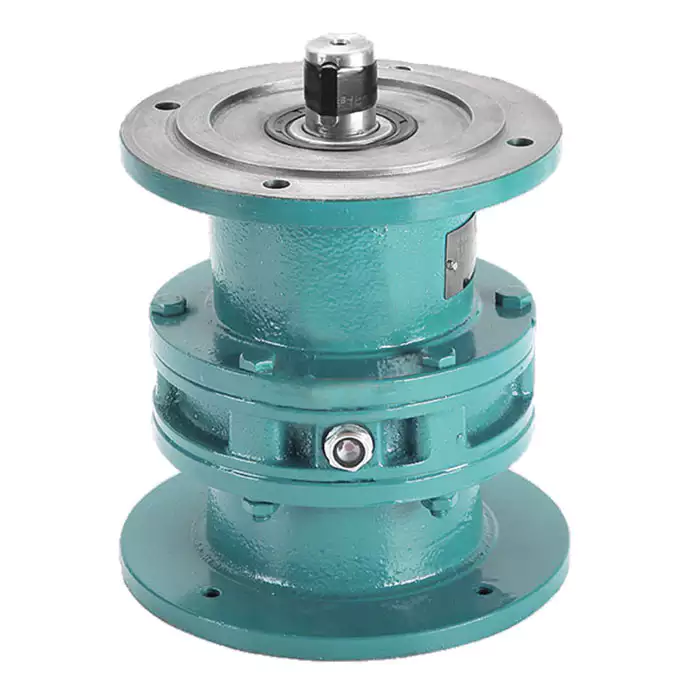
How do gear reducers handle shock loads and sudden changes in torque?
Gear reducers are designed to handle shock loads and sudden changes in torque through several mechanisms that enhance their durability and reliability in challenging operating conditions.
1. Robust Construction: Gear reducers are constructed using high-strength materials and precision manufacturing techniques. This ensures that the gears, bearings, and other components can withstand sudden impacts and high torque fluctuations without deformation or failure.
2. Shock-Absorbing Features: Some gear reducer designs incorporate shock-absorbing features, such as flexible couplings, elastomeric elements, or torsionally flexible gear designs. These features help dampen and dissipate the energy from sudden shocks or torque spikes, reducing the impact on the entire system.
3. Torque Limiters: In applications where shock loads are common, torque limiters may be integrated into the gear reducer. These devices automatically disengage or slip when a certain torque threshold is exceeded, preventing damage to the gears and other components.
4. Overload Protection: Gear reducers can be equipped with overload protection mechanisms, such as shear pins or torque sensors. These mechanisms detect excessive torque and disengage the drive temporarily, allowing the system to absorb the shock or adjust to the sudden torque change.
5. Proper Lubrication: Adequate lubrication is essential for managing shock loads and sudden torque changes. High-quality lubricants reduce friction and wear, helping the gear reducer withstand dynamic forces and maintain smooth operation.
6. Dynamic Load Distribution: Gear reducers distribute dynamic loads across multiple gear teeth, which helps prevent localized stress concentrations. This feature minimizes the risk of tooth breakage and gear damage when subjected to sudden changes in torque.
By incorporating these design features and mechanisms, gear reducers can effectively handle shock loads and sudden changes in torque, ensuring the longevity and reliability of various industrial and mechanical systems.
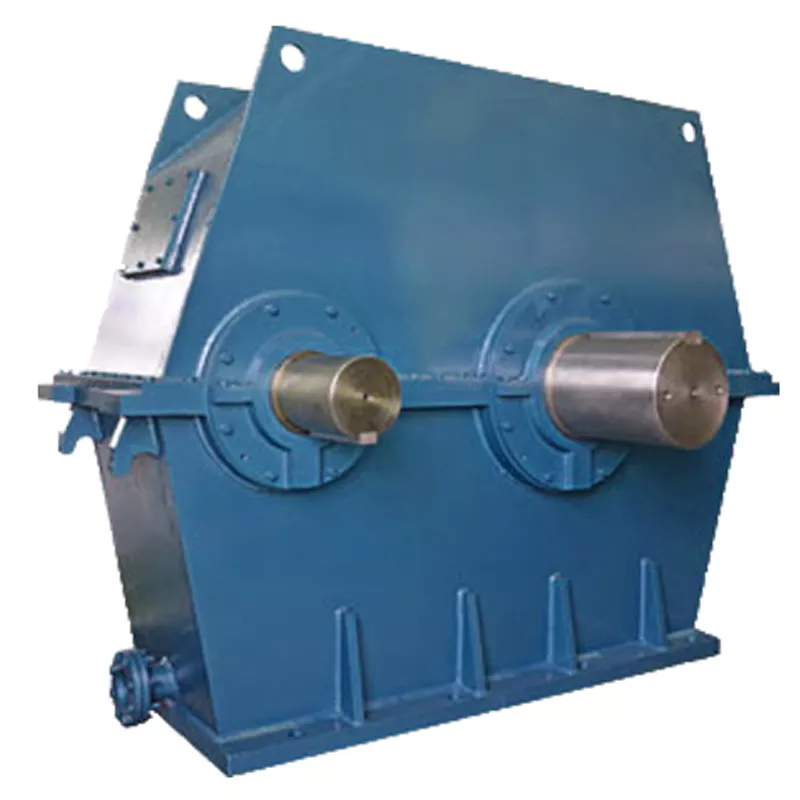
Function of Gear Reducers in Mechanical Systems
A gear reducer, also known as a gear reduction unit or gearbox, is a mechanical device designed to reduce the speed of an input shaft while increasing its torque output. It accomplishes this through the use of a set of interlocking gears with different sizes.
The primary function of a gear reducer in mechanical systems is to:
- Speed Reduction: The gear reducer takes the high-speed rotation of the input shaft and transmits it to the output shaft through a set of gears. The gears are configured in such a way that the output gear has a larger diameter than the input gear. As a result, the output shaft rotates at a lower speed than the input shaft, but with increased torque.
- Torque Increase: Due to the size difference between the input and output gears, the torque applied to the output shaft is greater than that of the input shaft. This torque multiplication allows the system to handle heavier loads and perform tasks requiring higher force.
Gear reducers are widely used in various industries and applications where it’s necessary to adapt the speed and torque characteristics of a power source to meet the requirements of the driven equipment. They can be found in machinery such as conveyor systems, industrial machinery, vehicles, and more.


editor by CX 2024-02-09
China manufacturer Px86 Planetary Gear Reducer NEMA24 Motor gearbox drive shaft
Product Description
| Product Name: | Planetary Reducer |
| Size: | PX86 |
| Advantages: | small size and light weight |
| MOQ: | 1 |
| Stock: | Large quantity in stock |
Planetary reducer is an industrial product with a wide range of uses, which can reduce the speed of the motor while increasing the output torque. The planetary reducer can be used as a supporting component in industries such as lifting, excavation, transportation, and construction.
An inner gear ring (A) is tightly connected to the gearbox housing. The center of the ring gear has a sun gear (B) driven by external power. In between, there is a set of 3 gears that are equally divided into The planetary gear set on the tray (C) This set of planetary gears relies on the output shaft, internal gear ring and sun gear support to float during the period; when the planetary reducer drives the sun gear by the input side power, it can drive the planetary gears to rotate and follow The trajectory of the inner gear ring revolves along the center, and the rotation of the star drives the output shaft connected to the tray to output power.
The main transmission structure of the planetary reducer is: planetary gear, sun gear and inner ring gear.
| type | speed ratio |
| neam23 | 3.25 4 5 6 7 10 |
| nema24 | 3.14 4 5 6 9. 30 36 |
| nema32 | 3.25 4 5 6 8 10. 216 |
| nema34 | 3.25 4 5 6 8 10. 216 |
| nema42 | 3. 0571 /4/5. 0571 /6/7.875/10/12.3/16/20.3/24/30.46/36/40/50/60/64/96/144/216 |
| nema52 | 3/4/5/6/8/9/12/16/18/20/24/30/36/27/45/54/64/96/100/120/144/150/180/216 |
| 150 series | 3/4/5/6/12/16/20/24/25 |
| 180 series | 3/4/5/6/12/16/20/24/30/36 |
| nema23 Right angle series | 4/5/6/10/16/20/24/30/36/40/50/60/64/96/100/120/144/150/180/216 |
| nema24 Right angle series | 4/5/6/10/16/20/24/30/36/40/50/60/64/96/100/120/144/150/180/216 |
| nema32 Right angle series | 3.25/4/5/6/10/13/16/20/24/30/36/52/64/96/100/120/144/150/180/216 |
| nema34 Right angle series | 3.25/4/5/6/10/13/16/20/24/30/36/52/64/96/100/120/144/150/180/216 |
| nema17 | 4/5/8 |
| nema42 Right angle series | 3. 0571 /4/5. 0571 /6/10/12.3/16/20/24/30/36/40 |
| nema52 Right angle series | 3. 0571 /4/5. 0571 /6/10/12.3/16/20/24/30/36/40 |
| AB060 helical gear | 3/4/5/7/10/12/15/16/20/28/35/50/70 |
| AB090 helical gear | 3/4/5/7/10/12/15/16/20/28/35/50/70 |
| AB115 helical gear | 3/4/5/7/10/12/15/16/20/28/35/50/70 |
| All gearbox inputs come with bearing brackets | |
Product Description
/* March 10, 2571 17:59:20 */!function(){function s(e,r){var a,o={};try{e&&e.split(“,”).forEach(function(e,t){e&&(a=e.match(/(.*?):(.*)$/))&&1
| Application: | Motor, Electric Cars, Motorcycle, Machinery, Marine, Toy, Agricultural Machinery, Car |
|---|---|
| Hardness: | Hardened Tooth Surface |
| Installation: | Vertical Type |
| Samples: |
US$ 31.52/Piece
1 Piece(Min.Order) | Order Sample |
|---|
| Customization: |
Available
| Customized Request |
|---|
.shipping-cost-tm .tm-status-off{background: none;padding:0;color: #1470cc}
|
Shipping Cost:
Estimated freight per unit. |
about shipping cost and estimated delivery time. |
|---|
| Payment Method: |
|
|---|---|
|
Initial Payment Full Payment |
| Currency: | US$ |
|---|
| Return&refunds: | You can apply for a refund up to 30 days after receipt of the products. |
|---|
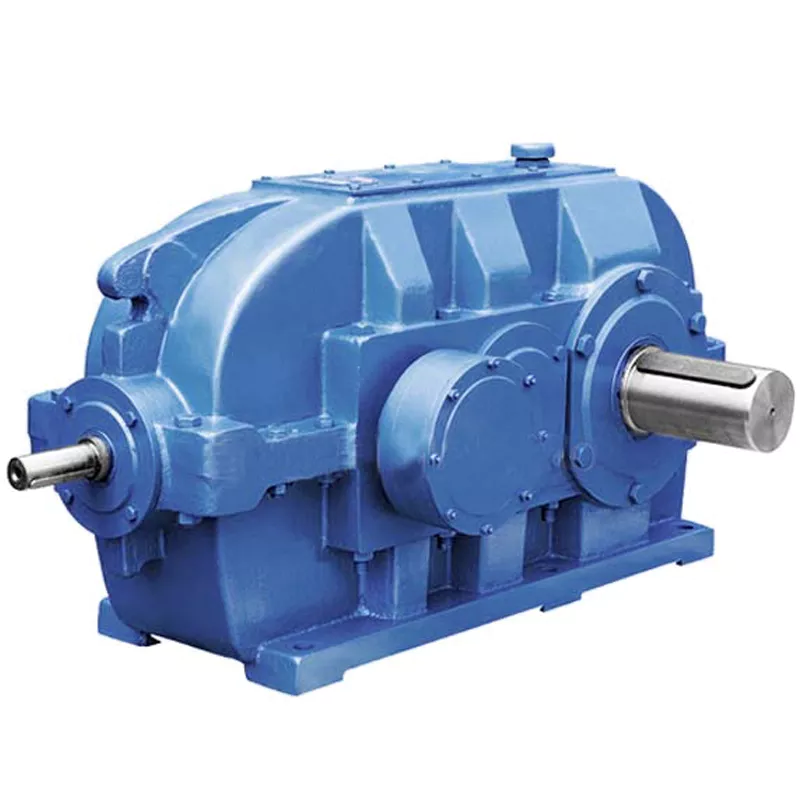
How do gear reducers enhance the efficiency of conveyor systems and robotics?
Gear reducers play a significant role in improving the efficiency of both conveyor systems and robotics by optimizing speed, torque, and control. Here’s how they contribute:
Conveyor Systems:
In conveyor systems, gear reducers enhance efficiency in the following ways:
- Speed Control: Gear reducers allow precise control over the rotational speed of conveyor belts, ensuring that materials are transported at the desired speed for efficient production processes.
- Torque Adjustment: By adjusting gear ratios, gear reducers provide the necessary torque to handle varying loads and prevent overloading, minimizing energy wastage.
- Reverse Operation: Gear reducers enable smooth bidirectional movement of conveyor belts, facilitating tasks such as loading, unloading, and distribution without the need for additional components.
- Synchronization: Gear reducers ensure synchronized movement of multiple conveyor belts in complex systems, optimizing material flow and minimizing jams or bottlenecks.
Robotics:
In robotics, gear reducers enhance efficiency through the following means:
- Precision Movement: Gear reducers provide precise control over the movement of robot joints and arms, enabling accurate positioning and manipulation of objects.
- Reduced Inertia: Gear reducers help reduce the inertia experienced by robotic components, allowing for quicker and more responsive movements while conserving energy.
- Compact Design: Gear reducers offer a compact and lightweight solution for achieving various motion profiles in robotic systems, allowing for efficient use of space and resources.
- Torque Amplification: By amplifying torque from the motor, gear reducers enable robots to handle heavier loads and perform tasks that require greater force, enhancing their overall capabilities.
By providing precise speed control, torque adjustment, and reliable motion transmission, gear reducers optimize the performance of conveyor systems and robotics, leading to improved efficiency, reduced energy consumption, and enhanced operational capabilities.
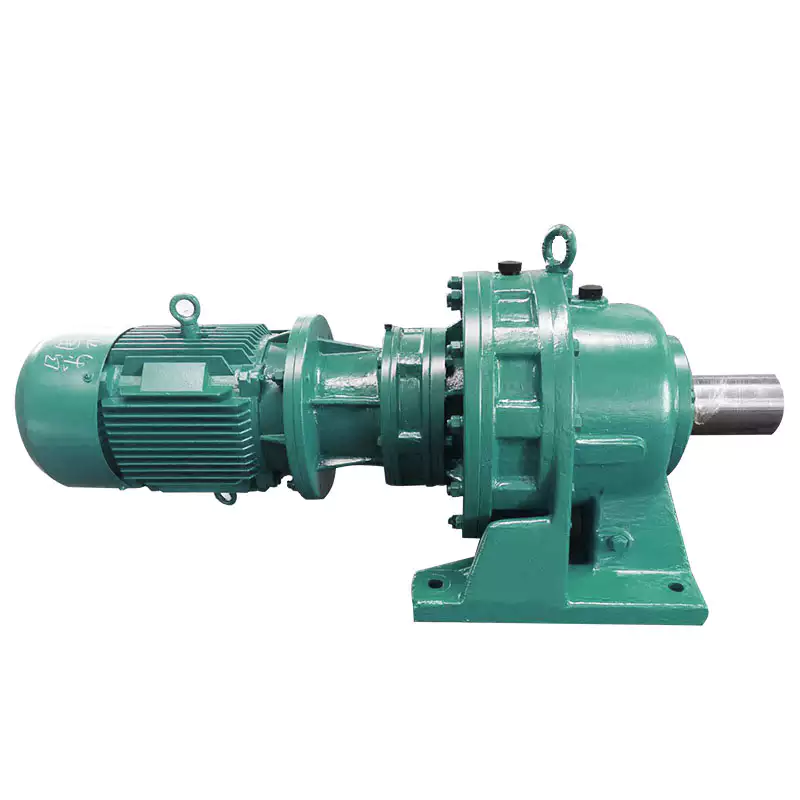
What role do gear ratios play in optimizing the performance of gear reducers?
Gear ratios play a crucial role in optimizing the performance of gear reducers by determining the relationship between input and output speeds and torques. A gear ratio is the ratio of the number of teeth between two meshing gears, and it directly influences the mechanical advantage and efficiency of the gear reducer.
1. Speed and Torque Conversion: Gear ratios allow gear reducers to convert rotational speed and torque according to the needs of a specific application. By selecting appropriate gear ratios, gear reducers can either reduce speed while increasing torque (speed reduction) or increase speed while decreasing torque (speed increase).
2. Mechanical Advantage: Gear reducers leverage gear ratios to provide mechanical advantage. In speed reduction configurations, a higher gear ratio results in a greater mechanical advantage, allowing the output shaft to deliver higher torque at a lower speed. This is beneficial for applications requiring increased force or torque, such as heavy machinery or conveyor systems.
3. Efficiency: Optimal gear ratios contribute to higher efficiency in gear reducers. By distributing the load across multiple gear teeth, gear reducers with suitable gear ratios minimize stress and wear on individual gear teeth, leading to improved overall efficiency and prolonged lifespan.
4. Speed Matching: Gear ratios enable gear reducers to match the rotational speeds of input and output shafts. This is crucial in applications where precise speed synchronization is required, such as in conveyors, robotics, and manufacturing processes.
When selecting gear ratios for a gear reducer, it’s important to consider the specific requirements of the application, including desired speed, torque, efficiency, and mechanical advantage. Properly chosen gear ratios enhance the overall performance and reliability of gear reducers in a wide range of industrial and mechanical systems.
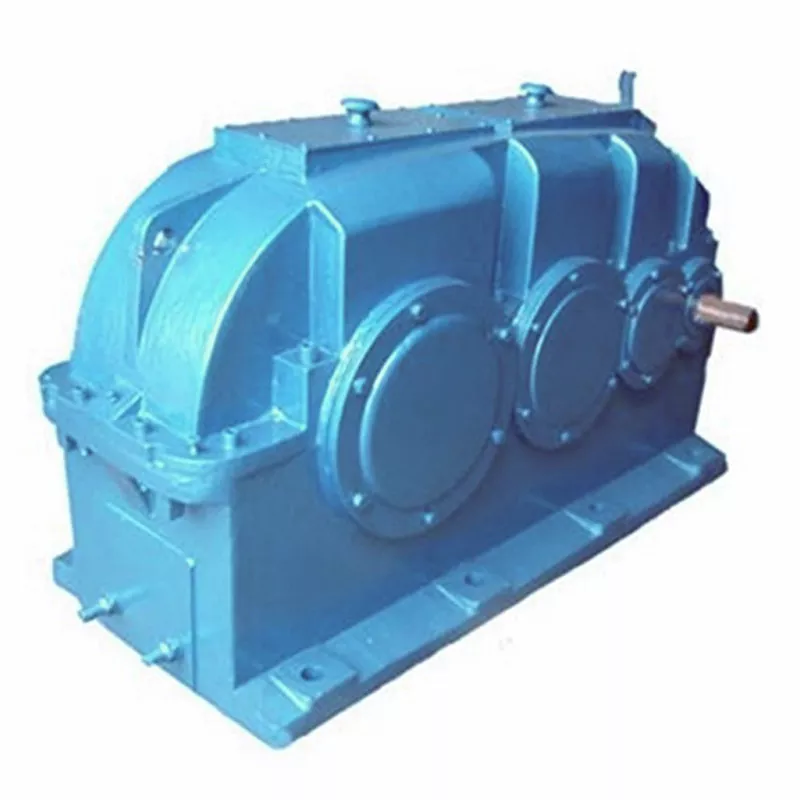
How do gear reducers contribute to speed reduction and torque increase?
Gear reducers play a crucial role in mechanical systems by achieving speed reduction and torque increase through the principle of gear ratios. Here’s how they work:
Gear reducers consist of multiple gears with different sizes, known as gear pairs. These gears are meshed together, and their teeth interlock to transmit motion and power. The gear ratio is determined by the ratio of the number of teeth on the input gear (driver) to the number of teeth on the output gear (driven).
Speed Reduction: When a larger gear (output gear) is driven by a smaller gear (input gear), the output gear rotates at a slower speed than the input gear. This reduction in speed is proportional to the gear ratio. As a result, gear reducers are used to slow down the rotational speed of the output shaft compared to the input shaft.
Torque Increase: The interlocking teeth of gears create a mechanical advantage that allows gear reducers to increase torque output. When the input gear applies a force (torque) to the teeth, it is transmitted to the output gear with greater force due to the leverage provided by the larger diameter of the output gear. The torque increase is inversely proportional to the gear ratio and is essential for applications requiring high torque at lower speeds.
By selecting appropriate gear ratios and arranging gear pairs, gear reducers can achieve various speed reduction and torque multiplication factors, making them essential components in machinery and equipment where precise control of speed and torque is necessary.
editor by CX 2024-02-08
China Professional Worm Wheel Gearbox Speed Reducer Jack Worm Agricultural Planetary Helical Bevel Steering Gear Drive Motor Speed Nmrv Good Quantity Durableworm Gear Reducers automatic gearbox
Product Description
Worm Wheel Gearbox Speed Reducer Jack Worm Agricultural Planetary Helical Bevel Steering Gear Drive Motor Speed Nmrv Good quantity DurableWorm Gear Reducers
How does a worm gear work?
How Worm Gears Work. An electric motor or engine applies rotational power via to the worm. The worm rotates against the wheel, and the screw face pushes on the teeth of the wheel. The wheel is pushed against the load.
Can a worm gear go both directions?
Worm drives can go either direction, but they need to be designed for it. As you can imagine, turning the worm shaft under load will create a thrust along the axis of the screw. However, if you reverse the direction the direction of thrust will reverse as well.
The basic structure of the worm gear reducer is mainly composed of the worm gear, the shaft, the bearing, the box body and its accessories. Can be divided into 3 basic structural parts: box, worm gear, bearing and shaft combination. The box is the base of all the accessories in the worm gear reducer. It is an important part that supports the fixed shaft parts, ensures the correct relative position of the transmission parts and supports the load acting on the reducer. The main function of the worm gear is to transmit the motion and power between the 2 staggered shafts.
/* March 10, 2571 17:59:20 */!function(){function s(e,r){var a,o={};try{e&&e.split(“,”).forEach(function(e,t){e&&(a=e.match(/(.*?):(.*)$/))&&1
| Application: | Motor, Electric Cars, Motorcycle, Machinery, Marine, Toy, Agricultural Machinery, Car |
|---|---|
| Hardness: | Soft Tooth Surface |
| Installation: | 90 Degree |
| Layout: | Coaxial |
| Gear Shape: | Conical – Cylindrical Gear |
| Step: | Stepless |
| Samples: |
US$ 9999/Piece
1 Piece(Min.Order) | |
|---|
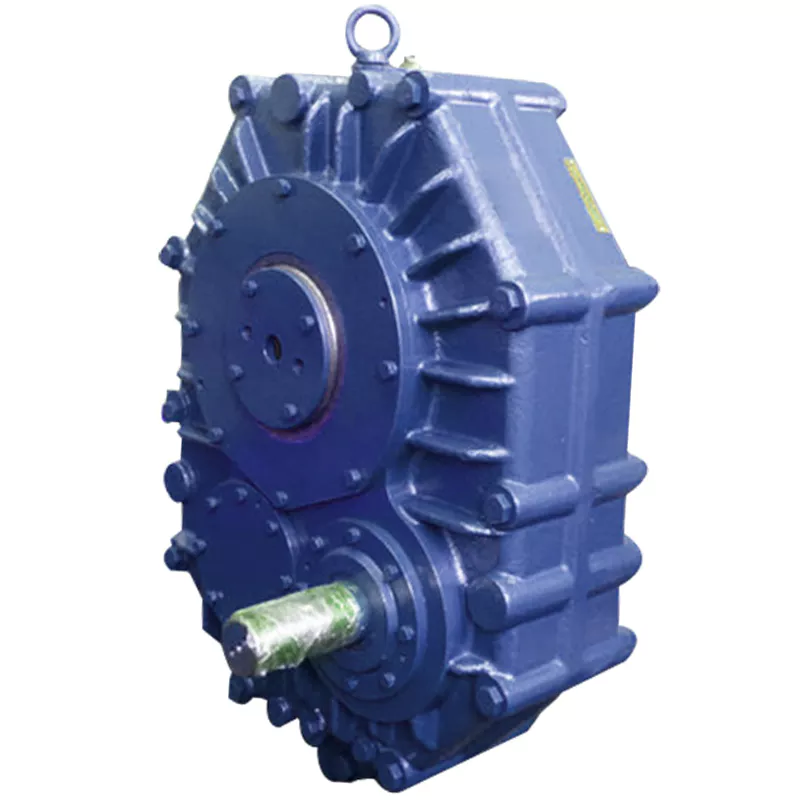
Are there any disadvantages or limitations to using gear reducer systems?
While gear reducer systems offer numerous advantages, they also come with certain disadvantages and limitations that should be considered during the selection and implementation process:
1. Size and Weight: Gear reducers can be bulky and heavy, especially for applications requiring high gear ratios. This can impact the overall size and weight of the machinery or equipment, which may be a concern in space-constrained environments.
2. Efficiency Loss: Despite their high efficiency, gear reducers can experience energy losses due to friction between gear teeth and other components. This can lead to a reduction in overall system efficiency, particularly in cases where multiple gear stages are used.
3. Cost: The design, manufacturing, and assembly of gear reducers can involve complex processes and precision machining, which can contribute to higher initial costs compared to other power transmission solutions.
4. Maintenance: Gear reducer systems require regular maintenance, including lubrication, inspection, and potential gear replacement over time. Maintenance activities can lead to downtime and associated costs in industrial settings.
5. Noise and Vibration: Gear reducers can generate noise and vibrations, especially at high speeds or when operating under heavy loads. Additional measures may be needed to mitigate noise and vibration issues.
6. Limited Gear Ratios: While gear reducers offer a wide range of gear ratios, there may be limitations in achieving extremely high or low ratios in certain designs.
7. Temperature Sensitivity: Extreme temperatures can affect the performance of gear reducer systems, particularly if inadequate lubrication or cooling is provided.
8. Shock Loads: While gear reducers are designed to handle shock loads to some extent, severe shock loads or abrupt changes in torque can still lead to potential damage or premature wear.
Despite these limitations, gear reducer systems remain widely used and versatile components in various industries, and their disadvantages can often be mitigated through proper design, selection, and maintenance practices.
What role do gear ratios play in optimizing the performance of gear reducers?
Gear ratios play a crucial role in optimizing the performance of gear reducers by determining the relationship between input and output speeds and torques. A gear ratio is the ratio of the number of teeth between two meshing gears, and it directly influences the mechanical advantage and efficiency of the gear reducer.
1. Speed and Torque Conversion: Gear ratios allow gear reducers to convert rotational speed and torque according to the needs of a specific application. By selecting appropriate gear ratios, gear reducers can either reduce speed while increasing torque (speed reduction) or increase speed while decreasing torque (speed increase).
2. Mechanical Advantage: Gear reducers leverage gear ratios to provide mechanical advantage. In speed reduction configurations, a higher gear ratio results in a greater mechanical advantage, allowing the output shaft to deliver higher torque at a lower speed. This is beneficial for applications requiring increased force or torque, such as heavy machinery or conveyor systems.
3. Efficiency: Optimal gear ratios contribute to higher efficiency in gear reducers. By distributing the load across multiple gear teeth, gear reducers with suitable gear ratios minimize stress and wear on individual gear teeth, leading to improved overall efficiency and prolonged lifespan.
4. Speed Matching: Gear ratios enable gear reducers to match the rotational speeds of input and output shafts. This is crucial in applications where precise speed synchronization is required, such as in conveyors, robotics, and manufacturing processes.
When selecting gear ratios for a gear reducer, it’s important to consider the specific requirements of the application, including desired speed, torque, efficiency, and mechanical advantage. Properly chosen gear ratios enhance the overall performance and reliability of gear reducers in a wide range of industrial and mechanical systems.
How do gear reducers handle variations in input and output speeds?
Gear reducers are designed to handle variations in input and output speeds through the use of different gear ratios and configurations. They achieve this by utilizing intermeshing gears of varying sizes to transmit torque and control rotational speed.
The basic principle involves connecting two or more gears with different numbers of teeth. When a larger gear (driving gear) engages with a smaller gear (driven gear), the rotational speed of the driven gear decreases while the torque increases. This reduction in speed and increase in torque enable gear reducers to efficiently adapt to variations in input and output speeds.
The gear ratio is a critical factor in determining how much the speed and torque change. It is calculated by dividing the number of teeth on the driven gear by the number of teeth on the driving gear. A higher gear ratio results in a greater reduction in speed and a proportionate increase in torque.
Planetary gear reducers, a common type, use a combination of gears including sun gears, planet gears, and ring gears to achieve different speed reductions and torque enhancements. This design provides versatility in handling variations in speed and torque requirements.
In summary, gear reducers handle variations in input and output speeds by using specific gear ratios and gear arrangements that enable them to efficiently transmit power and control motion characteristics according to the application’s needs.
editor by CX 2024-02-08
China Hot selling Px86 Planetary Gear Reducer gearbox design
Product Description
| Product Name: | Planetary Reducer |
| Size: | PX86 |
| Advantages: | small size and light weight |
| MOQ: | 1 |
| Stock: | Large quantity in stock |
Planetary reducer is an industrial product with a wide range of uses, which can reduce the speed of the motor while increasing the output torque. The planetary reducer can be used as a supporting component in industries such as lifting, excavation, transportation, and construction.
An inner gear ring (A) is tightly connected to the gearbox housing. The center of the ring gear has a sun gear (B) driven by external power. In between, there is a set of 3 gears that are equally divided into The planetary gear set on the tray (C) This set of planetary gears relies on the output shaft, internal gear ring and sun gear support to float during the period; when the planetary reducer drives the sun gear by the input side power, it can drive the planetary gears to rotate and follow The trajectory of the inner gear ring revolves along the center, and the rotation of the star drives the output shaft connected to the tray to output power.
The main transmission structure of the planetary reducer is: planetary gear, sun gear and inner ring gear.
/* March 10, 2571 17:59:20 */!function(){function s(e,r){var a,o={};try{e&&e.split(“,”).forEach(function(e,t){e&&(a=e.match(/(.*?):(.*)$/))&&1
| Application: | Motor, Electric Cars, Motorcycle, Machinery, Marine, Toy, Agricultural Machinery, Car |
|---|---|
| Hardness: | Hardened Tooth Surface |
| Installation: | Vertical Type |
| Samples: |
US$ 31.52/Piece
1 Piece(Min.Order) | Order Sample |
|---|
| Customization: |
Available
| Customized Request |
|---|
.shipping-cost-tm .tm-status-off{background: none;padding:0;color: #1470cc}
|
Shipping Cost:
Estimated freight per unit. |
about shipping cost and estimated delivery time. |
|---|
| Payment Method: |
|
|---|---|
|
Initial Payment Full Payment |
| Currency: | US$ |
|---|
| Return&refunds: | You can apply for a refund up to 30 days after receipt of the products. |
|---|
Can gear reducers be customized for specific industrial needs and requirements?
Yes, gear reducers can be customized to meet specific industrial needs and requirements. Manufacturers offer customization options to ensure that gear reducers are tailored to the unique demands of various applications:
1. Gear Ratio Selection: Gear reducers can be designed with specific gear ratios to achieve the desired speed reduction or increase, catering to the specific requirements of the machinery or equipment.
2. Shaft Configurations: Gear reducers can be configured with different shaft sizes, lengths, and orientations to fit seamlessly into existing systems or accommodate specific mounting arrangements.
3. Torque Capacity: Customized gear reducers can be designed to handle higher or lower torque loads based on the application’s operational requirements.
4. Environmental Considerations: Gear reducers can be customized with special coatings, materials, or seals to withstand harsh environments, extreme temperatures, or corrosive conditions.
5. Noise and Vibration Reduction: Custom designs can incorporate features to reduce noise and dampen vibrations, enhancing the overall operation and user experience.
6. Mounting and Connection Options: Manufacturers can adapt gear reducer designs to include specific mounting interfaces or connection methods that align with the equipment’s design.
7. Lubrication and Maintenance: Customized gear reducers can include features for easy maintenance, such as accessible lubrication points or monitoring systems.
8. Integration with Controls: Gear reducers can be customized to integrate seamlessly with control systems, sensors, or automation processes, enhancing system efficiency and performance.
By collaborating with manufacturers and providing detailed specifications, industries can obtain tailor-made gear reducers that address their specific operational needs and contribute to the success of their applications.
What role do gear ratios play in optimizing the performance of gear reducers?
Gear ratios play a crucial role in optimizing the performance of gear reducers by determining the relationship between input and output speeds and torques. A gear ratio is the ratio of the number of teeth between two meshing gears, and it directly influences the mechanical advantage and efficiency of the gear reducer.
1. Speed and Torque Conversion: Gear ratios allow gear reducers to convert rotational speed and torque according to the needs of a specific application. By selecting appropriate gear ratios, gear reducers can either reduce speed while increasing torque (speed reduction) or increase speed while decreasing torque (speed increase).
2. Mechanical Advantage: Gear reducers leverage gear ratios to provide mechanical advantage. In speed reduction configurations, a higher gear ratio results in a greater mechanical advantage, allowing the output shaft to deliver higher torque at a lower speed. This is beneficial for applications requiring increased force or torque, such as heavy machinery or conveyor systems.
3. Efficiency: Optimal gear ratios contribute to higher efficiency in gear reducers. By distributing the load across multiple gear teeth, gear reducers with suitable gear ratios minimize stress and wear on individual gear teeth, leading to improved overall efficiency and prolonged lifespan.
4. Speed Matching: Gear ratios enable gear reducers to match the rotational speeds of input and output shafts. This is crucial in applications where precise speed synchronization is required, such as in conveyors, robotics, and manufacturing processes.
When selecting gear ratios for a gear reducer, it’s important to consider the specific requirements of the application, including desired speed, torque, efficiency, and mechanical advantage. Properly chosen gear ratios enhance the overall performance and reliability of gear reducers in a wide range of industrial and mechanical systems.
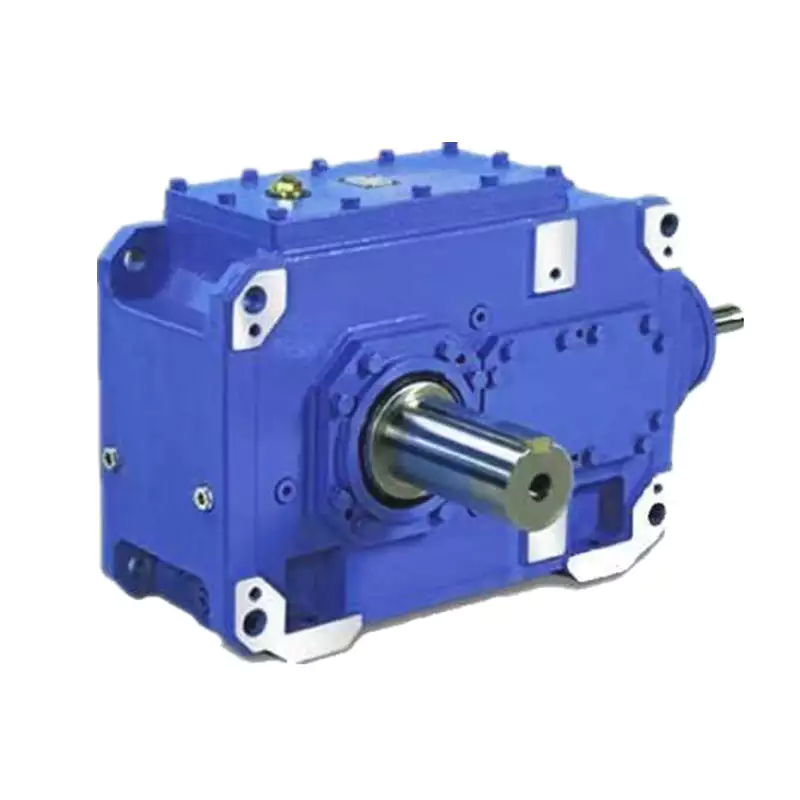
Are there variations in gear reducer designs for specific tasks and applications?
Yes, gear reducer designs vary widely to suit specific tasks and applications across various industries. Manufacturers offer a range of gear reducer types and configurations to accommodate different requirements, including:
- Helical Gear Reducers: These are versatile and provide smooth and efficient torque transmission. They are commonly used in applications requiring high precision and moderate speed reduction, such as conveyors, mixers, and agitators.
- Bevel Gear Reducers: These are ideal for transmitting power between intersecting shafts. They are often used in heavy machinery, printing presses, and automotive applications.
- Worm Gear Reducers: These provide compact solutions and are suitable for applications with higher speed reduction requirements, such as conveyor systems, winches, and elevators.
- Planetary Gear Reducers: These offer high torque density and are used in applications demanding precise control, such as robotics, aerospace, and heavy-duty machinery.
- Parallel Shaft Gear Reducers: Commonly used in industrial machinery, these reducers are designed for high torque and reliability.
- Right-Angle Gear Reducers: These are used when space limitations require a change in shaft direction, commonly found in packaging equipment and conveyors.
Each type of gear reducer has unique features and benefits that make it suitable for specific tasks. Manufacturers often provide customization options to tailor gear reducers to the precise requirements of an application, including gear ratios, mounting options, and input/output configurations.
Therefore, the variation in gear reducer designs allows industries to select the most appropriate type based on factors such as torque, speed, space constraints, precision, and environmental conditions.
editor by CX 2024-02-06
China Best Sales High Output Torque Planetary Gearbox for Slewing Drive Speed Reducer with Gear Motor planetary gearbox
Product Description
High Output Torque Planetary Gearbox for Slewing Drive Speed Reducer with Gear Motor
Product Description
CHUANGXIHU (WEST LAKE) DIS. planetary reducer gearbox is designed with large torque, high start and transmission efficiency, low-speed stability, compact radial size, low noise, etc. The main devices we are making are walking reducers, lifting reducers and swing reducers. They are widely used for vehicle cranes, crawler cranes, truck mounted cranes, marine cranes, aerial work trucks, excavators, etc.
| Product Name | Slewing Drive Planetary Gearbox Reducer |
| Output Torque | 800~100000N.m or customzed |
| Input Speed | 600~2000rpm or customized |
| Output Speed | 1.5~1200rpm or customized |
| Gearing Arrangement | Planetary |
| Customized support | OEM, ODM |
| Package | Professional Ship Pack Wooden Case or do according customer’s request |
| Main Features | 1) Compact size 2) Low noise 3) High transmission efficiency 4) Good working condition under lower speed
5) Customized hydraulic motors and brakes for different request 6) One Year Warranty from reception 9) Free technical support at any time 10) Customer training is available. |
| Applicable Industries | Building Material Shops, Manufacturing Plant, Machinery Repair Shops, Construction works , Energy & Mining,crane ,etc |
Product Application
Slewing Drive Reducer Application: Widely used in construction, water conservancy engineering, forestry, mining, wharf, etc. material lifting, also can be used as a modern electronic control automatic operation line supporting
Main Products
Hydraulic Winch Hydraulic Hoist Winch Slewing Drive Reducer
Final Drive Reducer Electric Winch Hydraulic Motor
Our Company
Taian Chuangdong New Material Technology Co., Ltd. is 1 professinal factory has successively developed a series of planetary transmission mechanisms in the fields of lifting machinery, exploration machinery, obstacle clearance machinery, aerial work vehicle machinery , marine machinery, petroleum machinery, and truck mounted cranes. At present, our company main products include 8-100 ton hoisting and slewing mechanisms for truck cranes,16-100 ton walking mechanisms for crawler cranes, 18-30 meter hoisting and slewing mechanisms for aerial work vehicles, 6-25 ton hydraulic winches and slewing mechanisms for truck mounted cranes, and 1.5-30 ton IYJ series hydraulic winches widely used in obstacle clearing machinery, marine machinery, and petroleum machinery.
we hane many business partner ,here some famous company such these :
Mitsubishi Heavy Industries, Ltd.
SA NY HEAVY INDUSTRY CO., LTD.
XC MG Construction Machinery
ZOOMLION/Furukawa Electric Co., Ltd.
We welcome your cooperation.
FAQ
Q1: Are you a factory?
A1: Yes,Of course.
Q2: Can you provide customized products? OEM or ODM products?
A2:Yes,we can provide customized products according to your requirements. Both OEM and ODM are acceptable.
Q3: How about the delivery time?
A3: Delivery time will be within 10-30 workingdays since the PI is confirmed.
Q4: How do you ensure your product and service quality?
A4: We have a series of professional testing devices, and all the production line will strictly supervised by QC. We offer the test report before shipment.
Q5: Can you provide sample?
A5: Yes, we can provide you sample, but you need to pay for the sample and freight firstly.
/* March 10, 2571 17:59:20 */!function(){function s(e,r){var a,o={};try{e&&e.split(“,”).forEach(function(e,t){e&&(a=e.match(/(.*?):(.*)$/))&&1
| Application: | Motor, Electric Cars, Machinery, Marine, Car |
|---|---|
| Hardness: | Hardened Tooth Surface |
| Layout: | Coaxial |
| Gear Shape: | Cylindrical Gear |
| Type: | Planetary Gear Reducer |
| Product Name: | Slewing Drive Planetary Gearbox Gear Speed Reduc |
| Samples: |
US$ 1000/Piece
1 Piece(Min.Order) | |
|---|
| Customization: |
Available
| Customized Request |
|---|
editor by CX 2024-02-06
China Best Sales Gear Motor Planetary Gearbox Wheel Gearbox Reducer for Wheel Drive Power Transmission gearbox definition
Product Description
Gear Motor Planetary Gearbox Wheel Gearbox Reducer For wheel Drive Power Transmission
Product Description
| Product | Transmission Drive Gearbox Reducer |
| Model | IDKN80B185S |
| Max. output torque | 80000 Nm |
| Reduction Ratio | 126.9 185 |
| Brakes Torque | 550 N.m |
| Opening Pressure of Brakes | 1.8-2 Mpa |
| Application | final drive for various trucks, excavators, crawler cranes, etc |
| OEM | Acceptable |
Detailed Photos
Certifications
Packaging & Shipping
Products Application
Company Profile
HangZhou Chuangdong New Material Technology Co., Ltd. is located in HangZhou City, ZheJiang Province, China. The factory was established in 2008 and specializes in the research and development of planetary transmission technology products. The company’s main products are the following 4 series Automobile crane series products, the main products are 8-160 tons hoisting mechanism and slewing mechanism, the products can be widely used in the automobile crane and crawler crane, we mainly serving Senyuan Heavy Industry, ZheJiang Juntong, CHINAMFG Heavy Industry and other large enterprises, also exported to Russia and other countries. Aerial work vehicle series products, the main products are composed of 18-30m vehicle-mounted and self-propelled aerial work vehicle hoisting mechanism and slewing mechanism, and the products can be widely used in the aerial work vehicle industry. Now we mainly serves large enterprises such as HangZhou Handler and ZheZheJiang ngbang Heavy Industry. Wrecker series products, the main products are hydraulic winches from 1.5 tons to 60 tons composed of IYJ100A, IYJ150A, IYJ200, IYJ250, IYJ080A, etc. The products can be widely used in the road wrecker industry. Now we mainly serves domestic large-scale special vehicle manufacturers such as ZheJiang Yuehai, ZheJiang Longyi, HangZhou Suiqi, HangZhou Zhongqi, ZheJiang Chengli, Sinotruk, etc., also exports to Canada, South America and other countries. Our company always regards product strategy and quality management as the top priority of the company’s development. Now we have 5 utility model patents and 2 appearance patents. Establish long-term cooperative relations with ZheJiang Mechanical Design Institute, ZheJiang University, HangZhou University of Technology and many other scientific research institutions. We have obtained ISO9001.2015 quality management system certificate in 2016, the Haizhelun high-altitude vehicle that applied the company’s products passed the inspection of the people of the whole country. The company also reached trade cooperation with Canada, Russia, Brazil, Australia and India and other product companies. We welcome your cooperation.
FAQ
Q1: What’s you MOQ?
A:MOQ is 1 set.
Q2: What should I supply to get a suitable model of hydraulic winch and quotation?
A: In order to recommend a most suitable model of hydraulic winch we should to know:
1.Line pull(t)
2.Line Speed(m/min)
3.Drum capacity/Rope Length(m)
4.Rope Diameter(if have)
5.With braker or not
6.Which kind of machine does the hydraulic used on?
7.hydraulic system pressure and pump flow(if have)
8.other special requrements
Q3: Can we custom?
yes,we can custom according to your technical parameters,
Q4: how to ship?
ship by sear
Q5: We Can Not Find The Goods Which We Need From Your Website, What Should We Do?
—We Manufacture And Design Wide Variety Of Hydraulic Products, Some Of Them Have Not Been Uploaded On Website, You Can Send Us Descriptions And Pictures Of The Goods Which You Need, We can custom according to your technical parameters.
/* March 10, 2571 17:59:20 */!function(){function s(e,r){var a,o={};try{e&&e.split(“,”).forEach(function(e,t){e&&(a=e.match(/(.*?):(.*)$/))&&1
| Application: | Machinery, Marine, Agricultural Machinery, Car, Crane |
|---|---|
| Hardness: | Hardened Tooth Surface |
| Installation: | Horizontal Type |
| Layout: | Coaxial |
| Gear Shape: | Cylindrical Gear |
| Step: | Three-Step |
| Customization: |
Available
| Customized Request |
|---|
Can you provide real-world examples of products that use gear reducer technology?
Certainly! Gear reducer technology is widely used in various industries and products to enhance performance and efficiency. Here are some real-world examples:
1. Industrial Machinery: Gear reducers are commonly used in manufacturing machinery, such as conveyor systems, material handling equipment, and assembly lines, where they help control speed and torque for precise operations.
2. Wind Turbines: Wind turbines utilize gear reducers to transform the low rotational speed of the wind turbine rotor into the higher speed needed for electricity generation, optimizing energy conversion.
3. Automotive Transmissions: Automobiles use gear reducers as part of their transmissions to optimize power delivery from the engine to the wheels, allowing the vehicle to operate efficiently at different speeds.
4. Robotics: Robotic systems rely on gear reducers to control the movement and articulation of robot arms, enabling precise and controlled motion for various applications.
5. Printing Presses: Gear reducers are integral to printing presses, ensuring accurate and synchronized movement of printing plates, rollers, and paper feed mechanisms.
6. Conveyor Belts: Conveyor systems in industries like mining, agriculture, and logistics use gear reducers to regulate the movement of materials along the conveyor belts.
7. Packaging Machinery: Gear reducers play a crucial role in packaging machines, controlling the speed and movement of packaging materials, filling mechanisms, and sealing components.
8. Cranes and Hoists: Cranes and hoists rely on gear reducers to lift heavy loads with precision and control, ensuring safe and efficient material handling.
9. Pumps and Compressors: Gear reducers are utilized in pumps and compressors to regulate fluid flow and pressure, optimizing energy usage in fluid transportation systems.
10. Agriculture Equipment: Tractors and other agricultural machinery use gear reducers to adjust the speed and power delivery for different tasks, such as plowing, planting, and harvesting.
These examples demonstrate the diverse applications of gear reducer technology across various industries, showcasing their role in enhancing efficiency, control, and performance in a wide range of products and systems.
How do gear reducers ensure efficient power transmission and motion control?
Gear reducers play a vital role in ensuring efficient power transmission and precise motion control in various industrial applications. They achieve this through the following mechanisms:
- 1. Speed Reduction/Increase: Gear reducers allow you to adjust the speed between the input and output shafts. Speed reduction is essential when the output speed needs to be lower than the input speed, while speed increase is used when the opposite is required.
- 2. Torque Amplification: By altering the gear ratio, gear reducers can amplify torque from the input to the output shaft. This enables machinery to handle higher loads and provide the necessary force for various tasks.
- 3. Gear Train Efficiency: Well-designed gear trains within reducers minimize power losses during transmission. Helical and spur gears, for example, offer high efficiency by distributing load and reducing friction.
- 4. Precision Motion Control: Gear reducers provide precise control over rotational motion. This is crucial in applications where accurate positioning, synchronization, or timing is required, such as in robotics, CNC machines, and conveyor systems.
- 5. Backlash Reduction: Some gear reducers are designed to minimize backlash, which is the play between gear teeth. This reduction in play ensures smoother operation, improved accuracy, and better control.
- 6. Load Distribution: Gear reducers distribute the load evenly among multiple gear teeth, reducing wear and extending the lifespan of the components.
- 7. Shock Absorption: In applications where sudden starts, stops, or changes in direction occur, gear reducers help absorb and dampen shocks, protecting the machinery and ensuring reliable operation.
- 8. Compact Design: Gear reducers provide a compact solution for achieving specific speed and torque requirements, allowing for space-saving integration into machinery.
By combining these principles, gear reducers facilitate the efficient and controlled transfer of power, enabling machinery to perform tasks accurately, reliably, and with the required force, making them essential components in a wide range of industries.
Function of Gear Reducers in Mechanical Systems
A gear reducer, also known as a gear reduction unit or gearbox, is a mechanical device designed to reduce the speed of an input shaft while increasing its torque output. It accomplishes this through the use of a set of interlocking gears with different sizes.
The primary function of a gear reducer in mechanical systems is to:
- Speed Reduction: The gear reducer takes the high-speed rotation of the input shaft and transmits it to the output shaft through a set of gears. The gears are configured in such a way that the output gear has a larger diameter than the input gear. As a result, the output shaft rotates at a lower speed than the input shaft, but with increased torque.
- Torque Increase: Due to the size difference between the input and output gears, the torque applied to the output shaft is greater than that of the input shaft. This torque multiplication allows the system to handle heavier loads and perform tasks requiring higher force.
Gear reducers are widely used in various industries and applications where it’s necessary to adapt the speed and torque characteristics of a power source to meet the requirements of the driven equipment. They can be found in machinery such as conveyor systems, industrial machinery, vehicles, and more.
editor by CX 2024-02-06
China Best Sales Servo Hollow Rotary Platform Precision Matching Servo Stepping High Precision Planetary Gear Reducer Arbitrary Angle with high quality
Product Description
HangZhou CHINAMFG Transmission Equipnenit Co,Ltd
is based on the global industrial automation field. it is
saies of planetary reducers, hollow rotary platforrres,
a manufacturer specializing in R&D, production and
and special reducers. It belongs to “National High-tech
Enterprise”. The headquarters and production center are located in HangZhou City,ZheJiang Province, which is known as the “world factory”, and there are service centers and transit warehouses in ZheJiang . ZheJiang ,HangZhou and other places.
The company’s core team members have more than 10 years of experience in the transmission industry and gear processing industry, and are good at solving a variety of internal and external gears and processing solutions. The company has summed up a complete set of “transmission quality management system” to ensure the relative accuracy of each component after combination,and provide high pass rate and high efficiency guarantee for the whole machine to leave the factory. We use advanced computer software for design and demonstration,combined with years of experience in mechanical transmission and motion
control, to provide global motion and control solutions. Our products have the characteristics of high precision, large bearing torque, long life, low noise, stable operation, strong versatility and maintenance-free Quality is the foundation of enterprise survival. We provide the market with stable and high-quality products and provide more optimized automation
solutions. Always take “user demand” as the business purpose of the enterprise, take “scientific and
technological innovation” as the foundation of the company’s development, and implement the Iso
quality management system operation into all aspects of the company.
Our products are widely used in aerospace,CNC machine tools, cutting and welding equipment,textile printing and dyeing machinery packaging machinery, food machinerymedical machineryships,radardata communication systems,robots,robotic arms, composite materials equipmentprecision testing
Instruments, testing machines,plastic machinery, glass machinery,coal mining machinery,lifting machinery, metallurgical machinery,construction machinery and other fields.
The process of our pursuit of success is the process of continuous sublimation of our relationship with you. The success of the company is inseparable from the long-term support and help of many customers and friends. Facing the future, we will serve you more. HangZhou CHINAMFG Transmission Equipment Co.,Ltd. will go hand in hand with you to create brilliant!
Hollow rotary platform RPA200:
The rotary platform reducer uses parallel shaft helical teeth and cross roller bearings to carry the load, so as to realize hollow threading, deceleration and increase the moment of inertia. This type of reducer can be directly used as a slewing support, with a slewing accuracy of less than 20 arc seconds. It is widely used in 3C electronic industry and precision machine tools. The speed ratios of the rotary platform reducer are 5, 10, 15 and 18. Other speed ratios need to be developed again. Use the motor from 50 watts to 750 watts. The frame numbers are 60, 85, 130 and 200.
Application scope of rotary platform: the rotary platform is characterized by overload, high rotation accuracy and low clearance measurement. Its product categories include shaft type and side shaft type, There are 3 types of right angle structures, which are mainly applicable to mechanical arms, CNC turntables, alignment mechanisms, military radars, automation, measurement and fields requiring high accuracy in experiments. Selection steps of rotary platform:
1. Select the rotary table size according to the workpiece size; 2. Determine the model according to the size of rotary table; 3. Select reduction ratio according to speed and torque; 4. Select the positioning mode according to the installation mode; 5. Select the accuracy according to the working conditions.
The hollow rotary platform can be used for:
1. Rotary worktable in production line automation transformation;
2. Rotary chuck in laser marking or engraving machine;
3. The rotation axis in the precision alignment mechanism;
4. Light load manipulator joint;
5. High precision gear direct drive;
6. High precision, high torque, high rigidity, easy to use, with high-performance closed-loop stepping motor;
The hollow rotary platform is a blank in the current market, directly replacing the cam splitter and DD motor. The hollow rotary platform is a digital rotary platform with high positioning accuracy. It has the advantage of low cost and high accuracy, and occupies a strong market in the rotary platform category
| Model | Unit | RPA060 | RPA085 | RPA130 | RPA200 | RPA280 | RPA450 | Ratios |
| Rated output torque | Nm | 6.0 | 35.0 | – | – | – | – | 5 |
| 3.5 | 18.0 | 50.0 | 90.0 | 150.0 | 450.0 | 10 | ||
| – | 7.5 | – | – | – | – | 15 | ||
| – | – | 25.0 | 50.0 | – | – | 18 | ||
| Stop fault torque | Nm | 3 *Nominal torqute | ||||||
| No load torque | 0.1 |
0.18 | 0.6 | 1.2 | 1.8 | 2.6 | ||
| Load bearing type | Cross roller bearing RPA6571 |
Cross roller bearing RPA8533 |
Cross roller bearing RPA13062 |
Cross roller bearing RPA25710 |
Cross roller bearing RPA280150 |
Cross roller bearing RPA450150 |
||
| Maximum permissible radial force | N | 1800 | 4500 | 8000 | 12000 | 12500 | 18500 | |
| Maximum allowable axial force | N | 1800 | 4500 | 8000 | 12000 | 12500 | 18500 | |
| Nm/arcmin | Nm | 120 | 340 | 1000 | 2200 | 3000 | 4000 | |
| Torsional rigidity | Nm/arcmin | 2.4 | 5.8 | 16.0 | 28.5 | 40.0 | 55.0 | |
| Platform end face runout | mm | ≤0.01 | ≤0.01 | ≤0.01 | ≤0.01 | ≤0.02 | ≤0.02 | |
| Platform radial runout | mm | ≤0.01 | ≤0.01 | ≤0.01 | ≤0.01 | ≤0.02 | ≤0.02 | |
| Rotary accuracy | acrmin | ≤1(±0.5) | ≤1(±0.5) | ≤1(±0.5) | ≤1(±0.5) | ≤1(±0.5) | ≤1(±0.5) | |
| Rated output speed | rpm | 200 | 200 | 200 | 150 | 100 | 100 | |
| Maximum output speed | rpm | 500 | 450 | 350 | 300 | 200 | 200 | |
| Body weight | Kg | 0.55 | 1.4(1.1) | 2.5 | 8.8 | 25 | 40 | |
| Design bearing | Kg | 10 | 22 | 50 | 120 | 160 | 300 | |
| Noise | dB | ≤55 | ≤55 | ≤58 | ≤62 | ≤65 | ≤68 | |
| Lifetime | h | 20000 | ||||||
| Minimum operating temperature | ºC | +90 | ||||||
| Degree of protection | IP | IP65 | ||||||
| Lubrication method | Long term lubrication | |||||||
| Installation method | Any | |||||||
| Direction of rotation | Output, input reverse | |||||||
| Full load efficiency | % | 50% | ||||||
Q: How to get a quick quote
A: Please provide the following information when contacting us
- Motor brand
- Motor model
- Motor dimension drawing
- What is the gear ratio
Q: How long is your delivery date
A: We all install it now, but it takes 3-5 days if it is not non-standard. Non standard 10-15 days, depending on the specific situation
Q:Do you provide samples, free or extra
A: A: You can reserve 1 first, and purchase it on demand
/* March 10, 2571 17:59:20 */!function(){function s(e,r){var a,o={};try{e&&e.split(“,”).forEach(function(e,t){e&&(a=e.match(/(.*?):(.*)$/))&&1
| Specification: | RPA85-L1 |
|---|---|
| Trademark: | PLANETX |
| Origin: | China |
| Customization: |
Available
| Customized Request |
|---|
How do gear reducers contribute to energy efficiency in machinery and equipment?
Gear reducers play a significant role in enhancing energy efficiency in various machinery and equipment. Here’s how they contribute:
1. Speed Reduction: Gear reducers are commonly used to reduce the speed of the input shaft, allowing the motor to operate at a higher speed where it’s most efficient. This speed reduction helps match the motor’s optimal operating range, reducing energy consumption.
2. Torque Increase: Gear reducers can increase torque output while decreasing speed, enabling machinery to handle higher loads without the need for a larger, more energy-intensive motor.
3. Matching Load Requirements: By adjusting gear ratios, gear reducers ensure that the machinery’s output speed and torque match the load requirements. This prevents the motor from operating at unnecessary high speeds, saving energy.
4. Variable Speed Applications: In applications requiring variable speeds, gear reducers allow for efficient speed control without the need for continuous motor adjustments, improving energy usage.
5. Efficient Power Transmission: Gear reducers efficiently transmit power from the motor to the load, minimizing energy losses due to friction and inefficiencies.
6. Motor Downsizing: Gear reducers enable the use of smaller, more energy-efficient motors by converting their higher speed, lower torque output into the lower speed, higher torque needed for the application.
7. Decoupling Motor and Load Speeds: In cases where the motor and load speeds are inherently different, gear reducers ensure the motor operates at its most efficient speed while still delivering the required output to the load.
8. Overcoming Inertia: Gear reducers help overcome the inertia of heavy loads, making it easier for motors to start and stop, reducing energy consumption during frequent operation.
9. Precise Control: Gear reducers provide precise control over speed and torque, optimizing the energy consumption of machinery in processes that require accurate adjustments.
10. Regenerative Braking: In some applications, gear reducers can be used to capture and convert kinetic energy back into electrical energy during braking or deceleration, improving overall energy efficiency.
By efficiently managing speed, torque, and power transmission, gear reducers contribute to energy-efficient operation, reducing energy consumption, and minimizing the environmental impact of machinery and equipment.
How do gear reducers handle shock loads and sudden changes in torque?
Gear reducers are designed to handle shock loads and sudden changes in torque through several mechanisms that enhance their durability and reliability in challenging operating conditions.
1. Robust Construction: Gear reducers are constructed using high-strength materials and precision manufacturing techniques. This ensures that the gears, bearings, and other components can withstand sudden impacts and high torque fluctuations without deformation or failure.
2. Shock-Absorbing Features: Some gear reducer designs incorporate shock-absorbing features, such as flexible couplings, elastomeric elements, or torsionally flexible gear designs. These features help dampen and dissipate the energy from sudden shocks or torque spikes, reducing the impact on the entire system.
3. Torque Limiters: In applications where shock loads are common, torque limiters may be integrated into the gear reducer. These devices automatically disengage or slip when a certain torque threshold is exceeded, preventing damage to the gears and other components.
4. Overload Protection: Gear reducers can be equipped with overload protection mechanisms, such as shear pins or torque sensors. These mechanisms detect excessive torque and disengage the drive temporarily, allowing the system to absorb the shock or adjust to the sudden torque change.
5. Proper Lubrication: Adequate lubrication is essential for managing shock loads and sudden torque changes. High-quality lubricants reduce friction and wear, helping the gear reducer withstand dynamic forces and maintain smooth operation.
6. Dynamic Load Distribution: Gear reducers distribute dynamic loads across multiple gear teeth, which helps prevent localized stress concentrations. This feature minimizes the risk of tooth breakage and gear damage when subjected to sudden changes in torque.
By incorporating these design features and mechanisms, gear reducers can effectively handle shock loads and sudden changes in torque, ensuring the longevity and reliability of various industrial and mechanical systems.
Can you explain the different types of gear reducers available in the market?
There are several types of gear reducers commonly used in industrial applications:
1. Spur Gear Reducers: These reducers have straight teeth and are cost-effective for applications requiring moderate torque and speed reduction. They are efficient but may produce more noise compared to other types.
2. Helical Gear Reducers: Helical gears have angled teeth, which provide smoother and quieter operation compared to spur gears. They offer higher torque capacities and are suitable for heavy-duty applications.
3. Bevel Gear Reducers: Bevel gears have conical shapes and intersect at an angle, allowing them to transmit power between non-parallel shafts. They are commonly used in applications where shafts intersect at 90 degrees.
4. Worm Gear Reducers: Worm gears consist of a worm (screw) and a mating gear (worm wheel). They offer high torque reduction and are used for applications requiring high ratios, although they can be less efficient.
5. Planetary Gear Reducers: These reducers use a system of planetary gears to achieve high torque output in a compact design. They provide excellent torque multiplication and are commonly used in robotics and automation.
6. Cycloidal Gear Reducers: Cycloidal drives use an eccentric cam to achieve speed reduction. They offer high shock load resistance and are suitable for applications with frequent starting and stopping.
7. Harmonic Drive Reducers: Harmonic drives use a flexible spline to achieve high gear reduction ratios. They provide high precision and are commonly used in applications requiring accurate positioning.
8. Hypoid Gear Reducers: Hypoid gears have helical teeth and non-intersecting shafts, making them suitable for applications with space limitations. They offer high torque and efficiency.
Each type of gear reducer has its own advantages and limitations, and the choice depends on factors such as torque requirements, speed ratios, noise levels, space constraints, and application-specific needs.
editor by CX 2024-02-05
China Standard Speed Reducer Planetary Gear Reducer Used for Cooling Tower Fan gearbox assembly
Product Description
Speed Reducer Planetary Gear Reducer Used For Cooling Tower Fan
NYQ series cooling tower gear reducer is a patented product, screw drive mode, power range 4KW-22KW, especially suitable for cooling towers and air coolers of central air-conditioning requiring higher fan speed, low noise, maintenance-free, high efficiency, easy to install.
MODEL DESCRIPTIONFEATURES
FEATURES
-High operating reliability, no need to adjust the belt tension, completely solve the maintenance work caused by belt slippage
-High transmission efficiency, completely solve the power loss caused by belt slippage, and the air output of the fan is more guaranteed
– Convenient installation: the gear box is an integrated structure, which makes installation easier and more convenient, reduces installation requirements and reduces installation labor costs.
NYQ SERIES GEAR REDUCER SPECIFICATION
NYQ with model 132 and 160 types, motor is matched with the reducer or we only supply the reducer without motor.
INSTALLATION AND APPLICATION
NYQ series gear reducer is simpler installation, reliable transmission, more saving overall cost, better efficient cooling effect than traditional transmission method, it is easy installation and maintenance.
/* March 10, 2571 17:59:20 */!function(){function s(e,r){var a,o={};try{e&&e.split(“,”).forEach(function(e,t){e&&(a=e.match(/(.*?):(.*)$/))&&1
| Cooling Method: | Counter Flow |
|---|---|
| Ventilation Mode: | Mixing Ventilation |
| Material: | Concrete |
| Air Contact Form: | Dry |
| Air Contact Way: | Open |
| Tower Shape: | Square |
| Samples: |
US$ 1/Piece
1 Piece(Min.Order) | |
|---|
| Customization: |
Available
| Customized Request |
|---|
How do gear reducers enhance the efficiency of conveyor systems and robotics?
Gear reducers play a significant role in improving the efficiency of both conveyor systems and robotics by optimizing speed, torque, and control. Here’s how they contribute:
Conveyor Systems:
In conveyor systems, gear reducers enhance efficiency in the following ways:
- Speed Control: Gear reducers allow precise control over the rotational speed of conveyor belts, ensuring that materials are transported at the desired speed for efficient production processes.
- Torque Adjustment: By adjusting gear ratios, gear reducers provide the necessary torque to handle varying loads and prevent overloading, minimizing energy wastage.
- Reverse Operation: Gear reducers enable smooth bidirectional movement of conveyor belts, facilitating tasks such as loading, unloading, and distribution without the need for additional components.
- Synchronization: Gear reducers ensure synchronized movement of multiple conveyor belts in complex systems, optimizing material flow and minimizing jams or bottlenecks.
Robotics:
In robotics, gear reducers enhance efficiency through the following means:
- Precision Movement: Gear reducers provide precise control over the movement of robot joints and arms, enabling accurate positioning and manipulation of objects.
- Reduced Inertia: Gear reducers help reduce the inertia experienced by robotic components, allowing for quicker and more responsive movements while conserving energy.
- Compact Design: Gear reducers offer a compact and lightweight solution for achieving various motion profiles in robotic systems, allowing for efficient use of space and resources.
- Torque Amplification: By amplifying torque from the motor, gear reducers enable robots to handle heavier loads and perform tasks that require greater force, enhancing their overall capabilities.
By providing precise speed control, torque adjustment, and reliable motion transmission, gear reducers optimize the performance of conveyor systems and robotics, leading to improved efficiency, reduced energy consumption, and enhanced operational capabilities.
How do gear reducers ensure efficient power transmission and motion control?
Gear reducers play a vital role in ensuring efficient power transmission and precise motion control in various industrial applications. They achieve this through the following mechanisms:
- 1. Speed Reduction/Increase: Gear reducers allow you to adjust the speed between the input and output shafts. Speed reduction is essential when the output speed needs to be lower than the input speed, while speed increase is used when the opposite is required.
- 2. Torque Amplification: By altering the gear ratio, gear reducers can amplify torque from the input to the output shaft. This enables machinery to handle higher loads and provide the necessary force for various tasks.
- 3. Gear Train Efficiency: Well-designed gear trains within reducers minimize power losses during transmission. Helical and spur gears, for example, offer high efficiency by distributing load and reducing friction.
- 4. Precision Motion Control: Gear reducers provide precise control over rotational motion. This is crucial in applications where accurate positioning, synchronization, or timing is required, such as in robotics, CNC machines, and conveyor systems.
- 5. Backlash Reduction: Some gear reducers are designed to minimize backlash, which is the play between gear teeth. This reduction in play ensures smoother operation, improved accuracy, and better control.
- 6. Load Distribution: Gear reducers distribute the load evenly among multiple gear teeth, reducing wear and extending the lifespan of the components.
- 7. Shock Absorption: In applications where sudden starts, stops, or changes in direction occur, gear reducers help absorb and dampen shocks, protecting the machinery and ensuring reliable operation.
- 8. Compact Design: Gear reducers provide a compact solution for achieving specific speed and torque requirements, allowing for space-saving integration into machinery.
By combining these principles, gear reducers facilitate the efficient and controlled transfer of power, enabling machinery to perform tasks accurately, reliably, and with the required force, making them essential components in a wide range of industries.
How do gear reducers contribute to speed reduction and torque increase?
Gear reducers play a crucial role in mechanical systems by achieving speed reduction and torque increase through the principle of gear ratios. Here’s how they work:
Gear reducers consist of multiple gears with different sizes, known as gear pairs. These gears are meshed together, and their teeth interlock to transmit motion and power. The gear ratio is determined by the ratio of the number of teeth on the input gear (driver) to the number of teeth on the output gear (driven).
Speed Reduction: When a larger gear (output gear) is driven by a smaller gear (input gear), the output gear rotates at a slower speed than the input gear. This reduction in speed is proportional to the gear ratio. As a result, gear reducers are used to slow down the rotational speed of the output shaft compared to the input shaft.
Torque Increase: The interlocking teeth of gears create a mechanical advantage that allows gear reducers to increase torque output. When the input gear applies a force (torque) to the teeth, it is transmitted to the output gear with greater force due to the leverage provided by the larger diameter of the output gear. The torque increase is inversely proportional to the gear ratio and is essential for applications requiring high torque at lower speeds.
By selecting appropriate gear ratios and arranging gear pairs, gear reducers can achieve various speed reduction and torque multiplication factors, making them essential components in machinery and equipment where precise control of speed and torque is necessary.
editor by CX 2024-02-04
China wholesaler Low Price CE Certification Planetary Transmission Harmonic Drive Gear Reducer with high quality
Product Description
Company Profile
Welcome to our Harmonic Gearbox Factory, where we specialize in the production of high-quality precision gear systems. With years of experience in the industry, we have established ourselves as a trusted manufacturer and supplier of harmonic reducers to various industries worldwide.
Our Factory Facilities:
Equipped with advanced machinery and cutting-edge technology, our factory boasts a spacious and well-organized production floor. We have invested heavily in automation and robotics to ensure efficient and precise manufacturing processes. Our team of skilled technicians and engineers work diligently to maintain the highest standards of product quality.
Product Range:
At our factory, we produce a comprehensive range of harmonic reducers that cater to diverse industrial needs. Our product portfolio includes both standard series and customized designs, offering a wide selection to our customers. From small-scale applications to heavy-duty machinery, our harmonic reducers provide excellent torque handling capabilities, smooth operations, and enhanced efficiency.
Quality Assurance:
We understand the importance of delivering reliable and durable products to our customers. Each stage of our manufacturing process adheres to strict quality control measures. We source premium-grade materials from reputable suppliers, conduct rigorous inspections during production, and perform thorough testing before dispatching our products. This commitment to quality ensures that our harmonic reducers meet or exceed international standards.
Research and Development:
Innovation is at the core of our factory’s operations. Our dedicated research and development team continuously strives to improve our products and develop new solutions to meet evolving industry demands. Through constant experimentation and collaboration with industry experts, we stay ahead of the curve and deliver cutting-edge harmonic reducers that optimize performance and reliability.
Customer Satisfaction:
At our factory, customer satisfaction is paramount. We prioritize clear communication, timely delivery, and responsive after-sales support. We work closely with our clients to understand their specific requirements and provide tailored solutions that address their unique needs. Our commitment to building long-term relationships has earned us a loyal customer base that relies on our harmonic reducers for their critical applications.
Environmental Responsibility:
We are dedicated to minimizing our environmental impact and promoting sustainable practices. Our factory adheres to strict waste management protocols, energy-saving measures, and eco-friendly manufacturing techniques. We continually strive to reduce our carbon footprint and contribute positively to the communities we operate in.
Conclusion:
If you are seeking superior-quality harmonic reducers for your industrial applications, our factory is your ideal partner. With a focus on precision, innovation, and customer satisfaction, we deliver reliable and efficient gear systems that enhance the performance of your machinery. Contact us today to discuss your requirements and experience the CHINAMFG of our harmonic reducers.
Our Advantages
High precision
A good percentage of harmonic gear reducer’s teeth are meshed at all times and are engaged at 2 zones 180 degrees apart. This means influences of tooth pitch errors and accumulated pitch errors on rotational accuracy are neutralized, which assures high positional and rotational accuracy.
Long service time
As a professional harmonic drive gearbox company and strain wave gear manufacturer in China, Hanzhen harmonic drive reducers with superior harmonic drive efficiency and long service time.
Light weight and compact size
While being less the size of conventional gearing mechanisms and less the weight, the strain wave reducer provides the same levels of torque and speed reduction ratios as its conventional counterparts enabling machinery and equipment to be made smaller and lighter.
High speed reduction ratio
A harmonic gear reducer has high single-stage reduction ratios also known as harmonic drive gear ratio or harmonic drive ratio of 1/30-1/500. Three basic components along same axle without complex structures can provide high reduction ratios.
High torque capacity
Each tooth subjected to a negligible amount of force yet provides a high torque capacity because of the way the teeth come into contact with each other and because a good percentage of the teeth in the flex spline is engaged at all times.
Minimum vibration and quiet
Hanzhen harmonic drive reducers also operate with quiet and minimal vibration.
Product Parameters
14-50/52
| Warranty | 1 Year Return & Exchange |
| Life Span | Over 15000 hrs |
| Customized Service | Size & Solution |
| Production Capacity | 50000 Pieces / year |
FAQ
Q: What should I provide when I choose gearbox/speed reducer?
A: The best way is to provide the motor drawing with parameter. Our engineer will check and recommend the most suitable gearbox model for your refer.
Or you can also provide below specification as well:
1) Type, model and torque.
2) Ratio or output speed
3) Working condition and connection method
4) Quality and installed machine name
5) Input mode and input speed
6) Motor brand model or flange and motor shaft size
/* March 10, 2571 17:59:20 */!function(){function s(e,r){var a,o={};try{e&&e.split(“,”).forEach(function(e,t){e&&(a=e.match(/(.*?):(.*)$/))&&1
| Application: | Motor, Machinery, Marine, Agricultural Machinery, Robot , Automation |
|---|---|
| Hardness: | Hardened Tooth Surface |
| Installation: | 90 Degree |
| Layout: | Shunting |
| Gear Shape: | Cylindrical Gear |
| Step: | Single-Step |
| Samples: |
US$ 100/Piece
1 Piece(Min.Order) | |
|---|
| Customization: |
Available
| Customized Request |
|---|
editor by CX 2024-02-04
China high quality OEM Customize High Quality Double-Shaft X/B Series Cycloidal Planetary Gear Speed Reducer cycloidal gearbox
Product Description
Product Description
OEM Customize High quality double-shaft X/B series cycloidal planetary gear speed reducer
Components:
1. Housing: Cast Iron
2. Gearset: Cycloid Wheel & Pin Wheel
3. Input Configurations:
Equipped with Electric Motors (AC Motor, Brake Motor, Explosion-proof Motor, Regulated Speed Motor, Hydraulic Motor)
IEC-normalized Motor Flange
Keyed CHINAMFG Shaft Input
4. Output Configurations:
Keyed CHINAMFG Shaft Output
Detailed Photos
Features:
1. Large reduction ratio, 1-stage ratio 9~87, 2-stage ratio 121~1849, larger reduction ratio is available by 3-stage or multistage combinations
2. High efficiency, the average efficiency is over 90%
3. Compact structure, light weight
4. Stable and reliable operation, low noise5. Long service life
Product Parameters
Parameters:
| Models | Power | Ratio | Max. Torque | Output Shaft Dia. | Input Shaft Dia. |
| 1 Stage | |||||
| X2(B0/B12) | 0.37~1.5 | 9~87 | 150 | Φ25(Φ30) | Φ15 |
| X3(B1/B15) | 0.55~2.2 | 9~87 | 250 | Φ35 | Φ18 |
| X4(B2/B18) | 0.75~4.0 | 9~87 | 500 | Φ45 | Φ22 |
| X5(B3/B22) | 1.5~7.5 | 9~87 | 1,000 | Φ55 | Φ30 |
| X6(B4/B27) | 2.2~11 | 9~87 | 2,000 | Φ65(Φ70) | Φ35 |
| X7 | 3.0~11 | 9~87 | 2,700 | Φ80 | Φ40 |
| X8(B5/B33) | 5.5~18.5 | 9~87 | 4,500 | Φ90 | Φ45 |
| X9(B6/B39) | 7.5~30 | 9~87 | 7,100 | Φ100 | Φ50 |
| X10(B7/B45) | 15~45 | 9~87 | 12,000 | Φ110 | Φ55 |
| X11(B8/B55) | 18.5~55 | 9~87 | 20,000 | Φ130 | Φ70 |
| 2 Stage | |||||
| X32(B10) | 0.25~0.55 | 121~1849 | – | Φ35 | Φ15 |
| X42(B20/B1812) | 0.37~0.75 | 121~1849 | – | Φ45 | Φ15 |
| X53(B31/B2215) | 0.55~1.5 | 121~1849 | – | Φ55 | Φ18 |
| X63(B41/B2715) | 0.75~2.2 | 121~1849 | – | Φ65(Φ70) | Φ18 |
| X64(B42/B2718) | 0.75~2.2 | 121~1849 | – | Φ65(Φ70) | Φ22 |
| X74 | 1.1~3.0 | 121~1849 | – | Φ80 | Φ22 |
| X84(B52/B3318) | 1.5~4.0 | 121~1849 | – | Φ90 | Φ22 |
| X85(B53/B3322) | 2.2~5.5 | 121~1849 | – | Φ90 | Φ30 |
| X95(B63/B3922) | 3.0~7.5 | 121~1849 | – | Φ100 | Φ30 |
| X106(B74/B4527) | 4.0~11 | 121~1849 | – | Φ110 | Φ35 |
| X117(B84/B5527) | 4.0~15 | 121~1849 | – | Φ130 | Φ40(Φ35) |
1 Stage Ratio: 9, 11, 17, 23, 29, 35, 43, 59, 71, 87
2 Stage Ratio: 121, 187, 289, 385, 473, 595, 731, 989, 1225, 1849
Installation:
Foot Mounted
Flange Mounted
Lubrication:
| – | Foot-mounted | Flange-mounted | ||
| 1 Stage | X2~X4 | X5~X11 | X2~X4 | X5~X11 |
| Grease Lubrication | Oil-bath & Splash Lubrication | Grease Lubrication | Oil Pump Circulation Lubrication | |
| 2 Stage | X32~X42 | X53~X117 | X32~X42 | X53~X117 |
| Grease Lubrication | Oil-bath & Splash Lubrication | Grease Lubrication | Oil Pump Circulation Lubrication | |
Cooling:
Natural Cooling
Packaging & Shipping
Company Profile
Our Advantages
FAQ
1.Q:What kinds of gearbox can you produce for us?
A:Main products of our company: UDL series speed variator,RV series worm gear reducer, ATA series shaft mounted gearbox, X,B series gear reducer,
P series planetary gearbox and R, S, K, and F series helical-tooth reducer, more
than 1 hundred models and thousands of specifications
2.Q:Can you make as per custom drawing?
A: Yes, we offer customized service for customers.
3.Q:What is your terms of payment ?
A: 30% Advance payment by T/T after signing the contract.70% before delivery
4.Q:What is your MOQ?
A: 1 Set
Welcome to contact us for more detail information and inquiry.
If you have specific parameters and requirement for our gearbox, customization is available. /* March 10, 2571 17:59:20 */!function(){function s(e,r){var a,o={};try{e&&e.split(“,”).forEach(function(e,t){e&&(a=e.match(/(.*?):(.*)$/))&&1
| Application: | Motor, Machinery, Agricultural Machinery, Industry |
|---|---|
| Function: | Change Drive Torque, Change Drive Direction, Speed Changing, Speed Reduction, Speed Increase |
| Layout: | Cycloidal |
| Hardness: | Hardened |
| Installation: | Vertical Type |
| Step: | Double-Step |
| Samples: |
US$ 50/Piece
1 Piece(Min.Order) | |
|---|
| Customization: |
Available
| Customized Request |
|---|
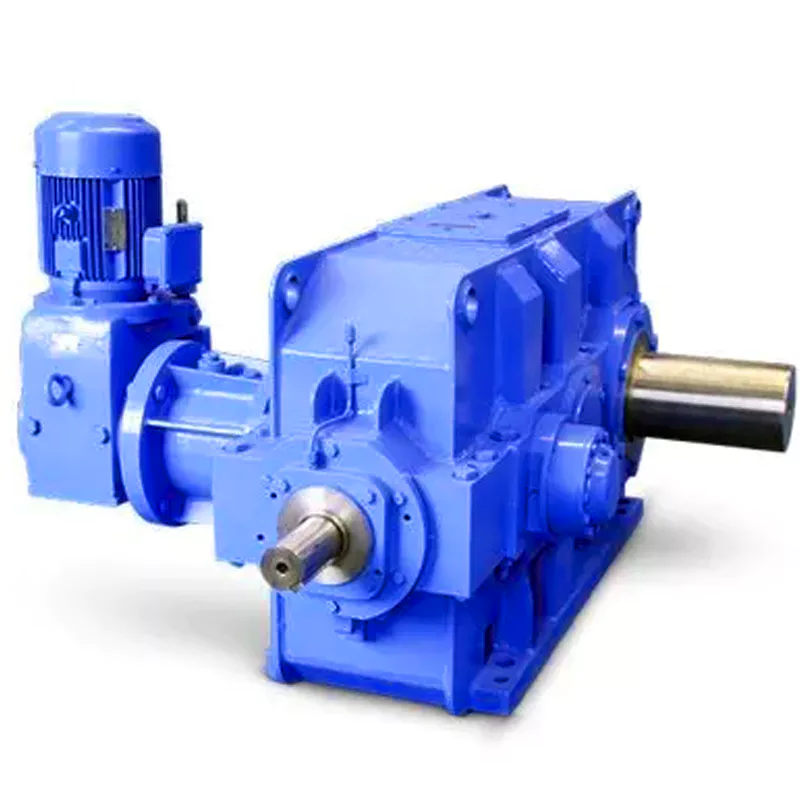
What are the considerations for choosing the appropriate lubrication for gear reducers?
Choosing the appropriate lubrication for gear reducers is crucial for ensuring optimal performance, longevity, and efficiency. Several considerations should be taken into account when selecting the right lubrication:
1. Load and Torque: The magnitude of the load and torque transmitted by the gear reducer affects the lubrication’s viscosity and film strength requirements. Heavier loads may necessitate higher viscosity lubricants.
2. Operating Speed: The speed at which the gear reducer operates impacts the lubrication’s ability to maintain a consistent and protective film between gear surfaces.
3. Temperature Range: Consider the temperature range of the operating environment. Lubricants with suitable viscosity indexes are crucial to maintaining performance under varying temperature conditions.
4. Contaminant Exposure: If the gear reducer is exposed to dust, dirt, water, or other contaminants, the lubrication should have proper sealing properties and resistance to contamination.
5. Lubrication Interval: Determine the desired maintenance interval. Some lubricants require more frequent replacement, while others offer extended operational periods.
6. Compatibility with Materials: Ensure that the chosen lubricant is compatible with the materials used in the gear reducer, including gears, bearings, and seals.
7. Noise and Vibration: Some lubricants have properties that can help reduce noise and dampen vibrations, improving the overall user experience.
8. Environmental Impact: Consider environmental regulations and sustainability goals when selecting lubricants.
9. Manufacturer Recommendations: Follow the manufacturer’s recommendations and guidelines for lubrication type, viscosity grade, and maintenance intervals.
10. Monitoring and Analysis: Implement a lubrication monitoring and analysis program to assess lubricant condition and performance over time.
By carefully evaluating these considerations and consulting with lubrication experts, industries can choose the most suitable lubrication for their gear reducers, ensuring reliable and efficient operation.
How do gear reducers ensure efficient power transmission and motion control?
Gear reducers play a vital role in ensuring efficient power transmission and precise motion control in various industrial applications. They achieve this through the following mechanisms:
- 1. Speed Reduction/Increase: Gear reducers allow you to adjust the speed between the input and output shafts. Speed reduction is essential when the output speed needs to be lower than the input speed, while speed increase is used when the opposite is required.
- 2. Torque Amplification: By altering the gear ratio, gear reducers can amplify torque from the input to the output shaft. This enables machinery to handle higher loads and provide the necessary force for various tasks.
- 3. Gear Train Efficiency: Well-designed gear trains within reducers minimize power losses during transmission. Helical and spur gears, for example, offer high efficiency by distributing load and reducing friction.
- 4. Precision Motion Control: Gear reducers provide precise control over rotational motion. This is crucial in applications where accurate positioning, synchronization, or timing is required, such as in robotics, CNC machines, and conveyor systems.
- 5. Backlash Reduction: Some gear reducers are designed to minimize backlash, which is the play between gear teeth. This reduction in play ensures smoother operation, improved accuracy, and better control.
- 6. Load Distribution: Gear reducers distribute the load evenly among multiple gear teeth, reducing wear and extending the lifespan of the components.
- 7. Shock Absorption: In applications where sudden starts, stops, or changes in direction occur, gear reducers help absorb and dampen shocks, protecting the machinery and ensuring reliable operation.
- 8. Compact Design: Gear reducers provide a compact solution for achieving specific speed and torque requirements, allowing for space-saving integration into machinery.
By combining these principles, gear reducers facilitate the efficient and controlled transfer of power, enabling machinery to perform tasks accurately, reliably, and with the required force, making them essential components in a wide range of industries.
Are there variations in gear reducer designs for specific tasks and applications?
Yes, gear reducer designs vary widely to suit specific tasks and applications across various industries. Manufacturers offer a range of gear reducer types and configurations to accommodate different requirements, including:
- Helical Gear Reducers: These are versatile and provide smooth and efficient torque transmission. They are commonly used in applications requiring high precision and moderate speed reduction, such as conveyors, mixers, and agitators.
- Bevel Gear Reducers: These are ideal for transmitting power between intersecting shafts. They are often used in heavy machinery, printing presses, and automotive applications.
- Worm Gear Reducers: These provide compact solutions and are suitable for applications with higher speed reduction requirements, such as conveyor systems, winches, and elevators.
- Planetary Gear Reducers: These offer high torque density and are used in applications demanding precise control, such as robotics, aerospace, and heavy-duty machinery.
- Parallel Shaft Gear Reducers: Commonly used in industrial machinery, these reducers are designed for high torque and reliability.
- Right-Angle Gear Reducers: These are used when space limitations require a change in shaft direction, commonly found in packaging equipment and conveyors.
Each type of gear reducer has unique features and benefits that make it suitable for specific tasks. Manufacturers often provide customization options to tailor gear reducers to the precise requirements of an application, including gear ratios, mounting options, and input/output configurations.
Therefore, the variation in gear reducer designs allows industries to select the most appropriate type based on factors such as torque, speed, space constraints, precision, and environmental conditions.
editor by CX 2024-02-01