Product Description
Extruder gearbox for plastic machine
1) Small volume
2) Big transmission torque
3) High efficiency
4) Low consumption
ZLYJ gearbox series are transmission devices, which are specially designed for single-screw extruder with high precision, hard gear surface, accompany with thrust. Adopting the technical specifications stipulated in JB/T9050.1-1999, all CZPT gearboxes are designed accordingly.
Main Features:
1. The material of gear is the high strength alloy steel, it is manufactured by carburizing, quenching (and other heat treatment), gringding process at last. The gear is in high precison ( 6 grade ) and high hardness ( reaches HRC54-62). Besides, it features low noise when operating.
2. It contains high bearing ability thrust, which is performed reliable and can withstand larger axial thrust.
3. All the items are treated by forced lubrication and cooling system except very few small specification products.
4. CZPT series gearbox is adopted by six-side processing box. Its normal installation is horizontal, but can also be changed to vertical installation according to customer’s requirment.
5. Efficiency transmission, low noise, long operaton time.
Package
Why choose us?
A> long time experience and history
B> long time nitriding treatment and heating treatment by itself
C>advanced Fanuk series CNC computer-controlled milling machines
D>depth hole drilling machine in 18meters length, which ensure the straigtnss of barrel inside.
E> CAD drawing confirmation before start making
F> Prompt after sale service
G>Land owner and registration capital 25, 000, 000RMB
If there is any problem, you can contact with us at any time, we will reply you as soon as possible!
| Type | Spec | Input Power(kw) | N( enter) | N(output) | Output Torque | Permitted axial thrust of output shaft(KN) | Screw Diameter | Length-diameter ratio |
| (N@m) | ||||||||
| ZLYJ | 112-8 | 5.5 | 800 | 100 | 525 | 35 | Ø35 | 25:01:00 |
| 133-8 | 8 | 800 | 100 | 764 | 39 | Ø50 | 25:01:00 | |
| 146-10 | 11 | 1000 | 100 | 1050 | 54 | Ø55 | 25:01:00 | |
| 173-10 | 18.5 | 900 | 90 | 1962 | 110 | Ø65 | 25:01:00 | |
| 200-12.5 | 30 | 1000 | 80 | 3581 | 155 | Ø75 | 25:01:00 | |
| 225-12.5 | 45 | 1000 | 80 | 5371 | 180 | Ø90 | 25:01:00 | |
| 250-16 | 55 | 1120 | 70 | 7503 | 192 | Ø105 | 25:01:00 | |
| 280-16 | 75 | 960 | 60 | 7643 | 258 | Ø110 | 25:01:00 | |
| 315-16 | 85 | 960 | 60 | 13528 | 287 | Ø120 | 25:01:00 | |
| 330-16 | 110 | 960 | 60 | 17507 | 360 | Ø135 | 25:01:00 | |
| 375-16 | 132 | 960 | 60 | 21008 | 390 | Ø150 | 25:01:00 | |
| 395-16 | 185 | 960 | 60 | 29442 | 400 | Ø160 | 25:01:00 | |
| 420-16 | 160 | 960 | 60 | 31831 | 430 | Ø160 | 25:01:00 | |
| 420-16 | 220 | 960 | 60 | 31831 | 430 | Ø170 | 25:01:00 | |
| 450-20 | 213 | 1000 | 60 | 40640 | 500 | Ø160/Ø170 | 25:01:00 | |
| 560-17 | 540 | 1000 | 50 | 84034 | 700 | Ø200 | 25:01:00 | |
| 630-10 | 540 | 1000 | 50 | 15712 | 770 | Ø250 | 25:01:00 |
| Application: | Machinery, Agricultural |
|---|---|
| Layout: | Three-Ring |
| Hardness: | Hardened |
| Installation: | Vertical Type |
| Step: | Stepless |
| Type: | Bevel Gear |
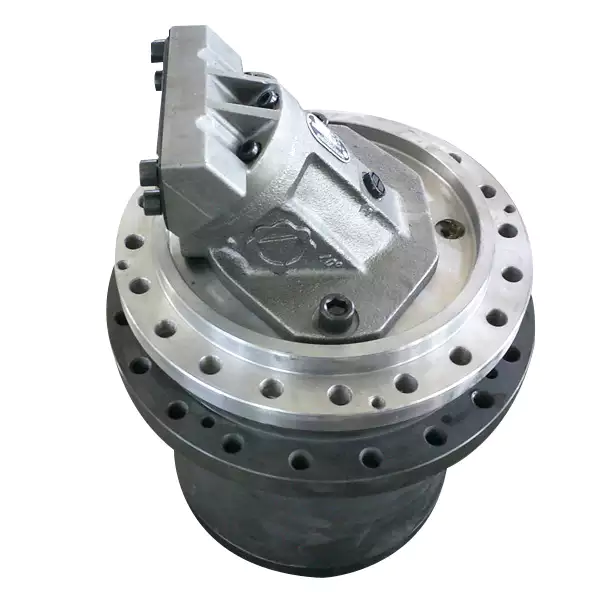
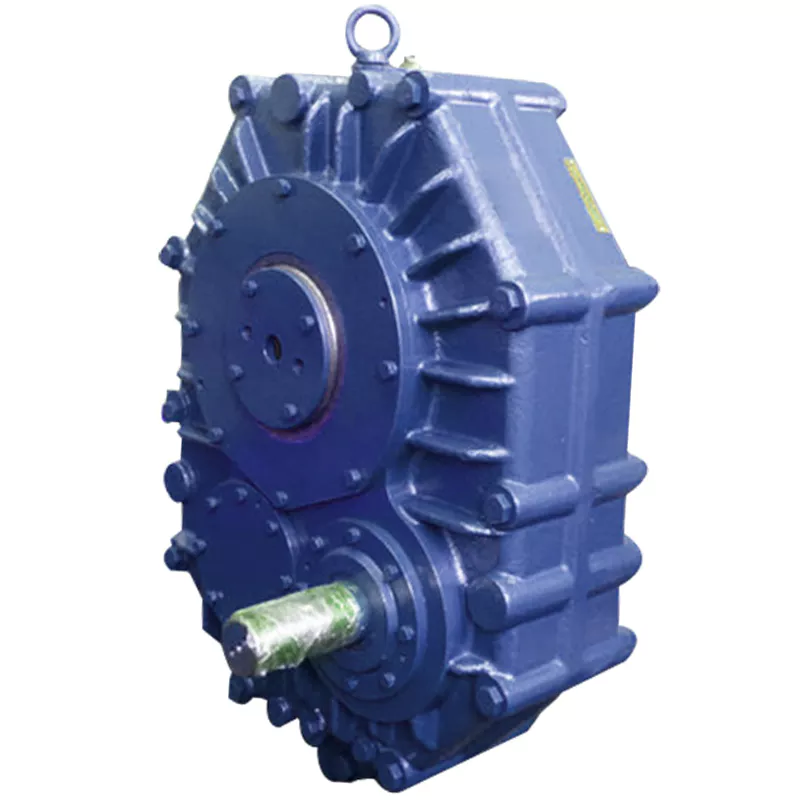
| Customization: |
Available
| Customized Request |
|---|
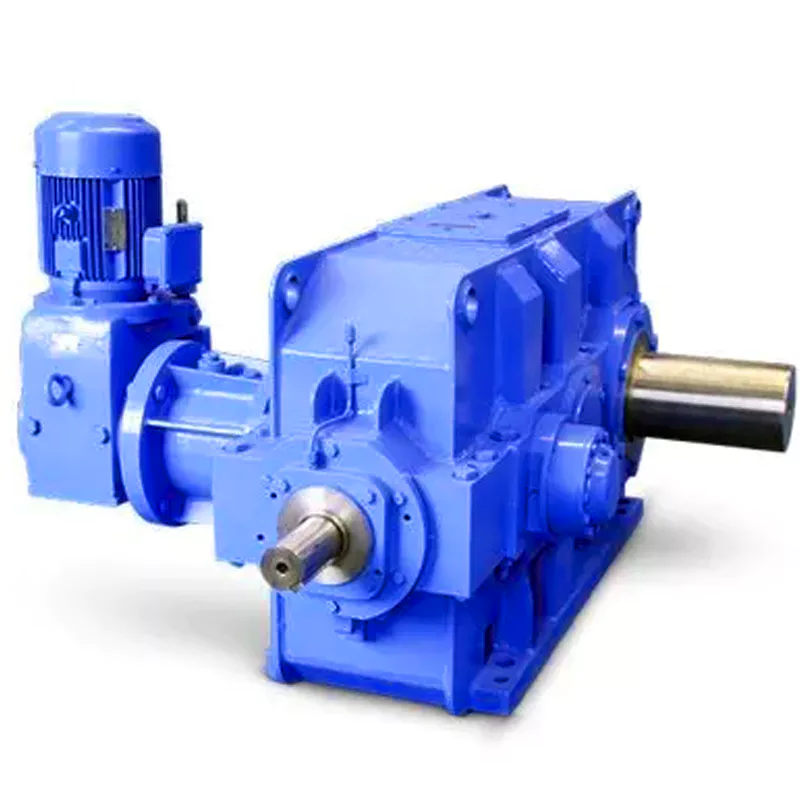
What are the benefits of using a gear reducer in industrial applications?
Gear reducers offer several benefits that make them indispensable in various industrial applications:
1. Speed Reduction: Gear reducers allow the reduction of high-speed input from motors or engines to lower, more usable output speeds for specific applications, ensuring proper equipment operation and safety.
2. Torque Increase: By leveraging the mechanical advantage of gear ratios, gear reducers can significantly increase torque output, enabling the handling of heavy loads and providing the necessary power for tasks such as lifting, conveying, and processing.
3. Precise Control: Gear reducers enable fine-tuning of rotational speed and torque, providing precise control over machinery and processes, which is crucial in industries like manufacturing, material handling, and robotics.
4. Shock Load Absorption: Gear reducers can absorb and dampen sudden shocks or changes in load, protecting both the machinery and connected components from abrupt forces that could otherwise lead to damage.
5. Versatility: With various gear types (e.g., spur, helical, worm) and designs, gear reducers can be tailored to different applications, including those requiring specific speed ratios, torque ranges, and environmental conditions.
6. Efficient Power Transmission: Gear reducers offer high mechanical efficiency, minimizing energy loss during power transmission, which is especially valuable in energy-conscious industries.
7. Compact Design: Gear reducers provide a compact solution for transmitting power and adjusting speeds, making them suitable for installations with space constraints.
8. Reliability and Longevity: Well-designed and properly maintained gear reducers can offer extended service life, contributing to reduced downtime and maintenance costs.
Overall, gear reducers enhance the performance, efficiency, and reliability of industrial equipment, making them essential components in a wide range of applications across various industries.


editor by CX 2023-08-30